
Key Points
- Joining an international teaching community requires the right qualifications and legal visas to work legally abroad. Building a professional network through events and online groups helps teachers integrate quickly and find opportunities. Early preparation of documents and continuous development improve chances of securing desirable teaching positions overseas.
Joining a teaching community abroad is defined as becoming an active member of a professional network of educators working in international schools, language centres, and government programmes outside your home country. To do it successfully, you need the right teaching qualifications, such as a TEFL or TESOL certificate, plus the correct visa or work permit for your destination. The two requirements work together. Without recognised credentials, most employers will not hire you. Without the correct legal status, you cannot work legally. This guide covers qualifications, visa processes, networking strategies, and practical job search steps so you can build a rewarding international teaching career with confidence.
How to join a teaching community abroad: qualifications first
Joining international teaching communities requires the correct teaching qualifications and proper visa arrangements. TEFL stands for Teaching English as a Foreign Language. TESOL stands for Teaching English to Speakers of Other Languages. Both terms describe similar qualification pathways, and many employers use them interchangeably. The key difference is context. TEFL is the term most commonly used in Europe, Asia, and Latin America. TESOL is more widely used in academic and institutional settings globally.

The qualification level matters enormously for your employability. A basic online TEFL certificate of 120 hours may open doors in some markets, but a Level 5 qualification carries far greater weight with serious employers. The Trinity CertTESOL is a Level 5 qualification that requires over 130 hours of instruction plus at least 6 hours of (https://www.trinitycollege.com target=‘_blank’). That hands-on component is what sets it apart from purely online alternatives.
Here is what most international employers look for in a qualified candidate:
- A recognised TEFL or TESOL certificate at Level 5 or above
- Supervised teaching practice hours with real learners
- A bachelor’s degree (required in many countries for work visa eligibility)
- Specialist endorsements such as Business English, CLIL, or Online Teaching
- Evidence of continued professional development
Pro Tip: Selecting a TEFL or TESOL programme that aligns with the visa requirements of your target country maximises both your job prospects and your residency options. Research your destination’s rules before you enrol.
The Trinity CertTESOL is widely recognised by the British Council and international employers across Asia, the Middle East, Europe, and Latin America. That recognition translates directly into better job offers and stronger visa applications.
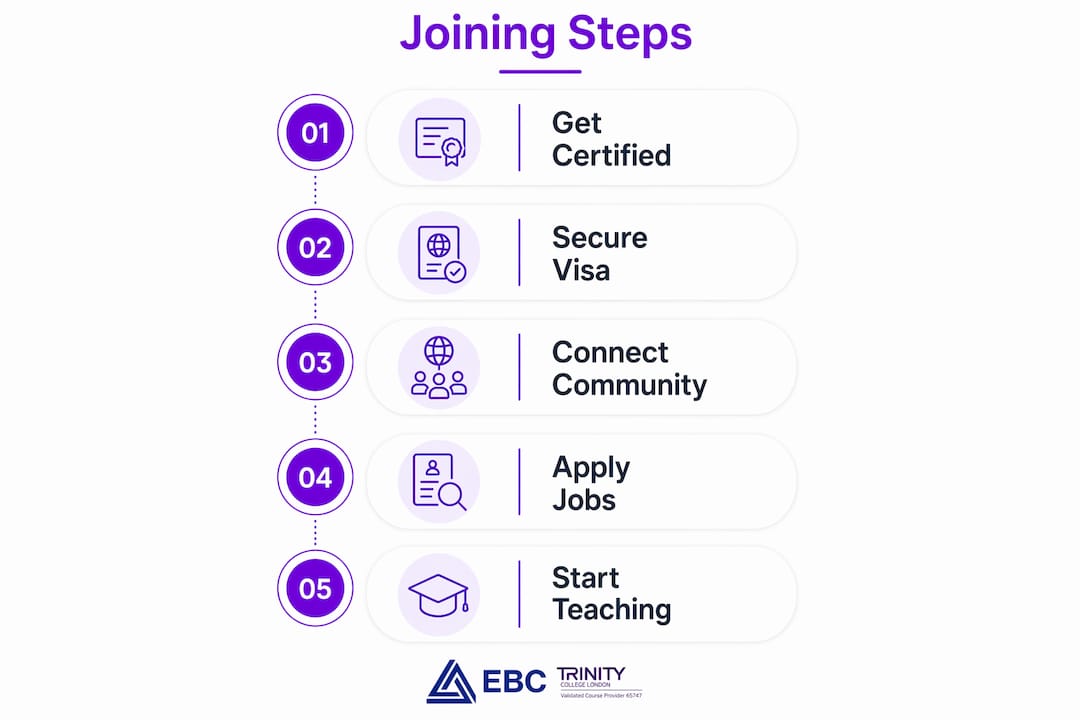
How do visa and work permit requirements affect teaching abroad?
Visa and work permit requirements vary significantly by region, and non-compliance carries serious consequences including deportation and bans on re-entry. Understanding the rules for your target country before you travel is not optional. It is the foundation of a legal and sustainable teaching career overseas.
Visa requirements differ widely by country, with some requiring a degree to issue a work visa and others relying on employer sponsorship. Here is a broad overview of how requirements vary by region:
- Europe: Many countries require a long-stay teaching visa or a student visa with a work authorisation.
- Asia: Countries such as South Korea, Japan, and China typically operate employer-sponsored visa systems. Your school arranges the permit, but you must supply the documents.
- Middle East: Employers in the UAE, Saudi Arabia, and Qatar usually handle the work permit process, though you remain responsible for providing accurate paperwork.
- Latin America: Requirements vary widely. Some countries offer cultural exchange visas; others require a formal work contract before any permit is issued.
Common documents required across most regions include a valid passport, a signed employment contract, a criminal background check, notarised copies of your degree and teaching certificate, and passport-sized photographs.
Preparation for paperwork and visa processes should start months in advance. Assembling your documents before you receive a job offer puts you in a far stronger position when deadlines arrive.
Never assume your employer will manage every step. Confirm responsibilities in writing before you accept a position. Visa rules change, and what applied last year may not apply today.
What are the best methods to connect with teaching communities abroad?
Teaching communities abroad form naturally in international schools, language academies, and government exchange programmes. The challenge is not finding them. It is integrating quickly enough to benefit professionally and personally during your first year.
Proactive participation in buddy systems, staff events, and online groups accelerates community integration for international teachers. Here are the most effective methods to build your network from day one:
- Say yes to staff events. Your school’s social calendar is your fastest route into the community. Attend every welcome event, departmental gathering, and after-work activity in your first month.
- Join WhatsApp and Facebook groups. Most cities with a significant expat teacher population have active online groups. Search for groups specific to your city and subject area.
- Connect with local teachers, not just expats. Local colleagues offer cultural insight, language practice, and professional contacts that no expat network can replicate.
- Volunteer outside school. Community volunteering connects you with residents and organisations beyond the teaching bubble. It also strengthens your CV.
- Attend professional events. Organisations such as IATEFL and TESOL International Association run annual conferences and regional events that bring together educators from across the globe.
Pro Tip: Reach out to teachers already working at your school before you arrive. A brief message via LinkedIn or the school’s staff directory can secure a contact who will show you around on your first day.
Networking to find jobs and build your career is a skill that compounds over time. Every connection you make in your first year can lead to a referral, a recommendation, or a new opportunity in year two.
What practical steps can you take to secure teaching jobs abroad?
Securing a teaching position overseas requires preparation across several fronts simultaneously. The teachers who land the best roles are those who treat the job search as a professional project, not an afterthought.
Where to find teaching opportunities overseas
Teaching opportunities overseas come from three main sources: structured programmes, specialist recruiters, and independent job boards. Structured programmes such as government language assistant schemes offer clear entry points with built-in support. Specialist recruiters focus on international schools and language academies and can match your profile to vacancies you would not find independently. Independent job boards give you the widest range of options but require more self-directed effort.
| Source | Best for | Key advantage |
|---|---|---|
| Government programmes | First-time teachers | Structured support and visa assistance |
| Specialist recruiters | Qualified teachers with experience | Access to premium school vacancies |
| Independent job boards | Flexible or freelance roles | Widest range of locations and contract types |
| Direct school applications | Targeted career moves | Builds direct relationships with employers |
Preparing your application documents
Teaching job applications commonly require a CV, sample lesson plans, a background check, notarised diplomas, and visa documents. Assembling these early means you can respond to offers quickly. Slow document preparation costs candidates strong positions every year.
Your CV for international teaching should include:
- Your TEFL or TESOL qualification and the awarding body
- Supervised teaching practice hours and the learner groups you taught
- Any specialist endorsements such as Business English or CLIL
- Relevant work experience, including volunteer teaching
- References from tutors, employers, or placement coordinators
Building your career through continued development
Building a successful teaching career abroad depends on continued professional development, cultural adaptation, and active community participation. Teachers who invest in upgrading their qualifications, whether through specialist TESOL endorsements or postgraduate study, consistently progress faster than those who do not. Cultural adaptation is equally important. Learning even basic phrases in the local language signals respect and opens doors with colleagues and students alike.
Ebcteflcourse supports teachers at every stage of this process, from initial certification through to international career development and global job placement. The combination of accredited training and lifetime placement support means you are never navigating the job market alone.
Key takeaways
Joining a teaching community abroad requires the right qualifications, correct visa arrangements, and proactive networking to build a sustainable international career.
| Point | Details |
|---|---|
| Qualifications are non-negotiable | A Level 5 TEFL or TESOL certificate, such as the Trinity CertTESOL, is the minimum standard for serious international employers. |
| Visa rules vary by region | Research your target country’s requirements before enrolling in any course to ensure your qualification meets work permit criteria. |
| Community integration takes effort | Attend staff events, join online groups, and connect with local colleagues from your first week to build your professional network. |
| Prepare documents early | Assemble your CV, background check, notarised certificates, and references before you receive a job offer, not after. |
| Development drives progression | Teachers who pursue specialist endorsements and continued training progress faster and access better opportunities overseas. |
EBC: your starting point for teaching abroad
EBC prepares aspiring teachers for international careers through Trinity College London accredited TEFL and TESOL programmes, including the Trinity CertTESOL, recognised by employers and institutions across Asia, Europe, the Middle East, Latin America, and beyond.
Every EBC student receives free lifetime job placement support, giving you a genuine advantage in a competitive global market. The platform also offers one-year study and work abroad programmes in Spain, France, and Italy, combining accredited teacher training with language study, visa guidance, and cultural immersion. Whether you are taking your first step or upgrading your credentials, certified teaching abroad starts with the right qualification. Book a free consultation with the EBC team today and find the programme that fits your goals.
FAQ
What qualifications do I need to teach English abroad?
Most international employers require a recognised TEFL or TESOL certificate at Level 5 or above, such as the Trinity CertTESOL, which includes supervised teaching practice. Many countries also require a bachelor’s degree to issue a work visa.
Do I need a visa to join a teaching community abroad?
Yes. Legal teaching work abroad requires the correct visa or work permit for your destination country. Requirements vary by region, so research your target country’s rules well before you travel.
How do I find teaching communities in a new country?
Teaching communities form through school staff networks, online groups on platforms such as WhatsApp and Facebook, and professional organisations such as IATEFL. Attending local events and saying yes to social invitations accelerates integration significantly.
Is a degree required to teach English abroad?
A degree is required in many countries, particularly in Asia and the Middle East, where it is often a condition of work visa eligibility. Some countries and programme types do not require a degree, but holding one widens your options considerably.
How long does it take to prepare for teaching abroad?
Preparation typically takes three to six months when you factor in completing a TEFL or TESOL course, assembling visa documents, and securing a position. Starting the paperwork process early is the single most effective way to avoid delays.