
Each year thousands of people move to Spain to teach English in Madrid. Language assistants in the region typically teach around 16 hours a week over four days, which leaves long weekends free. Demand stays high across public schools, private academies, and one-on-one tutoring. This guide covers what matters before you commit: the pay, the legal routes, the government programs, degree requirements, and the steps to land your first job.
Why Madrid Is a Top Choice to Teach English Abroad
Madrid pairs a big-city job market with a livable pace. Short teaching weeks leave real time for travel, Spanish practice, and a social life, one reason the city ranks high among the best teach English abroad programs for first-timers.
A few concrete draws:
- Steady demand. Public schools, academies, and families hire English speakers year-round.
- Manageable hours. Assistant roles often mean short weeks and three-day weekends.
- Established expat network. New teachers arrive to a community of people who made the same move.
If you want to teach English and travel the world, Madrid works as a practical launch point rather than a one-off gap year. The Spanish government recruits English-speaking assistants through its official language assistants program, run by the Spanish Ministry of Education, a structured, legal way in for newcomers.
After an incredible six months of teaching English in Madrid, Spain, truly transformative experience. teaching was the most rewarding …
How Much Do English Teachers Get Paid in Madrid?
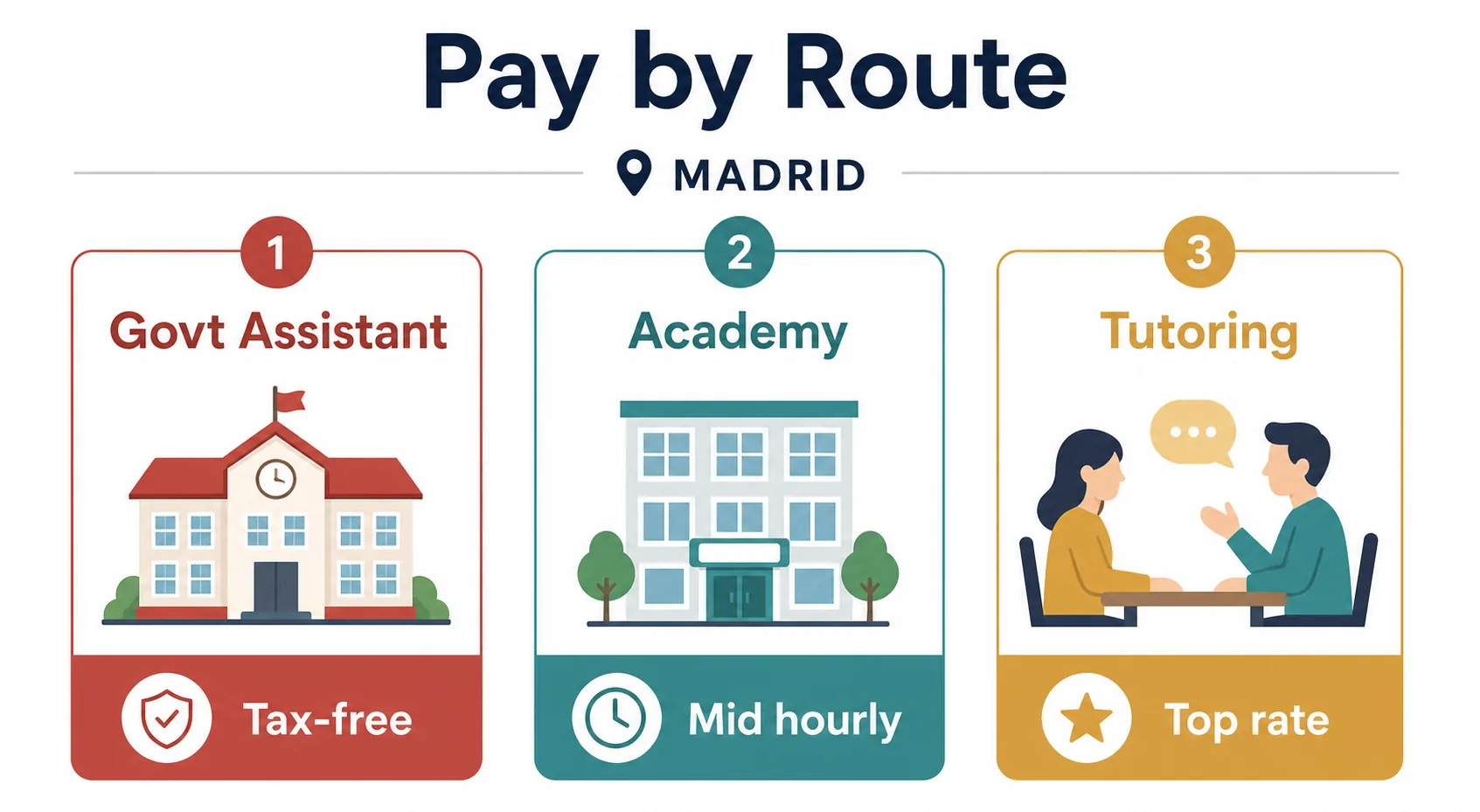
Pay depends on your route. Government stipends are modest but tax-free, academy salaries run higher with more hours, and private tutoring pays the most per hour with the least stability.
| Route | Typical pay | Hours | Notes |
|---|---|---|---|
| Government language assistant | Modest monthly stipend, tax-free | ~16/week | Health coverage often included; academic year only |
| Private language academy | Hourly, mid-range | 20-25+/week | More hours, split shifts common |
| Private tutoring (clases particulares) | Highest hourly rate | Flexible | You find your own students; income varies |
Many teachers pair an assistant placement with a few private students to lift their monthly income. Madrid costs less than most major Western European capitals, though central rents have climbed, Spain’s official statistics agency, the Instituto Nacional de Estadística, publishes current housing and cost-of-living data worth checking before you budget. On a single stipend, most first-year teachers cover their costs and travel comfortably rather than bank large savings.
Visa and Legal Routes to Teach English in Madrid
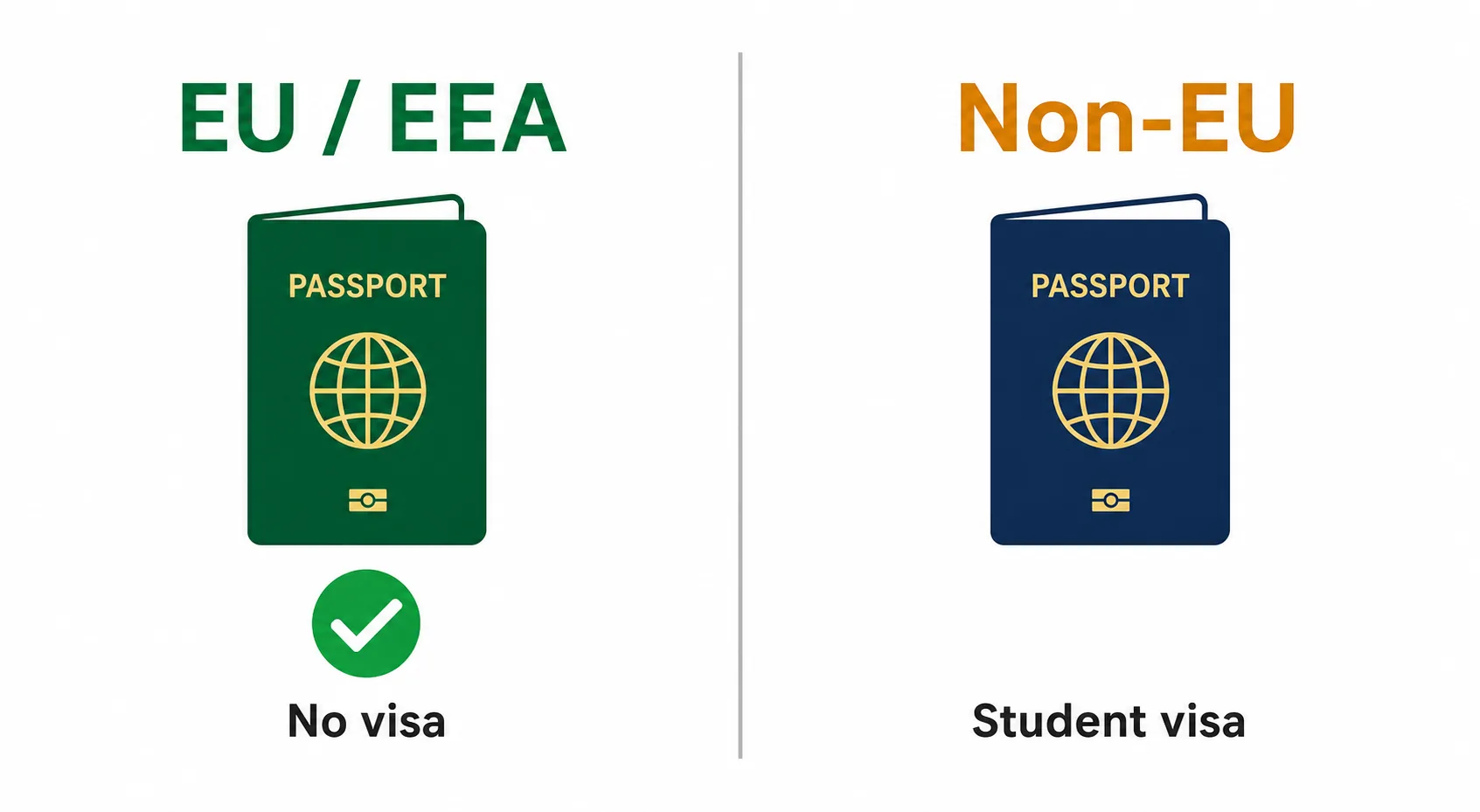
This is where planning matters most. EU and non-EU citizens face very different paths.
- EU/EEA citizens can live and work in Spain freely, no visa needed. Register locally and start applying.
- Non-EU citizens (including US, UK, Canadian, and Australian passport holders) rarely receive a standard work visa for entry-level English teaching. Employers seldom sponsor one for these roles.
The realistic non-EU route is a student visa tied to a language assistant program. It lets you live in Spain legally, receive a stipend, and teach within the program’s framework. Confirm current requirements through the Spanish Ministry of Foreign Affairs or your nearest Spanish consulate, since visa rules and appointments change. Trying to work full-time on a tourist entry is not a legal path.
Government Programs for Teaching English in Spain
Government-backed programs are the most common legal entry point, especially for North Americans. They provide the visa framework, a stipend, and a school placement.
The North American Language Assistant Program (Auxiliares de Conversación)
The flagship route. Assistants support classroom teachers, model natural English, and lead speaking practice. Typical terms: roughly 16 teaching hours a week, a monthly stipend, and placement in public schools across the Community of Madrid. A bachelor’s degree and a clean background check are generally required.
Regional and Private Language Assistant Programs
Beyond the main national program, several regional and privately run options place teachers in Madrid schools with similar hours and stipends. Some bundle TEFL certification, housing help, or added support for a fee. Fulbright also runs English teaching assistantships in Spain through Fulbright Spain, aimed at graduates after a more competitive placement.
| Program type | Hours/week | Degree required? | Best for |
|---|---|---|---|
| National assistant program | ~16 | Yes | First-timers wanting structure |
| Regional/private assistant | ~16-20 | Usually | Extra support, faster placement |
| Competitive assistantship | Varies | Yes | Graduates seeking prestige |
Can You Teach English in Madrid Without a Degree?
Short answer: yes, but your options narrow.
What’s Actually Possible
Most government assistant programs require a bachelor’s degree, so those are off the table without one. Private language academies and private tutoring are the realistic paths for teaching English in Madrid without a degree. Here, employers care far more about whether you can run a lesson than which diploma you hold.
A TEFL qualification becomes your credibility lever. An accredited online TEFL certification shows academies you understand lesson planning, classroom management, and how learners actually pick up English, the skills that get you hired and rehired. It won’t create a work visa, but for EU citizens and anyone already on a valid student visa, it’s often the deciding factor.
How to Get Hired, Steps to Land a Teaching Job in Madrid
Getting hired in Madrid is less about luck and more about sequence:
- Get TEFL certified. A 120-hour course is the recognized baseline and covers the methods you’ll use daily.
- Decide your route. Government program, private academy, private tutoring, or a mix. Non-EU teachers usually start with a program for the visa.
- Prepare your CV and a demo lesson. Academies often ask for a short teaching demonstration, practice one before you arrive.
- Time your applications. Line up with the academic calendar (below).
- Apply and interview. Apply broadly, follow up, and be ready to interview on short notice.
When to Apply, Hiring Seasons in Madrid
Hiring follows the school year. The biggest wave of openings lands before the September intake, with a smaller round in January. Late spring, May and June, is usually the slowest stretch, as the academic year winds down.
That quiet window is exactly when to prepare, not wait. Use those slower months to finish your TEFL certification, polish your CV, and get your visa paperwork moving, so you’re first in line when September roles open.
What Real Teachers Say About Teaching in Madrid
Honest feedback from teachers who’ve done it tends to land on a few recurring themes:
- The bureaucracy is real. Visa appointments, the NIE, and paperwork test your patience. Start early and expect delays.
- Pay is livable, not lucrative. Most cover rent, food, and travel on a stipend; bigger savings usually mean private students on the side.
- The lifestyle wins people over. Short weeks, a walkable city, cheap travel across Europe, and a warm social scene are the payoffs teachers mention most.
The balanced verdict: rarely a way to get rich, but a genuinely rewarding year, or several, for anyone who values experience over income.
How EBC Gets You From Certified to Employed
A certificate alone doesn’t get you hired, knowing how to teach does. EBC is built as a full path, not a single course: real training in ESL teaching methods, hands-on practice with lesson planning and classroom management, and career support to move you from certified to employed.
That means guidance on choosing your route, preparing your CV and demo lesson, and weighing program-versus-academy options, plus study abroad support for teachers who want a fuller landing in Spain. You get started, build practical skill, and open up global teaching opportunities, whether Madrid is your first stop or one of many.
Frequently asked questions
How much do English teachers get paid in Madrid?
Can I teach English in Madrid without a degree?
Do I need to speak Spanish to teach English in Madrid?
How do I get a visa to teach English in Madrid as a non-EU citizen?
Is teaching English in Madrid worth it?
Your Next Move
Madrid is well within reach once you pick the right route and back it with a recognized qualification. EU citizens can apply directly; non-EU teachers should plan around a language assistant program for the visa. The decisive first step is the same for everyone, get TEFL certified, prepare your applications during the quieter months, and be ready when the September hiring wave opens. Start the certification now, and this time next year you could be teaching in Madrid.