
Starting a teaching adventure after graduation can feel like both a professional challenge and a personal opportunity. For recent graduates looking to teach English abroad, earning an accredited TEFL certification is the first step towards real cultural connection and career growth. This guide unpacks every essential milestone—from confirming your eligibility to securing your international teaching placement—so you can confidently begin your teaching journey.
This article provides information for people who want to apply for jobs on their own. If you study with EBC, we help you find jobs through our EBC worldwide, lifetime job placement assistance programme.
Table of Contents
- Step 1: Assess Your Eligibility And Prepare Documents
- Step 2: Select An Accredited TEFL Or TESOL Programme
- Step 3: Complete Your Trinity College London Certification
- Step 4: Search And Apply For Global Teaching Positions
- Step 5: Verify Offers And Secure Your Placement
Quick Summary
| Key Insight | Explanation |
|---|---|
| 1. Assess Your Eligibility | Review qualifications like degree, age, and health before applying for TEFL jobs. |
| 2. Choose an Accredited Programme | Select a TEFL/TESOL course with recognised accreditation and practical teaching components for the best training. |
| 3. Complete Certification Thoroughly | Dedicate time to meet all requirements of the Trinity College London certification, focusing on theory and practice. |
| 4. Employ Strategic Job Search | Use various channels for the job search, including online boards and networking, to find global positions. |
| 5. Verify Job Offer Details | Carefully analyse key contract elements to ensure fair terms and avoid potential issues before accepting a job. |
Step 1: Assess your eligibility and prepare documents
Preparing to apply for TEFL jobs requires carefully assessing your eligibility and gathering the right documentation. In this crucial stage, you’ll evaluate your qualifications and compile the necessary paperwork to position yourself as a strong candidate for teaching English abroad.
To begin your assessment, you’ll want to review several key criteria that most employers and programmes consider when hiring English language teachers. These typically include:
- An accredited and globally accepted TEFL certificate – employers prefer job candidates with a Trinity CertTESOL or CELTA
- A university degree (in any discipline) – preferred
- Native or near-native English language proficiency
- Valid Passport
- Clean criminal background
- Good physical and mental health
Once you’ve confirmed you meet these basic requirements, start collecting your essential documents. Your documentation package should include:
- Original university degree certificate
- Valid passport
- Passport-sized photographs
- Academic transcripts
- Criminal background check
- Medical fitness certificate
Employers and TEFL programmes are seeking candidates who demonstrate professionalism and preparedness through their documentation.
For international opportunities, consider having your documents professionally translated to ensure smooth processing. Many programmes will require notarised copies of your original documents, so plan ahead and budget time for these administrative tasks.
Pro tip: Create digital and physical copies of all important documents, storing them in both secure cloud storage and a portable file for easy access during your job application process.
Step 2: Select an accredited TEFL or TESOL programme
Choosing the right accredited TEFL or TESOL programme is a critical step in launching your international teaching career. This decision will determine the quality of your training, your employability, and your confidence in the classroom.

When selecting a programme, focus on key accreditation factors that ensure high-quality training. Look for courses that are recognised by international teaching bodies, specifically those validated by reputable organisations like Trinity College London. These programmes provide comprehensive training that goes beyond basic language instruction.
Consider these essential criteria when evaluating TEFL programmes:
- Recognised international accreditation – employers prefer job candidates with a Trinity CertTESOL or CELTA
- Minimum 120-hour course duration
- Practical teaching practice components
- Specialisation options (online teaching, business English)
- Job placement support
- Experienced, qualified trainers
Accreditation is not just a badge – it’s a guarantee of quality training that prepares you for real-world teaching challenges.
The most robust programmes typically offer a combination of theoretical learning and practical classroom experience. Look for courses that include:
Here’s a comparison of leading TEFL programme accreditation bodies and their global recognition:
| Accreditation Body | Region of Influence | Employer Recognition |
|---|---|---|
| Trinity College London | Global | Highly prestigious – Widely accepted by schools |
| Cambridge English | Global | Highly prestigious – Widely accepted by schools |
| ACTDEC (UK) | United Kingdom, | Recognised in UK |
- Comprehensive theoretical modules
- Observed teaching practice
- Lesson planning workshops
- Language awareness training
- Cultural adaptation sessions
Most reputable TEFL programmes will provide detailed information about their accredited course types, allowing you to select a programme that matches your specific career goals and learning preferences.
Pro tip: Contact programme alumni and request detailed feedback about their training experience to gain unfiltered insights into the course’s actual value and job market preparation.
Step 3: Complete your Trinity College London certification
Successfully completing your Trinity College London certification represents the pivotal moment in transforming your teaching ambitions into a professional reality. This internationally recognised qualification will be your passport to teaching opportunities across the globe.
To navigate the certification process effectively, you’ll need to understand the certification pathway and meet its comprehensive requirements. The Trinity CertTESOL programme typically involves several critical components that assess your teaching potential and linguistic expertise.
Key components of the certification process include:
- Theoretical language awareness modules
- Observed teaching practice sessions
- Lesson planning and curriculum design assignments
- Language skills assessment
- Professional portfolio development
- Microteaching evaluations
Successful certification requires dedication, consistent effort, and a genuine commitment to developing your teaching skills.
The certification process typically unfolds through these structured stages:
- Complete theoretical training modules
- Develop comprehensive lesson plans
- Participate in observed teaching practicals
- Build a professional teaching portfolio
- Pass final assessment and examinations
Each stage demands careful preparation and a strategic approach to demonstrating your teaching capabilities. Your performance will be rigorously assessed by experienced TEFL trainers who evaluate not just your language skills, but your potential as an effective English language educator.
Pro tip: Create a detailed study schedule and allocate specific time for each certification requirement, ensuring you maintain consistent progress and reduce last-minute preparation stress.
Step 4: Search and apply for global teaching positions
Navigating the international teaching job market requires strategic planning and a systematic approach to identifying and securing global teaching opportunities. Your Trinity College London certification has prepared you for this exciting next phase of your professional journey.
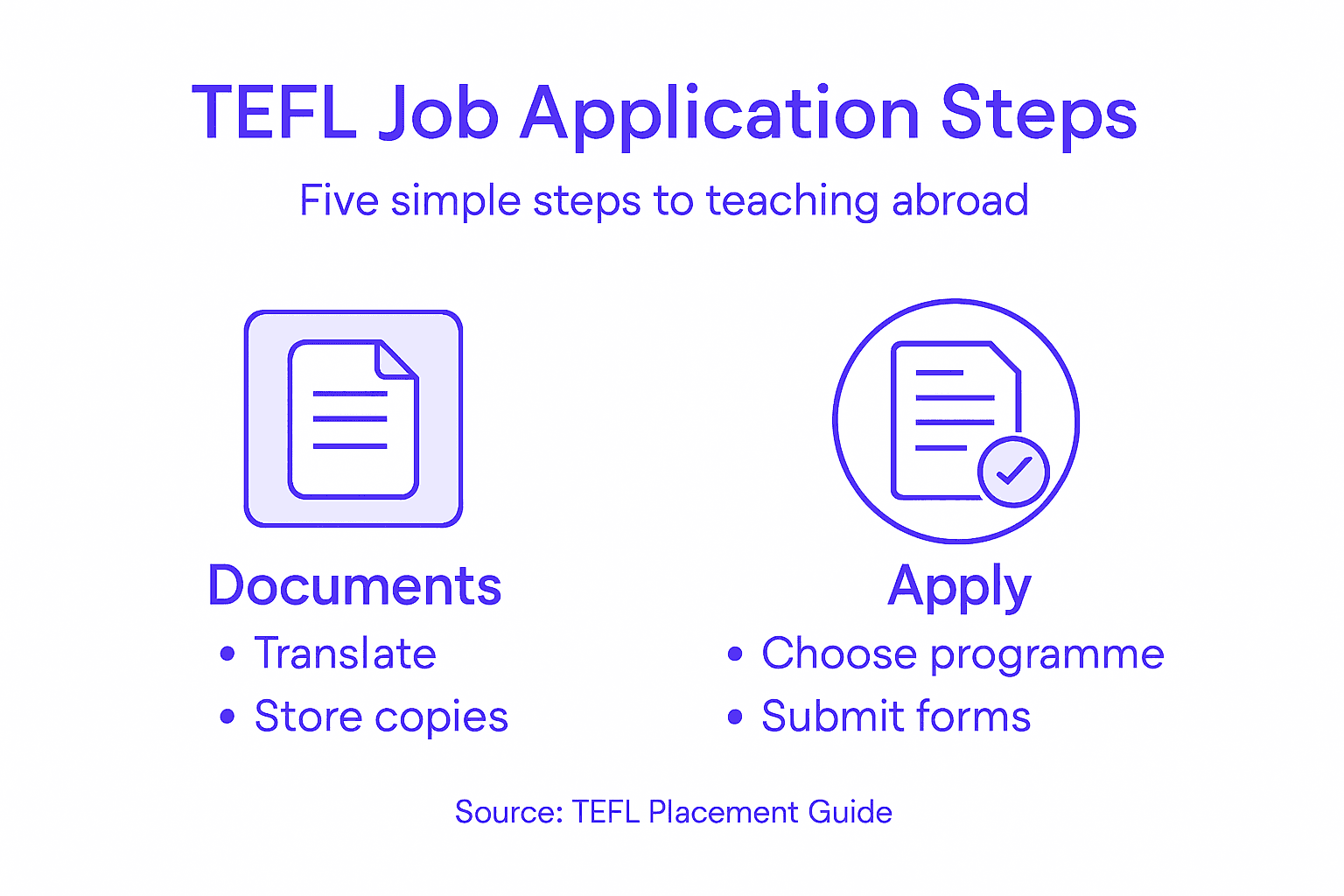
To maximise your job search effectiveness, explore comprehensive job search strategies that go beyond traditional recruitment channels. Your approach should be multi-faceted, leveraging both online platforms and professional networks to uncover potential teaching positions.
Key job search strategies include:
- International online teaching job boards
- Professional networking platforms
- University career centres
- TEFL recruitment agencies
- Direct school and language centre applications
- Professional social media networks
The most successful TEFL teachers approach job hunting as a professional marketing exercise, positioning themselves strategically in the global education marketplace.
Your job application process should encompass these critical steps:
- Update your professional CV/resume
- Prepare a compelling cover letter
- Gather professional references
- Research target countries and institutions
- Customise applications for specific roles
- Follow up professionally after applications
Remember that different regions have unique recruitment cycles and preferences. Some countries like South Korea and China recruit months in advance, while others such as Spain and Italy have more flexible timelines.
Pro tip: Create a dedicated email address and professional online portfolio to streamline your job application process and present a cohesive professional image to potential employers.
Step 5: Verify offers and secure your placement
Securing your ideal teaching position requires meticulous attention to detail and strategic evaluation of job offers. Verifying job opportunities is a critical phase that ensures you select a position aligned with your professional goals and personal expectations.
Carefully analyse employment contract details before making a final commitment. This comprehensive verification process protects your interests and sets the foundation for a successful international teaching experience.
Key aspects to verify in job offers include:
- Salary and compensation package
- Contract duration and working hours
- Housing provisions or allowances
- Flight reimbursement
- Health insurance coverage
- Visa and work permit support
A thorough contract review is your first line of defence against potential misunderstandings or professional disappointments.
The verification process should follow these systematic steps:
Below is a summary of key contract terms to analyse before accepting a TEFL position abroad:
| Contract Element | Why It Matters | Possible Pitfalls |
|---|---|---|
| Salary Package | Ensures fair compensation | Hidden deductions |
| Housing Provision | Reduces living costs | Unclear arrangements |
| Health Insurance | Offers medical security | Limited coverage |
| Flight Reimbursement | Eases start-up costs | Conditional clauses |
| Termination Policy | Protects job stability | Unreasonable penalties |
- Request complete job contract documentation
- Compare offer against standard industry rates
- Consult with programme advisors
- Verify institution’s reputation
- Understand termination clauses
- Negotiate terms if necessary
Additionally, research the specific cultural and professional context of your potential teaching destination. Each country has unique workplace expectations and educational system nuances that can significantly impact your experience.
Pro tip: Always maintain digital and physical copies of all correspondence and contract documents, creating a comprehensive record that protects your professional interests.
Take the Next Step Toward Your Global TEFL Career
If you are ready to transform your passion for teaching English abroad into a rewarding career but find the certification and job search process overwhelming this guide is your first step. At EBC TEFL, we understand the challenges of navigating eligibility requirements, choosing the right accredited programme, and securing a position in competitive international markets. Our Trinity College London accredited courses provide the high-quality, practical teacher training you need to confidently complete your certification and stand out to employers worldwide.
Benefit from our expert support including free lifetime job placement assistance and personalised guidance tailored to your unique goals. Whether you want to teach in Spain, France, Italy, or Asia, explore our comprehensive 1-year study and work abroad programmes that combine accredited training with visa support, cultural immersion, and part-time work opportunities. Make your teaching dreams achievable today by booking a free consultation and starting your journey with EBC TEFL’s trusted certification pathways at EBC TEFL. Take control of your future as an English language teacher and secure your place in the global classroom now.
Frequently Asked Questions
What documents do I need to have ready when applying for TEFL jobs abroad?
To apply for TEFL jobs abroad, you will need several key documents, including your original university degree certificate, a valid passport, passport-sized photographs, academic transcripts, a criminal background check, and a medical fitness certificate. Gather these documents to demonstrate your readiness and professionalism.
How do I choose an accredited TEFL or TESOL programme?
When selecting a TEFL or TESOL programme, ensure it has recognised international accreditation and offers a minimum of 120 hours of training, including practical teaching components. Research various programmes to find one that aligns with your career goals and teaching preferences.
What is the process for obtaining the Trinity College London certification?
The Trinity College London certification process involves completing theoretical training modules, participating in observed teaching practices, creating comprehensive lesson plans, and developing a professional portfolio. Follow a structured study plan to effectively navigate each requirement.
How can I effectively search and apply for TEFL job positions?
To search for TEFL job positions effectively, utilise international job boards, professional networking platforms, and direct applications to schools and language centres. Customise your CV and cover letter for each application to increase your chances of being noticed by employers.
What should I verify before accepting a job offer for a TEFL position?
Before accepting a TEFL job offer, carefully review the contract to verify the salary package, housing provisions, health insurance coverage, and termination policy. Understanding these details will help you avoid misunderstandings and ensure a positive teaching experience abroad.
How can I prepare for the cultural and professional context of my teaching destination?
To prepare for the cultural and professional context of your teaching destination, research the country’s educational system, workplace expectations, and cultural norms. This knowledge can help you adapt more easily, ensuring a smoother transition into your new teaching role.
Recommended
- TEFL Application Process Guide: Secure Your Teaching Career – EBC TEFL courses
- International TEFL Career Steps: Your Path to Global Teaching – EBC TEFL courses
- Get a job teaching English abroad | 3 foundation ‘how’ to tips – EBC Trinity CertTESOL and TEFL courses
- TESOL Abroad Application Process: Guide to Teaching Worldwide