
Landing a teaching job in Japan is more competitive than ever, with over 8,000 international instructors hired last year alone. Aspiring English teachers know that meeting strict Japanese qualifications is essential if you want to stand out. Whether you are attracted by Japan’s unique culture, strong career prospects, or the chance to enhance your global teaching credentials, this guide breaks down every step you need, from securing accredited training to finalizing your classroom placement.
Table of Contents
- Step 1: Assess Requirements For Teaching In Japan
- Step 2: Obtain A Trinity-Accredited TEFL Certification
- Step 3: Apply For Teaching Jobs With Global Support
- Step 4: Secure Your Visa And Prepare For Relocation
- Step 5: Validate Your Placement And Begin Teaching
Quick Summary
| Key Point | Explanation |
|---|---|
| 1. Obtain a Bachelor’s Degree | A recognised bachelor’s degree is essential for obtaining teaching visas in Japan. Preferably, it should be in any discipline. |
| 2. Acquire a Trinity CertTESOL | Holding a Trinity-accredited TEFL certification is crucial for demonstrating teaching competency and gaining employment in Japanese institutions. |
| 3. Choose the Right Visa Type | Select between an Instructor visa for public schools or a Specialist in Humanities visa for private centres, each with specific documentation requirements. |
| 4. Prepare for the Job Market | Effective job searching involves using online boards, recruitment agencies, and direct applications while ensuring your documents are professionally translated. |
| 5. Secure Visa and Relocation Plans | Completion of visa paperwork and thorough preparation for life in Japan are key to a smooth transition for teaching English abroad. |
Step 1: Assess Requirements for Teaching in Japan
Teaching English in Japan involves understanding specific legal and professional requirements that ensure you qualify for employment. Your journey begins with carefully evaluating the essential credentials needed to secure a teaching position in this fascinating country.
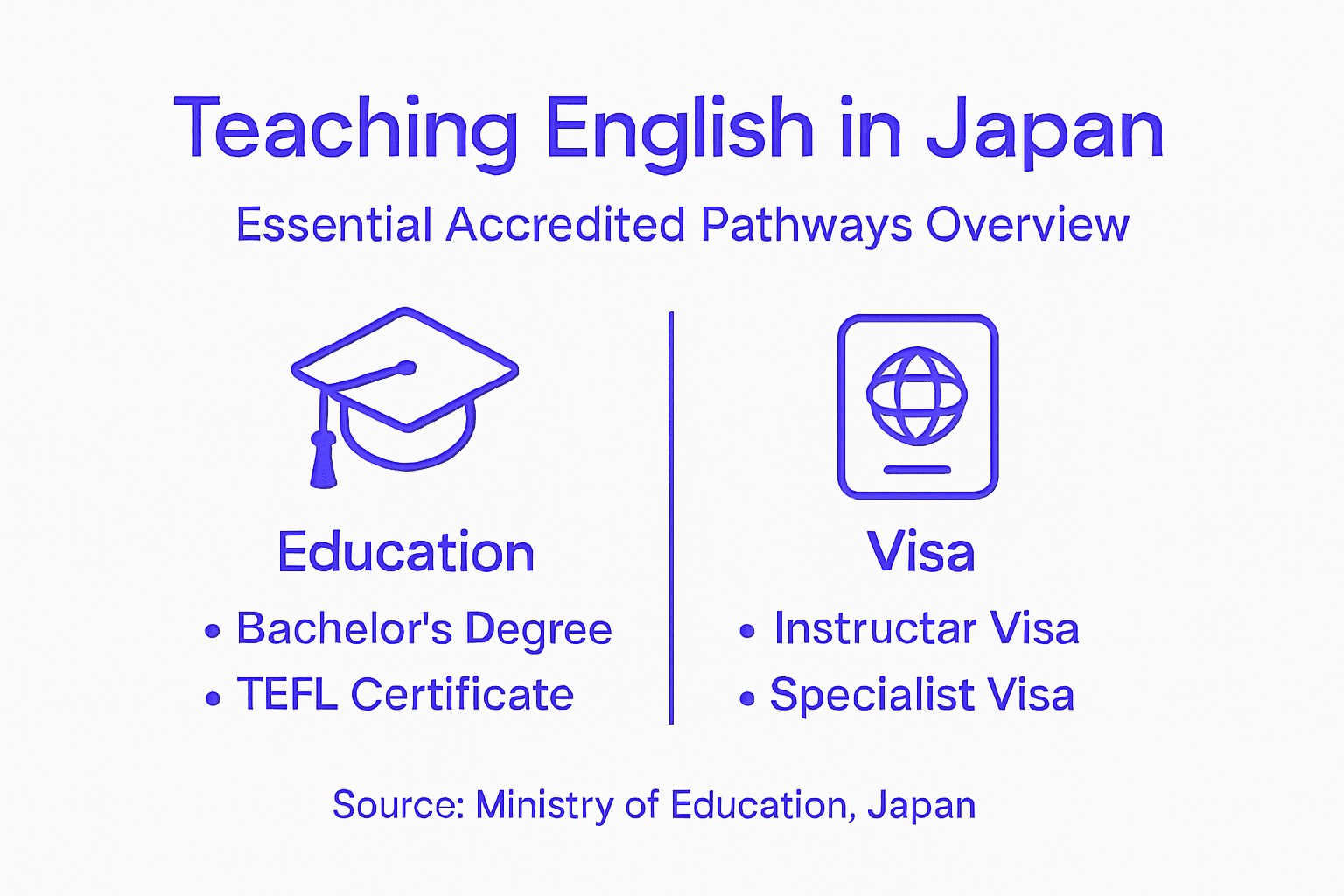
To teach legally in Japan, you must meet several critical qualifications. First and foremost, you will need a bachelor’s degree from an accredited university in any discipline. Native English speakers are preferred, and you must demonstrate near native English proficiency. Most employers and visa regulations require teachers to hold a four-year undergraduate degree, which serves as a fundamental prerequisite for obtaining an Instructor or Specialist in Humanities visa.
The visa process involves obtaining either an Instructor visa for public schools or an Engineer/Specialist in Humanities visa for private language institutions. Each pathway requires specific documentation, including your university degree, a clean criminal background check, and professional teaching certifications such as a Trinity CertTESOL or TEFL qualification. Japanese authorities will carefully review your documents to ensure you meet the professional standards for teaching English in their educational system.
Here’s a comparison of the two main visa types for English teachers in Japan:
| Visa Type | Typical Employer | Key Requirements | Main Benefits |
|---|---|---|---|
| Instructor Visa | Public schools | Bachelor’s degree, employer sponsorship | Access to government positions |
| Specialist in Humanities Visa | Private language centres | Bachelor’s degree, employer sponsorship | Wider range of institutions |
Professional Recommendation: Thoroughly verify your academic credentials and obtain certified translations of your degree and supporting documents before applying for teaching positions in Japan.
Step 2: Obtain a Trinity-Accredited TEFL Certification
Securing a Trinity-accredited TEFL certification is your essential first step towards becoming a qualified English language instructor in Japan. This internationally recognised qualification will provide you with the professional credentials necessary to teach effectively and legally in Japanese educational institutions.
The Trinity CertTESOL represents a gold standard in English language teaching qualifications. By pursuing this comprehensive teaching certification, you will develop critical pedagogical skills specific to teaching English as a foreign language. The programme typically involves intensive face-to-face training, including practical teaching experience, language awareness modules, and professional development workshops. These courses are designed to equip you with the advanced methodological knowledge and classroom management techniques required by international schools and language centres in Japan.

During your certification process, you will engage in practical teaching practicum sessions, learn advanced lesson planning strategies, and gain insights into communicative language teaching approaches. Most Trinity CertTESOL programmes include observed teaching practice with real students, ensuring you develop genuine classroom competencies. Successfully completing this certification demonstrates to potential Japanese employers that you possess the professional skills and theoretical understanding necessary to deliver high quality English language instruction.
Professional Recommendation: Research and select an accredited Trinity CertTESOL provider that offers specific preparation for teaching in Asian educational contexts.
Step 3: Apply for Teaching Jobs with Global Support
Navigating the job market for English teaching positions in Japan requires strategic planning and access to robust global support networks. Your goal is to transform your professional qualifications into meaningful employment opportunities across Japanese educational institutions.
Successfully securing a teaching position involves multiple strategic approaches. Comprehensive job search techniques will help you explore various recruitment channels including online job boards, international recruitment agencies, and direct school applications. Japanese language schools, public schools through programmes like JET, and private international academies offer diverse opportunities for qualified English instructors. You will need to prepare a professionally translated curriculum vitae, gather all necessary documentation including your Trinity CertTESOL certification, and develop a compelling application package that highlights your teaching credentials and cross cultural adaptability.
Most reputable TEFL organisations provide ongoing career support to help you navigate the complexities of international teaching recruitment. This includes assistance with interview preparation, understanding contract negotiations, and guidance on visa documentation. Leveraging these professional networks can significantly enhance your chances of securing a desirable teaching position in Japan, ensuring you have expert support throughout your international career transition.
Professional Recommendation: Create a digital portfolio showcasing your teaching experience, certifications, and cross cultural competencies to stand out in the competitive Japanese English teaching market.
Step 4: Secure Your Visa and Prepare for Relocation
Securing a legal work visa and preparing for your international move represents the final crucial step in your journey to teach English in Japan. This process requires careful planning, attention to documentation, and strategic preparation for your professional and personal transition.
Navigating the visa application process involves multiple critical steps. Most English teachers will need either an Instructor visa for public schools or a Specialist in Humanities visa for private language institutions. Your employing school will typically sponsor your Certificate of Eligibility, which is a mandatory document for obtaining your work visa. You will need to compile a comprehensive document portfolio including your university degree, Trinity CertTESOL certification, valid passport, employment contract, and professional background checks. The Japanese embassy will meticulously review these documents to verify your eligibility for teaching in Japan.
Beyond visa documentation, successful relocation requires comprehensive preparation for your new life in Japan. This includes researching housing options, understanding local health insurance requirements, managing financial logistics like bank account setup, and developing basic Japanese language skills. Many teaching programmes provide initial relocation support, helping you navigate cultural transitions and administrative processes. Connecting with other expatriate teachers and joining professional networks can provide invaluable practical advice and emotional support during your initial months in Japan.
Below is a summary of relocation essentials for teachers moving to Japan:
| Preparation Step | Why It Matters | Common Challenges |
|---|---|---|
| Housing research | Ensures comfort and stability | High demand in cities |
| Health insurance setup | Secures access to medical care | Navigating local rules |
| Bank account opening | Manages salary and payments | Language barriers possible |
| Learning Japanese | Eases daily interactions | Time investment required |
Professional Recommendation: Create a digital and physical folder with multiple copies of all essential documents and maintain digital backups to streamline your visa application and relocation process.
Step 5: Validate Your Placement and Begin Teaching
Validating your teaching placement represents the culmination of your professional journey towards becoming an English instructor in Japan. This crucial stage transforms your carefully acquired qualifications into a meaningful teaching opportunity.
English teaching job placement involves meticulously confirming every aspect of your employment contract. Most teaching positions in Japan commence in April, aligning with the Japanese academic calendar. You will need to carefully review your employment contract, verifying crucial details including monthly salary (typically ranging from ¥220,000 to ¥300,000), accommodation provisions, working hours, and specific teaching responsibilities. Japanese employers often provide comprehensive orientation programmes to help international teachers understand workplace expectations and cultural nuances.
Successful integration into the Japanese educational environment requires understanding and respecting workplace dynamics. This means embracing principles of punctuality, collaborative teamwork, and professional etiquette unique to Japanese institutional cultures. Your initial weeks may involve assistant teaching roles in public schools or independent lesson delivery in private language institutions. During this transition, actively seek guidance from Japanese colleagues, participate enthusiastically in team meetings, and demonstrate a genuine commitment to understanding the local educational approach. Maintaining a flexible, respectful attitude will be key to establishing yourself as a valued member of your new professional community.
Professional Recommendation: Develop a detailed personal onboarding checklist to systematically track and confirm all employment and logistical requirements during your initial placement.
Unlock Your Path to Teaching English in Japan with Accredited Trinity Certification
Navigating the complex requirements to teach English in Japan can feel overwhelming. From securing the right visa to obtaining a recognised qualification like the Trinity CertTESOL, each step demands careful preparation and expert guidance. At EBC TEFL, we understand these challenges and offer internationally accredited Trinity College London programmes designed to equip you with practical teaching skills and the credentials Japanese employers seek. Our comprehensive support extends beyond training, providing you with global job placement assistance and free lifetime career guidance, empowering you to confidently launch your career abroad.
Take advantage of our unique 1-year study and work abroad programmes available in Spain, France, and Italy, which combine accredited TEFL certification, immersive language study, visa support, and valuable teaching experience. This immersive approach develops your instructional abilities and cultural adaptability, making you a highly competitive candidate for teaching roles in Japan and beyond. Ready to transform your ambition into action? Book your free consultation today and begin your journey with EBC TEFL’s expert team. Discover how our tailored training and global opportunities can make teaching in Japan your next reality.
Frequently Asked Questions
What are the basic qualifications needed to teach English in Japan?
To teach English in Japan, you need at least a bachelor’s degree from an accredited university. Ensure your degree is ready for certification and translation before applying for positions.
How can I obtain a Trinity-accredited TEFL certification?
To obtain a Trinity-accredited TEFL certification, enrol in a recognised programme that includes practical teaching experience. Complete the course to gain the essential skills for teaching English effectively in Japan.
What steps should I take to apply for teaching jobs in Japan?
Begin by preparing a professionally translated curriculum vitae highlighting your qualifications. Then, explore various recruitment channels, such as online job boards and direct applications to schools, to find suitable teaching opportunities.
How do I secure a work visa for teaching in Japan?
Secure a work visa by having your employing school sponsor your Certificate of Eligibility. Compile all necessary documents, such as your degree, TEFL certification, and background checks, to submit with your visa application.
What should I include in my digital portfolio for teaching positions?
Include your teaching experience, credentials, and any cross-cultural competencies in your digital portfolio. This will enhance your chances of standing out during the application process.
What are the key aspects to validate before starting my teaching contract?
Carefully review your employment contract, ensuring you confirm details like salary, accommodation, and working hours. Check these aspects thoroughly to prevent misunderstandings once you start teaching.
