
Over 60 percent of language schools in Spain, France, and Italy specifically request accredited TESOL qualifications from british or other international applicants. For aspiring English teachers eager to build a global career, understanding the value of recognition and practical training is essential. This guide reveals how accredited certification and the right study or work programme can turn your dream of teaching across Europe into a credible path, whether your goal is a year in France or new opportunities in vibrant Spanish or Italian schools.
Table of Contents
- Step 1: Recognise Why Accreditation And Recognition Matter
- Step 2: Assess Practical Training And Assessment Opportunities
- Step 3: Evaluate Trainer Expertise And Class Formats
- Step 4: Compare Generic TEFL To Trinity CertTESOL Courses
- Step 5: Review Career Support And Graduate Success
Quick Summary
| Key Insight | Explanation |
|---|---|
| 1. Prioritise Accredited Programmes | Choose TESOL certifications that are internationally recognised to enhance your career opportunities. |
| 2. Seek Practical Training Experiences | Select courses offering substantial teaching practice with real learners, not just theoretical knowledge. |
| 3. Evaluate Trainer Qualifications | Look for programmes with experienced trainers who provide valuable insights and mentorship. |
| 4. Compare Certification Types | Understand the differences between generic TEFL courses and professional qualifications like Trinity CertTESOL. |
| 5. Assess Graduate Support Services | Ensure the programme provides ongoing career support and insights into graduate success stories. |
Step 1: Recognise Why Accreditation and Recognition Matter
Choosing the right TESOL certification can make or break your teaching career abroad. Understanding why accreditation matters will help you select a qualification that opens genuine international teaching opportunities.
Accreditation is not just a piece of paper it represents the quality and global recognition of your teaching credentials. The Trinity CertTESOL stands out as a globally recognised certification accepted by language schools and educational institutions worldwide. Unlike generic online courses, an accredited programme ensures you receive rigorous training that employers actually value. Professional recognition means your qualification carries weight in competitive job markets across Europe and Asia.
The difference between an accredited and non-accredited course is substantial. Proper certification demonstrates you have undergone structured training with real teaching practice assessed by qualified professionals. Employers look for candidates who can prove their teaching competence through credible qualifications. This means going beyond simple online modules and investing in a programme that provides practical classroom experience and expert mentorship.
Professional Recommendation Research multiple accreditation bodies and verify the international standing of your chosen TESOL certification before making a financial commitment.
Step 2: Assess Practical Training and Assessment Opportunities
Evaluating the practical training components of a TESOL course is crucial for developing real world teaching skills. Your certification should offer more than theoretical knowledge and provide genuine opportunities to practice classroom techniques with actual language learners.
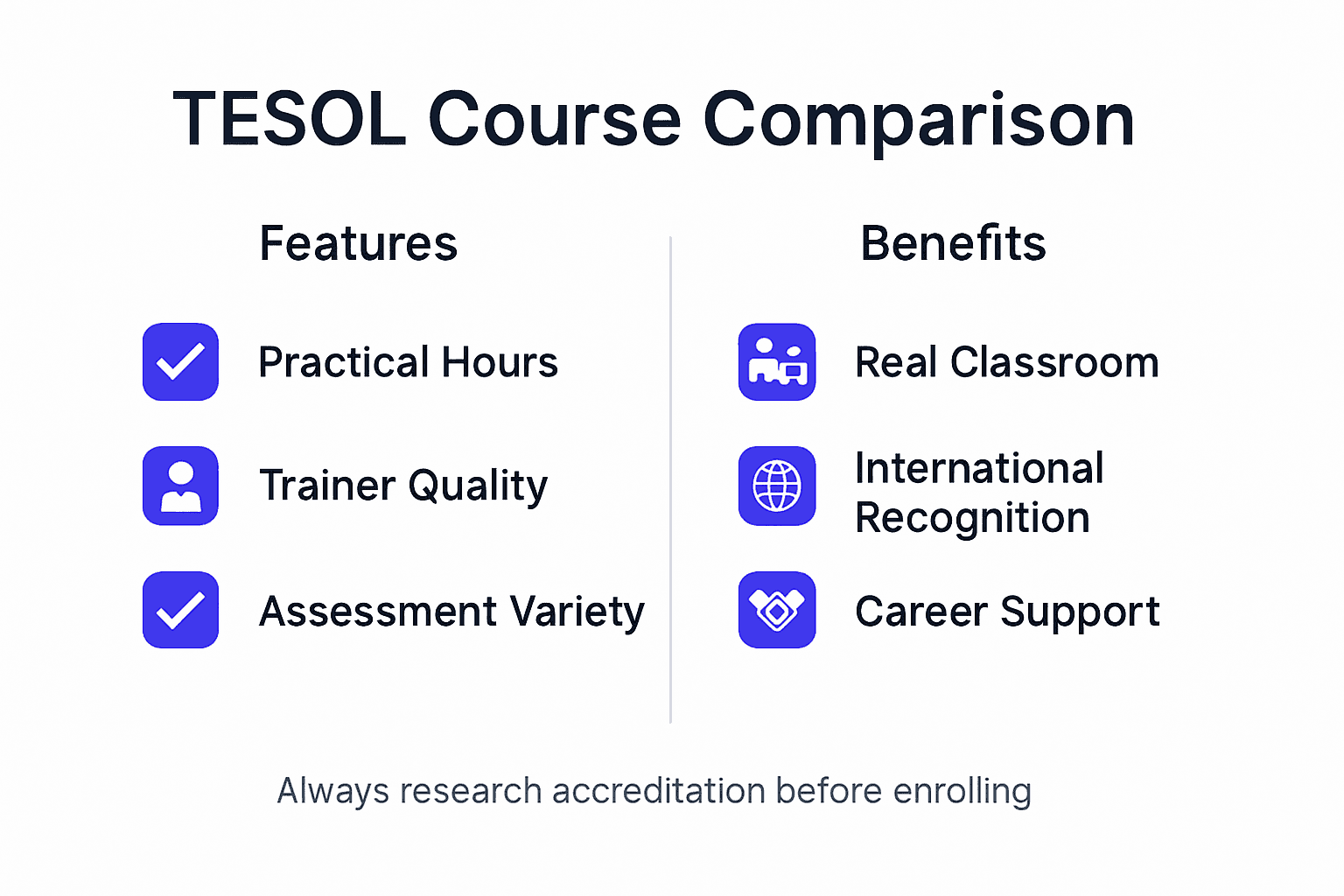
The most valuable TESOL programmes incorporate substantial practical teaching experience with comprehensive assessment. The teaching practice guide highlights that authentic classroom exposure means more than just observing lessons. You want a course that requires you to design lessons, deliver instruction, receive professional feedback, and demonstrate your ability to manage a classroom effectively. Look for programmes offering a minimum of six hours of assessed teaching practice with genuine English language learners. These hours should involve structured observations by experienced trainers who can provide detailed constructive feedback on your teaching performance.
Higher quality courses will also include multiple assessment methods beyond simple written exams. These might include lesson planning portfolios, recorded teaching demonstrations, reflective journals, and peer evaluations. Such comprehensive assessment ensures you develop a nuanced understanding of effective language instruction and can adapt to different teaching contexts.
Professional Recommendation Request detailed information about the practical teaching components and assessment methods before committing to any TESOL certification programme.
To better understand the practical benefits of accredited TESOL courses, here is a summary of key training aspects:
| Element | Accredited Programmes | Generic Online Courses |
|---|---|---|
| Classroom Practice | Minimum six hours assessed | Often limited or none |
| Trainer Feedback | Detailed, by professionals | Minimal, usually automated |
| Assessment Methods | Written, practical, reflective | Predominantly multiple choice tests |
| Real Learner Interaction | Required with actual students | Seldom included |
Step 3: Evaluate Trainer Expertise and Class Formats
Choosing the right TESOL certification means carefully examining the expertise of your potential trainers and understanding the course delivery formats available. Your learning experience depends significantly on the quality of instruction and the flexibility of the programme.
Trainer qualifications are paramount in determining the value of your TESOL course. Look for programmes with trainers who possess extensive international teaching experience and recognised teaching credentials. The online TEFL success guide emphasises that experienced trainers bring real world insights that go far beyond theoretical knowledge. Ideal trainers should have a minimum of five years teaching experience across different cultural contexts, advanced teaching qualifications such as the Trinity Diploma or equivalent postgraduate credentials, and a proven track record of supporting teachers in launching successful international careers.

Class formats have evolved dramatically in recent years, offering unprecedented flexibility for aspiring teachers. Modern TESOL programmes provide a range of learning options including full time intensive courses, part time evening classes, and comprehensive online programmes with live interactive sessions. The best courses maintain small class sizes typically between six to twelve participants to ensure personalised attention and meaningful interaction with trainers. This approach guarantees you receive targeted feedback and have sufficient opportunities to develop your teaching skills in a supportive environment.
Professional Recommendation Arrange a preliminary consultation with course trainers to assess their professional background and understand the specific learning methodologies they employ.
Step 4: Compare Generic TEFL to Trinity CertTESOL Courses
Navigating the world of English language teaching certifications requires a critical understanding of the differences between generic TEFL courses and professional qualifications like the Trinity CertTESOL. Your career prospects depend on selecting a course that offers genuine professional preparation.
Generic online TEFL courses might seem convenient and affordable, but they rarely provide the depth of training needed for serious international teaching opportunities. In contrast, the Trinity CertTESOL certification guide demonstrates a comprehensive approach to teacher training. While generic courses often involve minimal teaching practice and basic theoretical modules, the Trinity CertTESOL requires a minimum of six hours of assessed teaching practice with real language learners. This practical experience ensures you develop genuine classroom skills rather than merely accumulating theoretical knowledge.
The differences extend beyond classroom hours. Trinity CertTESOL is an internationally recognised qualification accepted by British Council accredited institutions worldwide, whereas many generic TEFL certificates are essentially unaccredited online documents. Professional language schools and international recruitment agencies consistently prioritise candidates with robust, assessment based qualifications. The Trinity CertTESOL provides a structured curriculum that covers language awareness, teaching methodology, lesson planning, classroom management, and reflective practice in a way that generic courses simply cannot match.
Professional Recommendation Always verify the international recognition and practical teaching components of any teaching certification before making your investment.
Here is a concise comparison of the Trinity CertTESOL and typical generic TEFL courses:
| Criterion | Trinity CertTESOL | Generic TEFL Course |
|---|---|---|
| Accreditation | Internationally recognised | Often unaccredited |
| Teaching Practice | Six hours minimum, observed | Minimal or absent |
| Employer Preference | High, especially in reputable schools | Low, limited opportunities |
| Curriculum Structure | Robust, covers key teaching skills | Basic theory, limited methodology |
Step 5: Review Career Support and Graduate Success
Choosing a TESOL course is more than acquiring a certification it is about launching a successful international teaching career. Understanding the career support and graduate outcomes can help you make an informed decision about your professional development pathway.
The most valuable programmes offer comprehensive career support that extends far beyond course completion. The complete Trinity CertTESOL certification guide highlights the importance of lifetime job placement assistance. This means having access to a professional network, job boards, recruitment support, and ongoing mentorship that helps you navigate the global teaching landscape. Reputable programmes will provide practical resources such as CV writing workshops, interview preparation, and connections with international schools and language centres across multiple countries.
Graduate success stories offer tangible proof of a programme’s effectiveness. Look for detailed alumni testimonials that showcase diverse teaching placements, career progression, and personal growth. The best programmes demonstrate a track record of graduates working in prestigious language schools, international universities, and corporate training environments across Europe, Asia, and beyond. This evidence of real world success indicates that the certification provides not just theoretical knowledge but genuine pathways to meaningful international teaching opportunities.
Professional Recommendation Request detailed graduate employment statistics and speak with recent programme alumni to gain authentic insights into potential career outcomes.
Unlock Your Global Teaching Career with Trinity-Accredited TESOL Training
Choosing the right TESOL course often feels overwhelming when faced with concerns about accreditation, authentic teaching practice and genuine career support. At EBC TEFL, we understand these challenges and provide a trusted solution through our Trinity College London accredited TESOL programmes. Our courses deliver rigorous practical training with real classroom experience and detailed professional feedback to prepare you confidently for international teaching roles.

Explore our comprehensive offerings including the acclaimed Trinity CertTESOL, specialised courses like Business English and Online Teaching, and life-changing 1-year study and work abroad programmes in Spain, France and Italy. With free lifetime job placement assistance and visa support, EBC TEFL gives you more than certification – we open global doors. Take your first step towards a rewarding teaching career by booking a free consultation today at EBC TEFL. Your path to international teaching success starts here.
Frequently Asked Questions
How do I identify accredited TESOL courses?
Accredited TESOL courses are essential for ensuring your qualification is valued by employers. Research various accreditation bodies and verify the international recognition of the course before enrolling.
What practical training should I expect from a TESOL certification?
You should look for TESOL courses that offer a minimum of six hours of assessed teaching practice with real language learners. This practical experience is vital for developing your teaching skills effectively.
How can I assess the expertise of TESOL trainers?
To evaluate trainer expertise, check their teaching credentials and years of experience in international contexts. Arrange a preliminary consultation to discuss their approach to training and gain insights into their qualifications.
What are the key differences between accredited TESOL courses and generic online TEFL certifications?
Accredited TESOL courses, such as the Trinity CertTESOL, offer structured teaching practice and recognised qualifications. In contrast, generic online TEFL courses may lack practical training and accreditation, limiting your job opportunities.
How important is career support after completing a TESOL course?
Career support is crucial for launching a successful teaching career. Choose programmes that provide lifetime job placement assistance, including networking opportunities and mentorship, to enhance your employability.
What should I ask alumni of a TESOL programme?
Speak with alumni to gain insights into their career outcomes and experiences with the programme. Ask them about their job placements, support received during the course, and how the certification helped them in their teaching careers.
Recommended
- International TEFL Career Steps: Your Path to Global Teaching – EBC TEFL courses
- 7 Essential TESOL Certification Tips for Aspiring Teachers – EBC TEFL courses
- TEFL vs TESOL Explained: Complete Guide for 2026 – EBC Trinity CertTESOL and TEFL courses
- TESOL Certification Steps: Guide to Global English Teaching – EBC Trinity CertTESOL and TEFL courses
