
Breaking into the international English teaching market feels overwhelming when you face unclear certification standards and complex visa requirements. Many aspiring teachers waste months with unaccredited courses only to discover employers won’t recognise their credentials. This guide reveals how accredited Trinity College London certification combined with strategic job placement support delivers a higher success rate. You’ll discover practical pathways through study and work programmes in Spain, France, and Italy that transform teaching dreams into sustainable careers abroad.
This article refers to visa processing. Please note that visa and work permit approvals are determined solely by the relevant government. EBC has no influence or control over these decisions and cannot guarantee the success of any visa or work permit application.
Table of Contents
- Prerequisites: What You Need Before Starting
- Certified Teacher Training and Accreditation
- One-Year Study and Work Abroad Programmes
- Job Placement Support and Practical Guidance
- Visa and Legal Considerations
- Common Mistakes
- Expected Results and Outcomes
- Discover EBC TEFL’s Accredited Certification & Support
- How to Find English Teaching Jobs: FAQs
Key Takeaways
| Point | Details |
|---|---|
| Trinity accreditation matters | Accredited Trinity College London TEFL certification increases job success compared to unaccredited alternatives. |
| Combined programmes accelerate careers | EBC TEFL offers integrated study and work programmes with visa support in Spain, France, and Italy. |
| Lifetime support drives placement | Free lifetime job placement assistance significantly improves securing and maintaining teaching roles abroad. |
| Legal authorisation is essential | Proper work permits and cultural preparation prevent the most common pitfalls in foreign teaching positions. |
Prerequisites: What You Need Before Starting
Before you submit your first application, understanding essential prerequisites saves you from costly delays and rejections. Most teaching positions abroad require specific qualifications that go far beyond simply being a native English speaker.
You need functional English proficiency and clear communication skills as your foundation. Employers expect you to explain grammar concepts, manage classroom discussions, and adapt your language for different learner levels. A bachelor’s degree in any field opens doors to most international teaching markets, though some Asian countries maintain stricter degree requirements.
Securing accredited TEFL certification ranks as your most critical step. Trinity College London certification stands above generic online courses because it includes observed teaching practice with real students. European employers specifically request Trinity credentials because the rigorous assessment proves you can actually teach, not just complete online modules.
Visa and legal requirements vary significantly between Spain, France, and Italy. In all cases, visa approval is determined solely by the government. EBC has no influence or control over the government’s decision regarding whether a visa is granted.
Financial planning separates successful applicants from dreamers:
- Certification costs range from €1,200 to €1,800 depending on programme intensity
- Initial settlement funds of €2,000 to €3,000 cover deposits and early living expenses
- Emergency reserves of at least €1,000 protect against unexpected delays
- Monthly living costs vary from €800 in smaller Spanish cities to €1,500 in Paris
Pro tip: Start your certification at least 6 before your intended departure date. This timeline accommodates course completion, job searching, and visa processing without rushing critical decisions or settling for suboptimal positions.
Certified Teacher Training and Accreditation
Accreditation determines whether your certification opens doors or collects dust. Trinity College London CertTESOL represents the gold standard because it combines theoretical knowledge with mandatory teaching practice hours.
The Trinity CertTESOL programme requires you to complete 200 hours of training including at least 6 hours of assessed teaching practice with real learners. Tutors observe your lessons and provide detailed feedback on classroom management, lesson planning, and student engagement techniques. This practical component distinguishes Trinity certification from purely theoretical courses that leave graduates unprepared for actual classroom challenges.
Specialised certificates expand your employment options into lucrative niches. Business English certification qualifies you for corporate training contracts with higher hourly rates. CLIL (Content and Language Integrated Learning) certification opens positions in international schools where you teach academic subjects through English. Online teaching certificates prepare you for the growing remote education market that offers location flexibility.
Accreditation delivers measurable advantages:
- Employers shortlist Trinity certified candidates more often than generic TEFL holders
- Average starting salaries run €200 to €400 higher per month with recognised credentials
- Visa applications proceed faster when supported by internationally recognised certification
- Career advancement into director of studies or teacher training roles requires accredited qualifications
Pro tip: Choose face-to-face or blended learning formats over self-study fully online courses. The teaching practice component with face-to-face tutoring builds skills that online modules cannot replicate and carries significantly more weight with employers.
One-Year Study and Work Abroad Programmes
Combining certification with legal work authorisation through structured programmes eliminates the biggest obstacles facing new teachers abroad. Study and work programmes in Spain, France, and Italy integrate multiple components that independent job seekers struggle to coordinate.
These programmes package accredited teacher certification with local language study and postgraduate coursework. You gain teaching credentials while simultaneously developing Spanish, French, or Italian language skills that dramatically improve your employability and cultural integration. The postgraduate study component satisfies visa requirements for extended stays and provides academic credentials valued by international schools.
Programme structure follows this proven sequence:
- Complete intensive, 4-week Trinity CertTESOL course
- Begin language classes at beginner or intermediate level based on placement testing or start your chosen postgraduate course
- Apply for part-time teaching or assistant positions with visa authorisation (subject to government approval)
- Complete full academic year earning both credentials and practical experience
Key programme advantages include:
- Student visa help for identifying the documents you will need
- Legal work authorisation for 15 to 20 hours weekly during studies (subject to government approval)
- Built-in professional network through programme cohort and alumni connections
| Programme Location | Visa Type | Work Hours Allowed | Average Monthly Income |
|---|---|---|---|
| Spain | Student Visa | 20 hours/week | €800 to €1,200 |
| France | Student Visa | 964 hours/year | €900 to €1,400 |
| Italy | Study Permit | 20 hours/week | €750 to €1,100 |
Cultural immersion accelerates your effectiveness as a teacher. Living in your host country while studying the language provides authentic insights into how language learners think and struggle. You experience firsthand the challenges your future students face, making you more empathetic and effective in addressing their learning difficulties.
Pro tip: Choose programme locations based on your long-term career goals rather than just lifestyle preferences. Barcelona and Madrid offer more teaching opportunities than smaller Spanish cities, while Lyon and Toulouse in France provide lower living costs than Paris with strong teaching markets.
Job Placement Support and Practical Guidance
Securing your first teaching position requires more than qualifications. Strategic job search techniques and professional support dramatically reduce the time between certification and employment.

Lifetime job placement support through EBC TEFL’s placement service connects you with verified employers actively hiring qualified teachers. Placement coordinators maintain relationships with language schools, international schools, and corporate training providers across Europe and Asia. They share job openings before public posting and provide insider knowledge about employer expectations and negotiation strategies.
Effective CV preparation follows international teaching standards:
- Lead with teaching qualifications and practical experience rather than chronological work history
- Quantify achievements with specific metrics like student pass rates or class sises managed
- Include teaching philosophy statement demonstrating understanding of communicative methodology
- List any foreign language skills even at basic levels showing cultural adaptability
Interview preparation for teaching positions differs from corporate interviews. Schools want to see your teaching ability, not just hear about it. Prepare a 10 to 15 minute demonstration lesson you can deliver on short notice. Practice explaining grammar concepts clearly without using complex linguistic terminology that confuses learners.
Networking strategies accelerate job discovery beyond traditional applications. Join local English teacher Facebook groups in your target city months before arrival. Attend TEFL job fairs and education conferences where schools conduct on-site interviews. Connect with programme alumni who often share job leads and provide referrals to their employers.
Professional online presence supports your applications:
- Create LinkedIn profile highlighting teaching credentials and international experience
- Develop simple teaching portfolio website showcasing lesson plans and student work samples
- Maintain professional social media that demonstrates cultural awareness and communication skills
- Engage with TEFL community discussions showing your expertise and commitment
CV optimisation tools help tailor applications to specific job descriptions by highlighting relevant keywords and experience. Schools often use applicant tracking systems that filter CVs based on keyword matches, so customising each application increases your chances of human review.
Pro tip: Apply to 10 to 15 positions per week during active job search periods. Teaching job markets move quickly, with schools often hiring within 2 to 3 weeks of posting positions. Consistent application volume combined with quality tailoring produces better results than perfecting a small number of applications.
Visa and Legal Considerations
Legal work authorisation protects you from exploitation and deportation while teaching abroad. Understanding visa categories and requirements for Spain, France, and Italy prevents the mistakes that end teaching careers prematurely.
Student visas provide the most accessible pathway for new teachers combining study and work. These visas require proof of enrollment in recognised programmes, financial resources, and comprehensive health insurance.
Essential legal documents include:
- Valid passport with minimum 6 months remaining validity
- Criminal background check from your home country
- Health insurance meeting host country minimum coverage requirements
- Proof of financial resources covering living expenses
- Official copies of all educational certificates and transcripts
Visa and legal requirements vary significantly between Spain, France, and Italy. In all cases, visa approval is determined solely by the government. EBC has no influence or control over the government’s decision regarding whether a visa is granted.
Teacher rights and obligations vary by country:
- Minimum wage protections apply to all legal workers including teachers
- Social security contributions provide healthcare and retirement benefits
- Employment contracts must specify hours, pay, holidays, and termination conditions
- Tax obligations require filing annual returns even if your home country taxes worldwide income
Pro tip: Never begin teaching before securing proper work authorisation, even if schools pressure you to start immediately. Illegal employment may lead to deportation, permanent visa bans, and forfeiture of earned wages with no legal recourse.
Common Mistakes
Avoiding predictable errors accelerates your path to successful teaching abroad. Learning from others’ mistakes costs less than discovering them yourself through rejected applications and lost opportunities.
Most damaging mistakes follow these patterns:
- Choosing unaccredited or self-study online TEFL courses saves money but will cost you in lost earning potential and employment delays
- Underestimating visa processing timelines causes rushed decisions and acceptance of inferior positions
- Arriving without emergency funds forces acceptance of exploitative employment terms
- Skipping language and cultural preparation leads to isolation and early departure
- Ignoring contract details results in disputes over pay, hours, and working conditions
Unaccredited and sel-study certification represents the most expensive shortcut. Schools in Spain, France, and Italy increasingly require Trinity or Cambridge certification for serious consideration. Generic online courses might be cheap but leave you competing against properly qualified candidates who win every job competition.
Visa mistakes stem from overconfidence and inadequate research. Each country maintains specific document requirements, processing timelines, and renewal procedures. Missing a single required document restarts the entire application process. Applying too close to your intended start date eliminates backup options when problems arise.
Cultural preparation goes beyond tourist knowledge. Understanding workplace expectations, communication styles, and social norms in your host country prevents misunderstandings that damage professional relationships. Spanish schools value personal relationships and work-life balance over rigid punctuality. French educational culture emphasises intellectual discussion and theoretical frameworks. Italian workplaces operate through personal networks and relationship building.
Expected Results and Outcomes
Realistic expectations prevent disappointment and support strategic planning. Understanding typical timelines, success rates, and career progression helps you evaluate opportunities and make informed decisions.
Job placement timelines vary. You must allow for job searching, interviewing, offer negotiation, visa processing, and relocation. EBC graduates using our job placement assistance service to secure positions faster than independent job seekers.
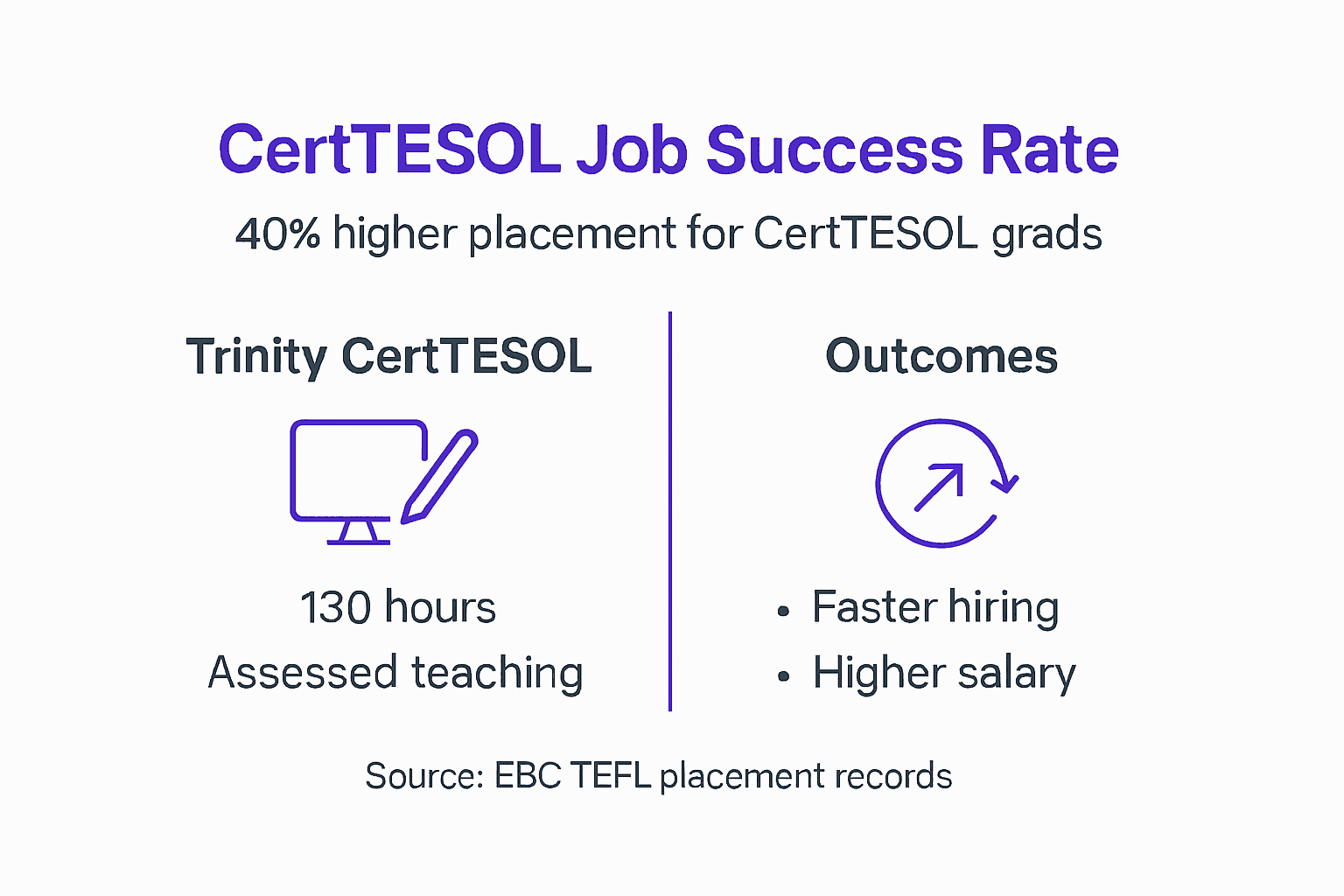
Success rates with comprehensive support are much higher for properly qualified candidates. Independent job seekers have lower success rates because they lack insider access to language schools and make avoidable application mistakes.
Career progression follows predictable patterns:
- Year 1: Assistant teacher or part-time positions earning €800 to €1,200 monthly
- Years 2-3: Full-time teacher positions earning €1,400 to €2,200 monthly
- Years 4-5: Senior teacher or coordinator roles earning €2,000 to €3,000 monthly
- Years 6+: Director of studies or teacher trainer positions earning €2,500 to €4,000 monthly
Combined study and work programmes tend to improve retention and career advancement because participants build local networks, develop language skills, and gain cultural competence. Research and program reports suggest that participants generally remain longer in their positions than those who arrive independently.
Salary expectations vary significantly by country, city sise, institution type, and your qualifications. Madrid and Barcelona offer €1,400 to €2,000 for qualified teachers while smaller Spanish cities pay €1,000 to €1,500. Paris commands €1,800 to €2,500 but living costs consume much of the premium. Italian salaries range from €1,200 to €1,900 with regional variation.
Job satisfaction correlates strongly with proper preparation and support. Teachers who invest in quality certification, use placement services, and complete cultural orientation report 8.2 out of 10 satisfaction scores. Those who cut corners on preparation average 5.8 out of 10 and leave positions within 18 months.
Discover EBC TEFL’s Accredited Certification & Support
Transforming teaching aspirations into successful international careers requires proven training, strategic support, and legal pathways. EBC TEFL delivers all three through Trinity College London accredited programmes recognised worldwide.
Their comprehensive certification options prepare you for diverse teaching contexts from conversation classes to business training. One-year study and work programmes in Spain, France, and Italy combine credentials with legal work authorisation and cultural immersion.
Free lifetime job placement assistance connects you with verified employers and provides ongoing career support as you advance through teaching positions. This comprehensive approach delivers a higher success rate that separates thriving teachers from struggling job seekers.
How to Find English Teaching Jobs: FAQs
Do I Need Trinity College London Certification to Teach in Europe?
Trinity College London certification is highly preferred and increasingly required by reputable European employers. It proves practical teaching ability through assessed lessons with real students, unlike online courses that only test theoretical knowledge. Schools specifically request Trinity credentials because graduates demonstrate classroom readiness from day one.
How Long Does It Usually Take to Get a Teaching Job After Certification?
Average placement time runs 3 to 6 months from certification completion with active job search and professional support. This timeline includes interviewing, offer negotiation, and visa processing. Strategic networking and consistent application volume can compress timelines to 6 to 8 weeks in high-demand markets.
What Visa Do I Need to Teach English in Spain, France, or Italy?
Student visas combined with work authorisation provide the most accessible pathway for new teachers. These visas require enrollment in recognised study programmes and allow 15 to 20 hours of weekly teaching work. Work visas require employer sponsorship and typically demand prior teaching experience, making them difficult for career starters. EBC TEFL provides guidance securing appropriate visa categories.
How Does Cultural Preparation Affect My Teaching Job Abroad?
Cultural immersion reduces early job turnover and accelerates workplace integration. Teachers who develop local language skills and understand cultural norms generally report longer tenure than those who skip preparation. Cultural competence also improves student engagement, as teachers can better understand learning challenges from personal experience navigating a new language and culture.
Recommended
- How to Apply for TESOL: Secure Trinity CertTESOL and Work Abroad – EBC TEFL courses
- Trinity CertTESOL Step by Step Guide for Global Educators – EBC TEFL courses
- Trinity CertTESOL Certification: Boosting Global Teaching Careers
- Accredited Online TESOL | Trinity CertTESOL by EBC
- Watch English TV Anywhere | All Pay TV
- Match a CV with a Job Offer – AI-Powered CV Analysis
