
Key Points
- A recognised Trinity CertTESOL or CELTA is essential for most European TEFL roles.
- Trust verified job boards and structured programmes to find reputable teaching opportunities.
- Tailored applications and alumni networks significantly increase chances of securing a TEFL position.
Stepping into the international TEFL job market for the first time can feel genuinely overwhelming. Competing job listings, varying qualification requirements, and unfamiliar visa rules make it difficult to know where to begin. The good news is that with the right certification, a clear strategy, and trusted resources, the path forward becomes far more manageable. This guide breaks down exactly what you need, from choosing the correct certification level to navigating the best job boards, crafting a standout application, and protecting yourself from scams, with a particular focus on teaching opportunities across Europe.
Table of Contents
- What you need before you start: requirements and certification
- Where to search: TEFL job boards and global programmes
- How to stand out: crafting your CV, cover letter and demo lesson
- Immersive Europe pathways and programme insights
- Verification and avoiding scams in the TEFL job market
- A reality check: what most guides don’t tell you about TEFL job hunting
- Ready to start your teaching adventure?
- Frequently asked questions
Key Takeaways
| Point | Details |
|---|---|
| Get the right certification | A Trinity CertTESOL or CELTA is essential for most European teaching jobs. |
| Use trusted job boards | Verified platforms and job placement support greatly boost your job chances and protect against scams. |
| Tailor every application | Personalise your CV, cover letter, and demo lesson to each employer for better responses. |
| Check every offer | Always confirm programme legitimacy and read reviews before accepting any job. |
What you need before you start: requirements and certification
Before you send a single application, you need to understand what employers and immigration authorities actually expect. The single most important credential is a recognised TEFL qualification. A minimum 120-hour certificate is considered the baseline for most markets, but European employers and visa offices frequently require a Trinity CertTESOL qualification or a CELTA (Certificate in English Language Teaching to Adults).
Not all certificates carry the same weight. Here is a quick comparison to help you decide:
| Certificate | Level | Hours | Recognition | Typical cost |
|---|---|---|---|---|
| Basic TEFL online | Level 3 | 120 | Limited | £100-£300 |
| Generic Level 5 TEFL | Level 5 | 120+ | Better than the basic TEFL | £300-£800 |
| Trinity CertTESOL | Level 5 | 130 | Internationally recognised (best for jobs) | £1,000-£1,500 |
| CELTA | Level 5 | 120 | Internationally recognised (best for jobs) | £1,200-£1,800 |
The difference in cost between a basic online certificate and a Level 5 qualification is significant, but so is the difference in outcomes. For European roles, a Trinity CertTESOL or CELTA can mean the difference between being shortlisted and being ignored. You can explore English teacher requirements in Europe for a detailed breakdown of country-specific rules.
Beyond certification, most European countries require a bachelor’s degree in any subject for work visa eligibility, along with native-level English proficiency. Prior teaching experience is rarely mandatory for entry-level roles, which is genuinely encouraging news for career changers.
Key requirements at a glance:
- Recognised TEFL certificate (Trinity CertTESOL or CELTA)
- Bachelor’s degree in any discipline
- Native or near-native English level
- Clean background check (required in most countries)
- Specialist certifications in Business English or CLIL can increase your salary and job options
For a thorough side-by-side look at your options, the TEFL, TESOL vs CELTA comparison is a useful starting point.
Pro Tip: If you plan to teach in Spain, France, or Italy specifically, prioritise a Trinity CertTESOL or CELTA from the outset. It will save you time, money, and frustration later when visa applications demand accredited evidence of your qualifications.
Where to search: TEFL job boards and global programmes
With your qualifications in hand, the next step is finding trustworthy job sources and placement opportunities. Not all job boards are equal, and understanding the difference between open listings and structured placement programmes can save you considerable time.
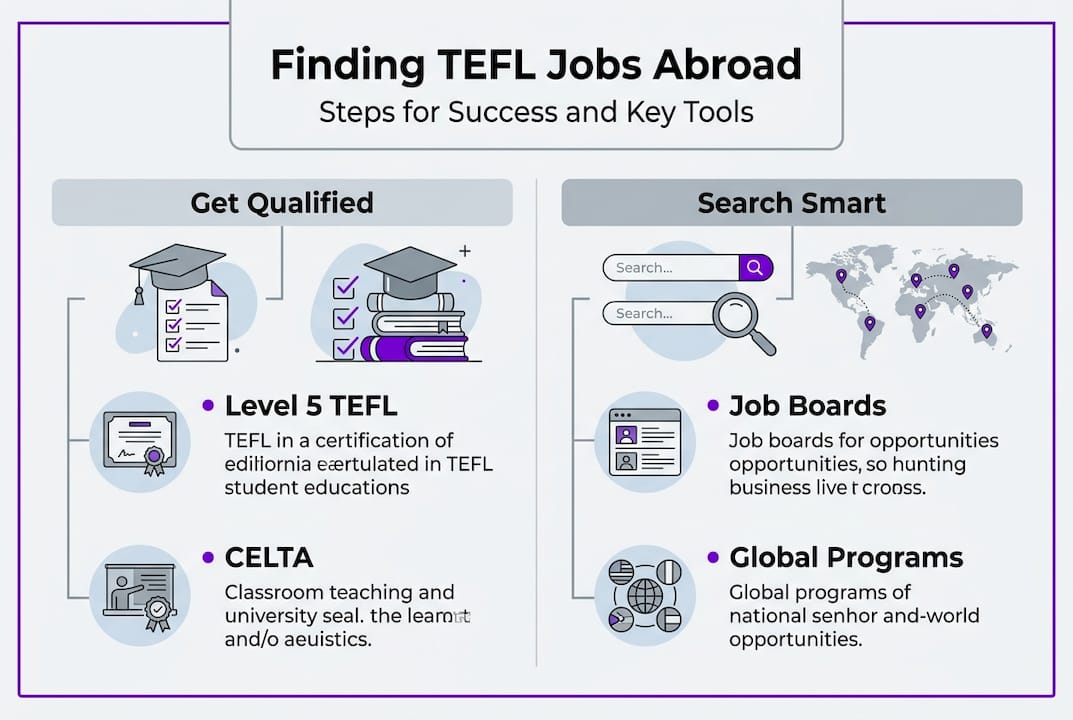
The most reputable platforms for TEFL job searches include GoAbroad, TEFL.com, Dave’s ESL Cafe, ESLGorilla, Teast.co, and TeachAway. These sites aggregate verified listings from schools worldwide and allow you to filter by country, contract type, and required qualification level.
| Platform | Best for | Placement support |
|---|---|---|
| TEFL.com | Wide global listings | No |
| GoAbroad | Programme-based opportunities | Yes (selected) |
| Dave’s ESL Cafe | Asia-focused roles | No |
| Teast.co | Europe-specific roles | Partial |
| TeachAway | Verified employer listings | Yes |
Browse TeachAbroad job listings for curated roles that align with specific qualifications and experience levels.
For first-timers targeting Europe, Spain’s Auxiliares de Conversación government programme is one of the most accessible entry points available. It places language assistants in state schools, requires no prior TEFL qualification initially, and provides a structured introduction to classroom life. That said, programmes with guaranteed placement from established providers offer a far more secure route, with verified employer relationships and ongoing support.
Tips for avoiding scams when job searching:
- Only use boards that verify employer listings
- Check independent reviews on platforms like Trustpilot or Google
- Avoid any listing that demands large upfront fees before an interview
- Request a written contract before accepting any position
Pro Tip: Use multiple boards simultaneously rather than relying on a single platform. Set up job alerts with specific keywords such as “Level 5 TEFL Spain” or “English teacher Barcelona” to receive relevant listings directly to your inbox. When you are ready to apply for TEFL jobs, having a refined shortlist will help you focus your efforts effectively.
How to stand out: crafting your CV, cover letter and demo lesson
After targeting the best jobs, focus on making your application irresistible to employers. The TEFL job market in Europe is competitive, and a generic CV rarely makes it past the first round of review.

Your CV should lead with your TEFL qualification front and centre, clearly stating the level, awarding body, and completion date. Follow with your degree, any relevant work experience (teaching or otherwise), and language skills. Keep it to two pages maximum. European schools value clarity and professionalism above all else.
Steps to build a winning TEFL application:
- List your Trinity CertTESOL or CELTA at the top of your CV
- Tailor your cover letter to each school, referencing their specific student age group or curriculum
- Highlight any specialist certifications such as Business English or CLIL
- Prepare a 10-minute demo lesson that demonstrates clear aims, learner interaction, and varied activities
- Include two professional references, ideally from a trainer or academic supervisor
- Reference any language skills relevant to the target country
A tailored CV and cover letter that highlight your TEFL certificate, degree, and transferable skills consistently outperform generic applications. Schools receive dozens of enquiries, so personalisation genuinely matters.
Demo lessons are increasingly expected, even at the application stage. Prepare a short, engaging activity that shows you can manage a classroom, adapt to learner needs, and use communicative techniques. Practise it beforehand, ideally in front of a friend or colleague.
Pro Tip: Alumni networks are one of the most underused resources in the TEFL job search. Graduates who find jobs through alumni referrals and dedicated job boards typically secure positions far faster than those applying cold. Check whether your training provider offers an active alumni community before enrolling. You can also review the TEFL job application steps to make sure your process is structured correctly.
Immersive Europe pathways and programme insights
To give yourself an edge, understand the most rewarding and streamlined pathways into the European TEFL market. Simply holding a certificate is one thing; choosing the right programme structure can transform your entire experience.
Spain remains the most accessible country for first-time TEFL teachers. The Auxiliares de Conversación programme offers a monthly stipend of €800 to €1,000, roughly 12 to 16 hours of work per week, and no formal TEFL requirement at entry. It is an excellent way to build classroom experience while living abroad. Due to serious administration problems, the Auxiliares de Conversación programme has been suspended until further notice.
For those ready to invest in a more structured pathway, immersive programmes that combine TEFL or CELTA training with language study and visa support offer significant advantages. A Level 5 or CELTA qualification can add €200 to €500 per month to your salary compared to a basic certificate. Over a full contract year, that difference is substantial.
“Immersive programmes that integrate teacher training, language study, and placement support give candidates a measurable advantage over those who simply hold a certificate and search independently.”
EBC’s one-year programmes in Spain, France, and Italy are built precisely on this model, combining accredited training with language study, visa guidance, and part-time work opportunities. Learn more through our teach English abroad guide and explore our detailed breakdown of reasons to teach in Europe.
Verification and avoiding scams in the TEFL job market
As you progress, safeguarding yourself from scams is as important as preparing for interviews. The TEFL industry, unfortunately, attracts fraudulent operators who target candidates who are eager and unfamiliar with the market.
The most common warning signs include requests for large upfront fees before any contract is signed, vague or unverifiable school addresses, pressure to accept quickly without adequate time to review terms, and a complete absence of online reviews or alumni testimonials.
Red flags to watch out for:
- Fees demanded before any formal offer or contract
- No verifiable contact information for the hiring school
- Promises of unusually high salaries with minimal qualifications
- Poor or entirely absent online presence
- Pressure to transfer money internationally
“Legitimate employers do not ask you to pay for your own placement. If the arrangement feels transactional in the wrong direction, trust that instinct.”
Always verify job offers by cross-referencing employer details on independent review sites, checking LinkedIn for staff profiles, and consulting TEFL community forums. Only work with organisations that have a transparent track record of placements.
For a more detailed overview of what to look out for, our guide on TEFL scam warning signs covers the most common tactics and how to protect yourself at every stage.
A reality check: what most guides don’t tell you about TEFL job hunting
Here is something worth saying plainly: competition for TEFL roles in Barcelona, Madrid, Paris, and Rome is fierce. These cities attract the largest volume of applicants, and schools in those markets can afford to be selective. If you apply to ten well-known schools in a major Western European city and hear nothing back, it is not necessarily your CV that is the problem.
Smaller cities and towns often offer faster starts, warmer welcomes, and more genuine professional development. A school in Valencia or Lyon may give you more responsibility, better mentorship, and quicker progression than a language school in a capital city where turnover is high and support is thin.
The other truth is that professionalism and reliability often matter more to hiring managers than the specific level of your certificate. A candidate who responds promptly, prepares a focused demo lesson, and communicates clearly will frequently be chosen over a more qualified applicant who appears distracted or disorganised.
Strategic applications consistently outperform volume applications. One well-researched, personalised application to the right school is worth far more than twenty generic emails. Use the tools in our optimise your TEFL job search guide to focus your efforts where they will have the most impact.
Ready to start your teaching adventure?
If this guide has clarified your next steps, we are here to help you take them with confidence. At EBC TEFL, we offer Trinity College London accredited certification programmes that are recognised by employers worldwide, giving you the credentials that genuinely open doors in Europe and beyond.
Our global network spans Spain, France, Italy, and dozens of markets further afield, supported by free lifetime job placement assistance so you are never navigating the search alone. Whether you are ready to explore a certification to teach English abroad or want to browse your options, our full range of pathways is waiting. Explore all TEFL courses and book a free consultation to speak directly with an adviser about the route that suits you best.
Frequently asked questions
Do I need a degree to get a TEFL job in Europe?
Yes, a bachelor’s degree in any subject is typically required for legal work visas in most European countries, though some government programmes like Auxiliares de Conversación have different criteria.
How do I avoid TEFL job scams online?
Only use verified job boards, check independent reviews, and never pay large upfront fees before receiving a signed contract from a named employer.
Which TEFL certificate do European employers prefer?
A Level 5 or CELTA is the most widely recognised and is often required for visa eligibility and competitive roles across Spain, France, and Italy.
How long does it take to find a TEFL job after certification?
Many candidates secure a position within a few weeks of completing their certification, particularly when they have access to placement support and active alumni networks.