
Breaking into English teaching abroad can feel like a catch-22: you need experience to get certified and hired, but how do you gain experience without a job? Many aspiring teachers face this exact challenge when pursuing accredited TEFL or TESOL qualifications. The good news is that practical teaching experience is within reach through volunteering, internships, assistant roles, and immersive study abroad programmes. This guide reveals proven strategies to build meaningful classroom experience, prepare for certification to teach English abroad, and position yourself for teaching opportunities in Spain, France, Italy, and beyond.
Table of Contents
- Understanding The Importance Of Teaching Experience For Certification And Abroad Roles
- Preparing To Get Teaching Experience: Requirements And Best Practices
- How To Gain Practical Teaching Experience: Step-By-Step Methods
- Validating And Leveraging Your Teaching Experience For Job Placement
- Start Your Teaching Journey With Accredited TEFL/TESOL Courses
- Frequently Asked Questions About Getting Teaching Experience
Key takeaways
| Point | Details |
|---|---|
| Experience matters for certification | Teaching practice enhances your application for accredited TEFL/TESOL programmes and improves job prospects abroad. |
| Multiple pathways exist | Volunteering, internships, assistant teaching, and immersive study programmes all provide valuable classroom experience. |
| Practicum hours count | Structured certification courses often include supervised teaching practice that fulfils experience requirements. |
| Documentation is crucial | Keeping records of hours taught, lesson plans, and feedback strengthens your CV and validates your experience. |
| Networking accelerates success | Connecting with placement services and teaching communities opens doors to international opportunities. |
Understanding the importance of teaching experience for certification and abroad roles
Gaining teaching experience before or during your TEFL/TESOL certification journey fundamentally transforms your effectiveness in the classroom and your appeal to international employers. Teaching experience strengthens your application for accredited programmes whilst simultaneously building the practical skills that certification courses aim to develop. When you’ve already navigated real classroom challenges, you approach training with context and purpose rather than abstract theory.
Employers in Spain, France, and Italy place significant weight on demonstrated classroom experience when reviewing applications. Schools want teachers who can manage diverse learner groups, adapt lesson plans on the fly, and maintain student engagement across cultural contexts. Your experience signals commitment to the profession and readiness to handle the unique demands of teaching English abroad. It shows you understand the difference between knowing English and teaching English effectively.
Practical teaching experience also clarifies your own teaching methodology and classroom management approach. You discover whether you thrive with young learners or adults, prefer structured curricula or communicative approaches, and excel in large groups or intimate settings. This self-knowledge proves invaluable when selecting specialised certification to teach English abroad pathways and targeting job opportunities that align with your strengths.
Key benefits of gaining teaching experience include:
- Enhanced confidence when delivering lessons and managing classroom dynamics
- Practical understanding of lesson planning, assessment, and student feedback
- Demonstrated commitment that strengthens certification applications
- Competitive advantage in international job markets
- Clarity about your teaching preferences and career direction
“The classroom is where theory meets reality. Every hour you spend teaching before certification makes you a more effective student during training and a more capable teacher afterwards.”
Experience transforms abstract pedagogical concepts into lived understanding. When your certification instructor discusses scaffolding or differentiation, you’ll recognise these strategies from your own practice rather than encountering them as foreign terminology. This foundation accelerates your learning and enables you to extract maximum value from accredited training programmes.
Preparing to get teaching experience: requirements and best practices
Before actively pursuing teaching opportunities, invest time in foundational preparation that positions you for success. Research the accreditation standards of TEFL/TESOL programmes relevant to your target countries, as requirements vary significantly between regions and institutions. Trinity College London accreditation, for example, maintains rigorous standards recognised globally and often includes practicum components that combine training with supervised teaching hours.
Develop baseline knowledge of English teaching methodologies before entering a classroom, even in volunteer or assistant roles. Familiarise yourself with communicative language teaching, task-based learning, and the principles of second language acquisition. This preparation enables you to contribute meaningfully from day one rather than feeling overwhelmed by unfamiliar pedagogical territory. Many online resources and introductory courses provide this foundational understanding without requiring full certification.
If you’re planning to teach in Spain, France, or Italy, consider basic language and cultural preparation. Whilst English teaching roles don’t always require fluency in the local language, understanding cultural context and basic phrases demonstrates respect and facilitates daily life abroad. This preparation also helps you appreciate the challenges your future students face when learning English, making you a more empathetic and effective teacher.
Essential preparation steps include:
- Researching certification requirements for your target countries
- Developing foundational knowledge of teaching methodologies
- Preparing your CV to highlight transferable skills from previous roles
- Creating a teaching portfolio that showcases relevant experience
- Investigating courses offering practicum or placement assistance
Pro Tip: Look for TEFL or TESOL qualification options that integrate teaching practice into the certification process itself. Choosing an accredited course with built-in practicum hours allows you to gain experience whilst training, creating a seamless pathway from preparation to qualification.
Your CV and teaching portfolio deserve particular attention during this preparation phase. Even without formal teaching experience, you likely possess transferable skills from tutoring, training, presenting, or mentoring roles. Frame these experiences to emphasise communication, instruction, and learner support. Include any volunteer work with children or adults, public speaking engagements, or roles requiring patience and adaptability. These elements demonstrate teaching potential even before you step into a formal classroom.
How to gain practical teaching experience: step-by-step methods
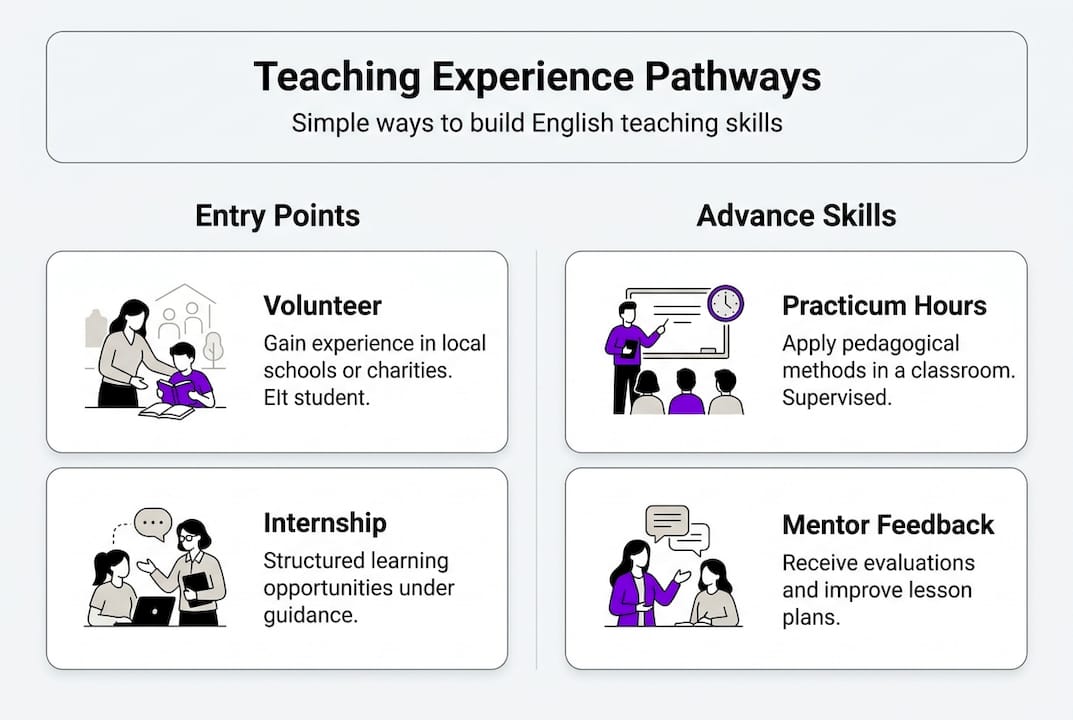
Volunteering as an assistant teacher or in community education projects provides an accessible entry point for building teaching experience. Local libraries, community centres, refugee support organisations, and literacy programmes frequently seek volunteers to support English language learners. These roles allow you to observe experienced teachers, assist with lesson delivery, and gradually take on more responsibility as your confidence grows. The flexible commitment often fits around other obligations whilst building your teaching portfolio.

Applying for internships or trainee positions in language schools offers more structured experience with professional mentorship. Many language schools worldwide run intern programmes specifically designed for aspiring teachers pursuing certification. These positions typically provide supervised teaching hours, feedback on your lesson delivery, and exposure to diverse student populations. Whilst some internships are unpaid or offer modest stipends, the experience and references prove invaluable for future applications.
Immersive study abroad and teaching programmes in Spain, France, and Italy represent perhaps the most comprehensive approach to gaining experience. These programmes combine language learning with teaching roles, offering hands-on classroom practice within a supportive framework. You develop cultural fluency whilst building your teaching CV, creating a unique dual qualification that appeals strongly to international employers. The immersive environment accelerates both your language skills and teaching competence.
Practical methods to gain teaching experience:
- Contact local community centres and libraries about volunteer English teaching opportunities
- Apply for language school internships in your home country or abroad
- Join immersive study and work programmes that combine training with teaching practice
- Enrol in certification courses offering supervised practicum hours
- Participate in conversation exchange programmes where you teach English informally
- Offer private tutoring to build one-on-one teaching skills
- Attend teaching English abroad networking events to discover placement opportunities
| Experience Type | Time Commitment | Supervision Level | Cost | CV Impact |
|---|---|---|---|---|
| Volunteer assistant | Flexible, 2-10 hours weekly | Varies, often minimal | Free | Moderate |
| Language school intern | 15-30 hours weekly | High, structured feedback | Usually unpaid | High |
| Study abroad programme | 6-12 months full-time | High, integrated training | Programme fees apply | Very high |
| Certification practicum | Integrated into course | Very high, assessed hours | Included in course fees | Very high |
| Private tutoring | Fully flexible | None, self-directed | None, often paid | Moderate |
Pro Tip: Combine multiple experience pathways for maximum impact. Start with local volunteering to build confidence, then pursue a certification course with practicum hours, followed by an immersive study abroad programme. This progression demonstrates sustained commitment and diverse teaching contexts on your CV.
Gaining supervised teaching hours as part of your certification course delivers dual benefits: you fulfil training requirements whilst accumulating verifiable experience. Trinity College London accredited programmes typically include observed teaching practice with detailed feedback, creating documented evidence of your developing skills. These hours carry particular weight with employers because they’re assessed against professional standards rather than informal volunteer contexts.
Validating and leveraging your teaching experience for job placement
Documenting your teaching experience meticulously transforms informal practice into professional credentials. Maintain detailed records of hours taught, including dates, student levels, lesson topics, and teaching contexts. Save lesson plans, teaching materials you’ve created, and any student work samples that demonstrate your impact. This documentation provides concrete evidence of your experience when applying for certification programmes or teaching positions abroad.
Securing references and mentor endorsements significantly strengthens your teaching portfolio. Request written recommendations from supervising teachers, programme coordinators, or school administrators who’ve observed your classroom performance. Specific testimonials about your teaching strengths, classroom management, and student rapport carry far more weight than generic character references. These endorsements validate your experience and provide third-party verification of your teaching capabilities.
Understanding how various experience types weigh in applications helps you strategically build your CV. Supervised practicum hours from accredited certification courses typically hold the highest value, followed by paid teaching positions, formal internships, and then volunteer roles. However, quality matters more than category. Sustained volunteer work with documented impact often outweighs brief paid positions with minimal responsibility. Focus on depth of experience and demonstrable outcomes rather than simply accumulating hours.
Essential validation strategies:
- Create a teaching portfolio with lesson plans, materials, and student feedback
- Request formal reference letters from supervisors and mentors
- Log teaching hours with details about student levels and lesson content
- Collect testimonials highlighting specific teaching strengths
- Document any special achievements or student progress outcomes
| Documentation Type | Purpose | When to Collect | Storage Method |
|---|---|---|---|
| Teaching hours log | Verify experience duration | Ongoing, after each session | Digital spreadsheet |
| Lesson plans | Demonstrate planning skills | Save all created plans | Cloud folder |
| Reference letters | Validate teaching quality | End of placement/course | PDF copies |
| Student feedback | Show impact and rapport | After teaching units | Scanned/digital |
| Certificates of completion | Prove programme participation | Upon finishing placements | Secure digital archive |
Developing strong CVs tailored to overseas teaching employers requires understanding what international schools prioritise. Emphasise your cultural adaptability, any language skills, and experience with diverse learner populations. Highlight specific teaching methodologies you’ve employed and quantifiable outcomes when possible. Frame your experience to demonstrate readiness for the particular challenges of teaching English abroad rather than generic classroom competence.
Engaging with TEFL job placement process services and professional networks accelerates your transition from experience-building to employment. Many accredited certification providers offer lifetime job placement assistance, connecting graduates with international teaching opportunities. These services understand employer requirements and can position your experience effectively. Active participation in teaching communities, both online and in-person, often surfaces opportunities before they’re publicly advertised.
Start your teaching journey with accredited TEFL/TESOL courses
EBC offers globally recognised TEFL and TESOL courses accredited by Trinity College London, combining rigorous training with essential practicum components. These programmes provide supervised teaching hours that simultaneously fulfil certification requirements and build your professional experience. You’ll gain hands-on classroom practice with expert feedback, developing the skills and confidence international employers seek.
Immersive study abroad and teach abroad programmes in Spain, France, and Italy take your experience-building further by integrating language learning, cultural immersion, and teaching practice. These comprehensive one-year programmes combine accredited teacher training with opportunities to teach or work part-time, creating a powerful foundation for your international teaching career. You’ll develop linguistic and cultural fluency whilst accumulating valuable teaching experience in authentic European classroom settings.
EBC’s lifetime job placement support and global network help transform your experience and qualifications into meaningful employment opportunities worldwide. Whether you’re just beginning to explore certification to teach English abroad or ready to commit to an immersive programme, expert guidance ensures you choose the pathway that aligns with your goals. Book a call with EBC to discuss how their accredited courses and study abroad options can launch your teaching career with the experience and credentials employers value most.
Frequently asked questions about getting teaching experience
Can I get teaching experience without certification?
Yes, numerous pathways exist for gaining teaching experience before formal certification. Volunteering as an assistant teacher, participating in conversation exchange programmes, or offering private tutoring all provide legitimate classroom practice. However, paid teaching positions abroad typically require accredited TEFL or TESOL certification, making pre-certification experience most valuable as preparation for training rather than as a substitute for it.
Are immersive study abroad programmes effective for gaining experience?
Immersive study abroad programmes prove highly effective because they combine language learning with practical teaching in authentic cultural contexts. Employers particularly value this dual competency, as it demonstrates both teaching capability and cultural adaptability. These programmes often include structured mentorship and supervised teaching hours that carry significant weight on your CV whilst providing transformative personal and professional development.
How do TEFL practicum hours count as teaching experience?
Practicum hours completed during accredited TEFL/TESOL certification courses count as supervised teaching experience assessed against professional standards. These hours typically involve observed teaching practice with detailed feedback from qualified instructors, making them particularly valuable to employers. Most certification bodies require a minimum number of practicum hours, and these documented teaching sessions provide verifiable evidence of your classroom competence.
What documentation should I keep of my teaching experience?
Maintain comprehensive records including a detailed log of teaching hours, lesson plans you’ve created, any teaching materials or resources you’ve developed, and feedback from supervisors or students. Collect formal reference letters from mentors and programme coordinators who’ve observed your teaching. Save certificates of completion from volunteer programmes or internships. This documentation transforms informal experience into professional credentials that strengthen certification applications and job prospects.
How can networking enhance my chances of teaching abroad?
Networking connects you directly with job opportunities, experienced mentors, and professional placement services that understand international teaching markets. Many teaching positions abroad are filled through personal recommendations and professional networks before public advertising. Engaging with TEFL/TESOL communities provides insider knowledge about desirable employers, visa processes, and cultural considerations. Active networking often surfaces opportunities perfectly matched to your experience level and teaching preferences.