
Teaching English in France is one of the most rewarding career moves you can make, but the path from aspiration to classroom is rarely straightforward. Most positions at private language schools, tutoring centres, and public institutions require an internationally accredited TEFL or TESOL certificate, and for non-EU citizens, navigating visas and work authorisation adds another layer of complexity. The good news is that with the right qualification, a clear plan, and structured support, you can make France your professional home. This guide walks you through every stage, from choosing your certification to finding paid teaching work and settling into French life with confidence.
Table of Contents
- Understanding the pathway: requirements to teach English in France
- Getting certified: how to earn your Trinity CertTESOL
- Securing a visa and work authorisation in France
- Finding your first teaching job: schools, private lessons, and practical tips
- Why the right support makes all the difference for new teachers in France
- Ready to start your journey? Get certified and teach English in France
- Frequently asked questions
Key Takeaways
| Point | Details |
|---|---|
| Trinity CertTESOL is key | This qualification is the gold standard for teaching English in France and opens most doors. |
| Student visa pathway | Road2France-style programmes bundle your visa, French immersion, and work authorisation as a practical entry route. |
| Realistic earning expectations | English teachers can expect to earn €10–15/hour starting out or €20–30/hour in private lessons. |
| Cultural immersion matters | Success in France means adapting culturally and leveraging French language skills for better integration. |
Understanding the pathway: requirements to teach English in France
Before you book your flight to Paris or Lyon, it is worth understanding exactly what French employers expect. The requirements vary depending on the type of institution, but certain standards apply almost universally.
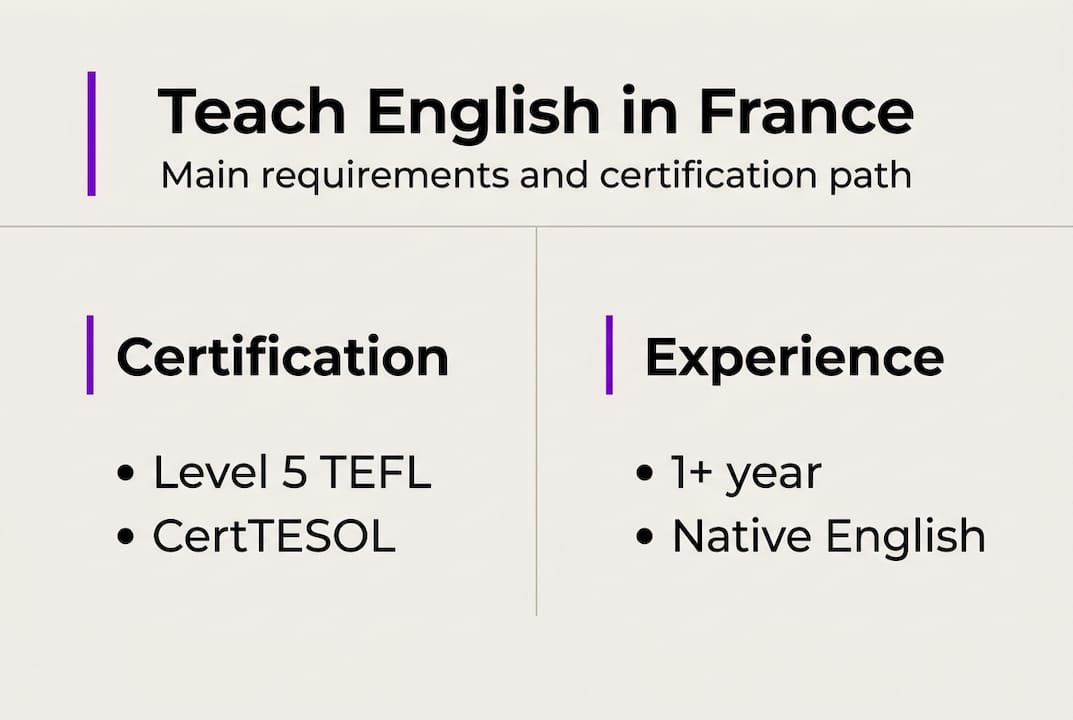
Private language schools typically require a recognised TEFL or TESOL qualification at Level 5 or above. Tutoring centres and independent agencies often accept candidates with strong credentials and some demonstrated teaching ability. Public schools, meanwhile, operate through formal government programmes with their own eligibility criteria. Across all of these settings, a Trinity CertTESOL is widely regarded as the gold standard, particularly for non-EU applicants who need to demonstrate professional credibility quickly.
The Trinity CertTESOL is a Level 5 Ofqual-regulated qualification, equivalent in standing to CELTA, and is highly recognised by French employers. You do not need prior teaching experience to enrol, but you do need a minimum B2 level of English proficiency.
Here is a quick overview of entry requirements by institution type:
| Institution type | Qualification required | Experience needed |
|---|---|---|
| Private language school | Level 5 TEFL/TESOL (e.g. CertTESOL) | Preferred but not always required |
| Tutoring agency | TEFL certificate | None typically |
| Public school programme | Degree plus eligibility check | None |
For EU citizens, working rights are straightforward. Non-EU citizens must secure a visa and work authorisation, which is where structured programmes become essential. It is also worth noting that studying FLE (Français Langue Étrangère, meaning French as a foreign language) significantly improves your day-to-day life and makes you a more competitive candidate. Employers value teachers who can communicate with administrative staff and understand the local context. Understanding the required English teaching qualifications for Europe more broadly will also help you plan your career trajectory beyond France.
Pro Tip: Even a basic working knowledge of French signals cultural commitment to employers and can set your application apart from other candidates.
Getting certified: how to earn your Trinity CertTESOL
Once you understand what you need, the next stage is securing an accredited TEFL/TESOL qualification recognised by French employers. Here is how to do it and why Trinity CertTESOL stands out.
The Trinity CertTESOL is a 4 to 6 week intensive course comprising 130 hours of input and 6 hours of assessed teaching practice. It is designed to take you from no classroom experience to job-ready teacher in a matter of weeks. Here is the step-by-step process:
- Check your eligibility. You need a B2 level of English or above. No prior teaching experience is required.
- Submit your application. This typically involves a written task and a short interview to assess your suitability.
- Complete the course. You will cover lesson planning, language analysis, teaching methodology, and observed practice with real learners.
- Pass your assessments. These include observed teaching sessions, a written portfolio, and a language awareness task.
- Receive your certificate. Trinity College London issues your qualification directly, giving it international credibility.
When comparing your options, it helps to understand how Trinity CertTESOL stacks up against alternatives:
| Qualification | Level | Assessed teaching | Recognised in France |
|---|---|---|---|
| Trinity CertTESOL | Level 5 | Yes (6 hours) | Yes, highly |
| CELTA | Level 5 | Yes (6 hours) | Yes |
| Online TEFL (non-accredited) | Varies | No | Limited |
The return on investment is strong. Certified teachers in France typically earn between €10 and €30 per hour depending on the setting, and the qualification opens doors across Europe and globally. Reading teacher experiences from graduates who have already made this journey is one of the most useful ways to set realistic expectations. For a full breakdown of what the course involves, the CertTESOL course overview covers everything in detail.
Key insight: Trinity CertTESOL is not just a certificate. It is a practical teaching qualification that French employers trust because it involves real classroom hours, not just theory.
Securing a visa and work authorisation in France
With your certificate in progress or in hand, moving to France is about more than just booking a flight. Visa and work authorisation are vital, and here is the proven route for aspiring teachers.

EU citizens can live and work in France without restriction. For non-EU citizens, the most practical legal route is a student visa, which allows you to work up to 20 hours per week while enrolled in a recognised study programme. This is where structured programmes like Road2France become genuinely valuable.
Road2France offers an accredited course, work authorisation, and student visa support for non-EU citizens, combining your Trinity CertTESOL training with a French language course (FLE), cultural immersion, and legal guidance throughout the process. The programme is available in several major cities:
- Paris: The largest job market for English teachers in France, with high demand from corporate clients and language schools alike.
- Lyon: A vibrant, more affordable alternative with a strong international community.
- Marseille: A culturally rich port city with growing demand for English language instruction.
Here is a cost overview to help you plan:
| Expense | Approximate cost |
|---|---|
| Road2France programme fee | ~€8,500 |
| Monthly living expenses | €800 to €1,200 |
| Part-time teaching income | €10 to €30/hour |
Pro Tip: Apply for your student visa at least three months before your intended start date. French consulates can have significant processing times, and delays are common.
For those considering teaching abroad with Trinity certification more broadly, France is an excellent starting point. If you prefer to complete part of your training remotely before arriving, Trinity CertTESOL online options are also available through EBC.
Finding your first teaching job: schools, private lessons, and practical tips
With your legal status secured, it is time to start teaching. Here is how you can quickly turn your new qualification and visa into paid work and a culturally rich experience.
Knowing where to look is half the battle. The most productive channels for finding English teaching work in France include:
- Private language schools: Search for schools affiliated with national networks such as Wall Street English or Berlitz, as well as independent local schools.
- Online job boards: Sites like Indeed France, LinkedIn, and Teach Away regularly post English teaching vacancies.
- Tutoring agencies: Platforms such as Superprof and Preply allow you to build a private client base from day one.
- Word of mouth and networking: Joining expat and teacher communities in your city is often the fastest route to your first paid lesson.
Your CertTESOL and FLE credentials should feature prominently in your CV and cover letter. French employers respond well to candidates who demonstrate both professional training and cultural awareness. Tailor each application to the specific school or agency, and be prepared for interviews conducted partly in French.
French bureaucracy is real. You will likely need to register with URSSAF if you work as a freelance tutor, and you may be eligible for CAF housing assistance. Demand for English teachers is high in Paris and Lyon, but the administrative complexity means that using a programme with visa and job support gives you a significant advantage.
“The French classroom rewards patience and preparation. Students appreciate structured lessons and clear explanations, so your CertTESOL training in lesson planning will serve you well from day one.”
For a broader look at your job options for English teachers in France, and practical advice on teaching English abroad more generally, EBC’s resources cover the full picture.
Why the right support makes all the difference for new teachers in France
Most guides about teaching English in France focus on the exciting parts: the culture, the food, the language, the career opportunity. What they tend to gloss over is the day-to-day reality of French administration. Opening a bank account, registering your address, understanding your tax obligations as a part-time worker, these are not minor inconveniences. They can genuinely derail your first months if you are unprepared.
This is where experienced providers earn their value. French administrative hurdles are significant, and programmes that combine practical training, visa help, and cultural immersion genuinely set you up for success in a way that self-guided approaches rarely do. The peer cohort you train alongside becomes your support network. Your programme coordinators have navigated these systems before and can anticipate problems before they become crises.
Culture shock is also real, even in a country as familiar as France. Having a structured routine, a cohort of fellow teachers, and local contacts makes the transition far smoother. If you are serious about making this work, the step-by-step teaching guide from EBC is the most practical starting point available. Do not underestimate the value of going in with a team behind you.
Ready to start your journey? Get certified and teach English in France
If you have read this far, you already know that teaching English in France is achievable with the right preparation. Trinity CertTESOL gives you an internationally respected qualification that French employers trust. Road2France gives you the legal framework, language training, and cultural support to make your first year genuinely transformative.
EBC operates globally, supporting teachers across Europe, Asia, Latin America, and beyond, with free lifetime job placement assistance included. Whether you are starting from scratch or looking to formalise existing skills, our TEFL introduction and certification to teach abroad pages will help you choose the right path. When you are ready to take the next step, book a call with our team for a free consultation.
Frequently asked questions
Can I teach English in France without speaking French?
Yes, it is possible, but learning French through an FLE course included in programmes like Road2France greatly improves your daily life and makes you a more competitive candidate for teaching roles.
How much can I earn teaching English in France as a beginner?
Entry-level positions typically pay €10 to €15 per hour, while private tutoring can earn you €20 to €30 per hour once you have built a client base.
Do I need a visa to teach English in France?
Non-EU citizens need a visa, and the most practical route is a student visa obtained through a structured programme. Road2France provides visa support and work authorisation specifically for non-EU applicants.
Is Trinity CertTESOL accepted for teaching jobs in France?
Yes. Trinity CertTESOL is highly recognised by French employers and is considered equivalent in standing to CELTA, making it one of the most valuable qualifications you can hold for teaching in France.