
Feeling stuck in traditional classrooms, many recent graduates crave something more dynamic when planning to teach English abroad. For those eyeing teaching opportunities abroad, understanding the true meaning of language immersion opens the door to enriching careers and life-changing cultural experiences. This guide reveals how immersion transforms teaching and learning, highlights the main programme types, and empowers you to make choices that blend certified training with genuine community connection.
Table of Contents
- Language Immersion Defined And Misunderstood
- Major Types Of Language Immersion Programmes
- Core Features: Learning And Cultural Integration
- Requirements For Effective Immersion Experiences
- Risks, Costs, And What To Avoid
- Alternatives To Language Immersion Approaches
Key Takeaways
| Point | Details |
|---|---|
| Immersion Enhances Learning | Language immersion transforms acquisition by integrating language into daily experiences rather than treating it as a separate subject. |
| Diverse Programme Types | Understanding the differences between Total, Partial, and Two-Way Immersion can help learners choose the right fit for their goals. |
| Cultural Engagement is Key | Effective immersion programmes must provide opportunities for authentic cultural interaction, which enhances language competence. |
| Plan for Challenges | Financial and emotional preparedness is crucial for success in immersion experiences; learners should evaluate potential obstacles beforehand. |
Language immersion defined and misunderstood
Language immersion represents far more than simply learning vocabulary and grammar in a classroom setting. At its core, immersion is an educational approach that transforms language acquisition into a comprehensive, experiential journey. Comprehensive research on immersion education reveals profound benefits extending well beyond basic linguistic skills.
Traditionally, language learning has been viewed as a structured, compartmentalised process. However, immersion challenges this perspective by integrating language learning directly into daily life experiences. The fundamental principle is straightforward: learners are consistently exposed to the target language through academic instruction, social interactions, and cultural engagement. This approach differs dramatically from traditional classroom methods, where language is studied as an isolated subject rather than a living, dynamic communication tool.
Bilingual education encompasses various approaches, but immersion represents a particularly intensive strategy. Research literature highlights nuanced definitions that distinguish between weak and strong bilingual programmes. Strong immersion programmes typically involve using the second language as the primary medium of instruction across multiple academic subjects, creating a holistic learning environment that naturally develops linguistic competence.
Key aspects of effective language immersion include:
- Comprehensive exposure to the target language
- Integration of language learning with academic content
- Consistent, meaningful communication contexts
- Cultural understanding alongside linguistic development
Pro tip: When pursuing language immersion, prioritise programmes that offer structured yet authentic language experiences, blending academic rigour with genuine cultural interactions.
Major types of language immersion programmes
Language immersion programmes represent a sophisticated spectrum of educational approaches designed to facilitate comprehensive language learning. Dual language immersion strategies have become increasingly prominent, particularly in educational contexts seeking bilingual proficiency.
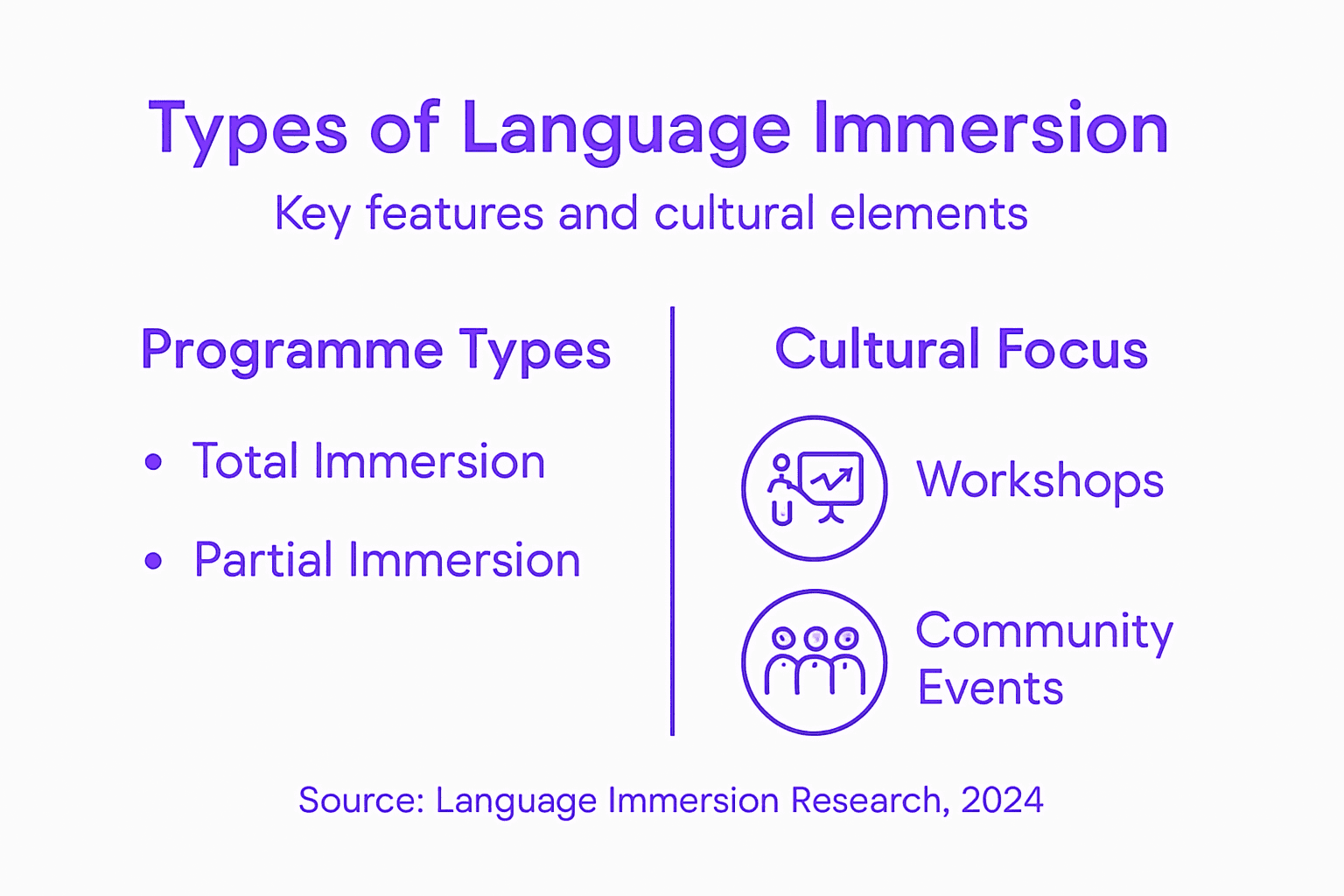
The primary categories of language immersion programmes include:
- Total Immersion: Where instruction occurs almost exclusively in the target language, typically involving 90-100% of academic content delivered in the second language
- Partial Immersion: A more balanced approach where approximately 50% of instruction happens in the target language
- Two-Way Immersion: A sophisticated model involving balanced groups of native speakers from different language backgrounds, creating a rich linguistic exchange environment
Research literature highlights nuanced programme configurations that demonstrate how different immersion models impact language acquisition. These variations depend on multiple factors, including educational objectives, learner demographics, and available resources. Two-way immersion programmes, for instance, are particularly effective because they create natural language exchange environments where students learn from and with each other.
Beyond traditional classroom settings, modern immersion programmes increasingly incorporate technology, cultural experiences, and interactive learning strategies. These approaches recognise that language learning is not merely about grammatical precision but about developing genuine communicative competence and cultural understanding.
Pro tip: When selecting an immersion programme, prioritise models that offer balanced linguistic exposure and meaningful cultural interactions, ensuring comprehensive language development.
Here is a comparison of the three major types of immersion programmes and their learning environments:
| Programme Type | Linguistic Exposure | Social Interaction | Typical Student Outcomes |
|---|---|---|---|
| Total Immersion | 90-100% target language | Mostly with target group | Rapid fluency, strong comprehension |
| Partial Immersion | About 50% target language | Mixed groups | Balanced bilingual proficiency |
| Two-Way Immersion | Dual target/native mix | Diverse, reciprocal groups | High linguistic and cultural skills |
Core features: learning and cultural integration
Language immersion transcends traditional language learning by creating holistic environments that blend linguistic development with profound cultural understanding. Language immersion programmes foster deep cultural connections through carefully designed experiences that go far beyond textbook learning.
The core features of effective language immersion programmes include:
- Authentic cultural exposure
- Meaningful social interactions
- Context-rich communication environments
- Opportunities for spontaneous language practice
- Emotional and intellectual engagement with the target culture
Research consistently demonstrates that successful immersion experiences integrate language learning with comprehensive cultural competence. This means learners are not simply acquiring vocabulary and grammar, but developing nuanced understanding of social norms, communication styles, and cultural subtleties. The process involves navigating complex social landscapes, understanding unspoken cultural rules, and developing empathy through direct engagement.

Motivational factors play a crucial role in cultural integration. Learners are typically driven by both intrinsic desires to connect with language communities and extrinsic goals related to academic or professional development. These motivations create a powerful psychological framework that supports deep, meaningful language acquisition. The emotional investment in understanding a new culture becomes a powerful catalyst for linguistic proficiency, transforming language learning from an academic exercise into a transformative personal journey.
Pro tip: Prioritise immersion programmes that offer structured cultural workshops and local community interactions to maximise your language learning and cultural understanding.
Requirements for effective immersion experiences
Language immersion demands a sophisticated approach that goes beyond traditional learning methodologies. Effective immersion requires strategic implementation tailored to individual learner characteristics and contextual needs.
Critical requirements for successful immersion experiences include:
- Comprehensive learner assessment
- Age-appropriate pedagogical strategies
- Consistent target language exposure
- Inclusive and adaptive teaching approaches
- Robust support systems for diverse learning needs
Immersive language experiences thrive on meaningful social interactions and emotionally engaging contexts. The most effective programmes create environments where language learning becomes a natural, dynamic process rather than a mechanical exercise. This involves designing curricula that challenge learners just beyond their current linguistic capabilities, providing comprehensible yet stretching communicative opportunities.
Quality teacher training emerges as a fundamental prerequisite for successful immersion. Educators must be skilled not just in language instruction, but in creating inclusive, motivating environments that support holistic language development. This requires sophisticated understanding of second language acquisition principles, cultural sensitivity, and the ability to adapt teaching strategies to diverse learner backgrounds.
Pro tip: Seek immersion programmes with experienced instructors who demonstrate flexibility, cultural understanding, and a commitment to personalised learning approaches.
Risks, costs, and what to avoid
Language immersion programmes, while transformative, come with complex financial and personal challenges that require careful consideration. Dual-language immersion programmes incur modest additional costs, typically ranging between 2% to 4% more per student annually, which can impact programme sustainability and accessibility.
Key risks and potential pitfalls include:
- Unexpected financial burdens
- Cultural adaptation challenges
- Insufficient language exposure
- Potential emotional stress
- Limited programme quality control
Research from global educational contexts highlights critical challenges such as cultural shock, financial constraints, and potential learning disruptions. Students must anticipate and prepare for these potential obstacles. Financial planning becomes crucial, with considerations including:
- Programme tuition fees
- Living expenses in a foreign environment
- Travel and accommodation costs
- Emergency financial reserves
- Potential loss of home country income
Successful immersion experiences demand comprehensive preparation and realistic expectations. Understanding potential challenges allows learners to develop robust support strategies, mitigate risks, and create contingency plans. Prospective participants should conduct thorough research, engage with programme alumni, and develop flexible mindsets that can adapt to unexpected circumstances.
Pro tip: Create a detailed financial and emotional preparedness plan at least six months before your immersion programme, including comprehensive budgeting and potential stress management strategies.
This summary outlines common financial and emotional considerations for immersion learners:
| Description | Impact on Learner | |
|---|---|---|
| Tuition/Programme Fees | Costs for academic participation | May limit accessibility |
| Cultural Adjustment | Adapting to new traditions and values | Can cause stress or homesickness |
| Emergency Financial Plan | Reserve funds for unexpected expenses | Provides emotional security |
Alternatives to language immersion approaches
Language learning extends beyond traditional immersion strategies, offering diverse pathways for linguistic development. Alternative bilingual education models provide flexible approaches tailored to different learning contexts and individual needs.
Key alternative language learning approaches include:
- Transitional Bilingual Education: Focused on supporting initial language transition
- Developmental Bilingual Education: Continuing development of both first and second languages
- Heritage Language Programmes: Supporting learners’ connection with their linguistic roots
- Digital Immersion Technologies: Leveraging technological platforms for language acquisition
Immersive learning technologies represent a groundbreaking alternative to traditional language learning methods. Virtual reality, augmented reality, and mixed reality platforms create interactive digital environments that simulate authentic linguistic experiences. These technologies offer unprecedented flexibility, allowing learners to engage with language contexts that might otherwise be inaccessible.
Each alternative approach presents unique advantages, enabling learners to select methods that align with their specific learning styles, time constraints, and personal objectives. The key is understanding individual learning preferences and choosing strategies that maximise linguistic potential while maintaining engagement and motivation.
Pro tip: Experiment with multiple language learning approaches to discover which method resonates most effectively with your personal learning style and linguistic goals.
Unlock Your Path to True Fluency and Global Teaching Success
The journey to mastering a new language requires more than just textbook study. As highlighted in “Language Immersion: Unlocking True Fluency Abroad,” authentic cultural exposure and consistent language use are essential for genuine fluency. However, navigating immersion programmes can be complex, with challenges such as maintaining steady language practice, cultural adaptation, and finding meaningful teaching opportunities abroad.
At EBC TEFL, we understand these challenges and offer a comprehensive solution that brings immersive language learning and practical teaching training together. Our internationally accredited Trinity College London courses provide you with not just high-quality certification but also hands-on teacher training designed to prepare you for real classroom environments worldwide. Through our innovative one-year study and work abroad programmes in Spain, France, and Italy, you benefit from accredited teacher training combined with language study, visa support, and part-time work opportunities that enhance your cultural immersion and professional development.
Why choose EBC TEFL?
- Trinity College London accreditation ensuring global recognition
- Lifetime employment assistance with job placement in diverse countries including Spain, France, Italy, and across Asia
- Structured programmes blending academic rigor with authentic cultural experiences
Transform your language immersion experience into a rewarding teaching career abroad. Start your journey today with our proven pathways and dedicated support.
Ready to embrace true language immersion and unlock your teaching potential worldwide Visit EBC TEFL’s booking page now to speak with our expert advisors. Discover how you can combine language study, accredited training and global job placement in one seamless programme designed for your success. Take the first step towards a vibrant international career and cultural adventure today.
Frequently Asked Questions
What is language immersion?
Language immersion is an educational approach that integrates language learning into daily life experiences, providing learners with constant exposure to the target language through academic instruction, social interactions, and cultural engagement.
What are the different types of language immersion programmes?
The main types of language immersion programmes include Total Immersion, where 90-100% of instruction is in the target language; Partial Immersion, where approximately 50% of instruction is in the target language; and Two-Way Immersion, which involves balanced groups of native speakers from different language backgrounds for enriched language exchange.
How does cultural understanding enhance language immersion?
Cultural understanding is crucial in language immersion as it helps learners develop nuanced understandings of social norms, communication styles, and cultural subtleties, fostering deeper engagement with the language and its speakers.
What should I consider when choosing a language immersion programme?
When selecting a language immersion programme, prioritise options that offer structured yet authentic language experiences, meaningful cultural interactions, and experienced instructors who can adapt teaching strategies to meet diverse learner needs.
