
Starting your TEFL journey means more than just mastering grammar rules or classroom routines. Lesson planning sits at the heart of confident teaching, giving you a practical structure that turns theory into active learning. With lesson planning frameworks recognised by Trinity College London, you will learn how to shape engaging, adaptable lessons that reflect real classroom needs, cultural differences, and student progress throughout your year abroad.
Table of Contents
- Lesson Planning Explained For TEFL Teachers
- Types And Models Of Lesson Planning Frameworks
- Essential Elements Of An Effective Lesson Plan
- Common Pitfalls And How To Avoid Them
- Lesson Planning In Trinity-Accredited Study Abroad Programmes
Key Takeaways
| Point | Details |
|---|---|
| Dynamic Lesson Planning | Lesson plans should be flexible, allowing teachers to adapt instruction in response to student needs and progress. |
| Effective Frameworks | Familiarity with various lesson planning models enables teachers to choose the right approach for different teaching contexts. |
| Inclusivity in Planning | Incorporating diverse learning styles and proficiency levels in lesson plans maximises student engagement and comprehension. |
| Reflective Practice | Regularly reviewing and modifying lesson plans helps improve teaching effectiveness and addresses potential classroom challenges. |
Lesson planning explained for TEFL teachers
Lesson planning represents a crucial skill for English language teachers, serving as a strategic roadmap for effective classroom instruction. Understanding lesson planning frameworks involves recognising that lesson plans are dynamic guides rather than rigid scripts. They help teachers organise learning experiences, set clear objectives, and adapt instruction to meet specific student needs.
Successful lesson planning requires teachers to consider several key components. These include defining precise learning outcomes, selecting appropriate teaching methodologies, preparing engaging activities, and developing assessment strategies. Experienced TEFL teachers understand that a well-structured lesson plan provides flexibility, allowing them to respond to students’ real-time learning progress while maintaining educational momentum. The planning process itself becomes a reflective practice that enhances teaching effectiveness.
Practical lesson plans typically incorporate multiple elements: clear learning objectives, anticipated student interactions, diverse instructional strategies, and contingency approaches for potential classroom challenges. Teachers should aim to create plans that balance structure with creativity, enabling meaningful language acquisition experiences. Effective lesson plans consider learners’ proficiency levels, cultural backgrounds, and individual learning styles to maximise engagement and comprehension.
Teaching Pro Tip: Always allocate 10-15 minutes after creating your lesson plan to review and potentially adjust activities to ensure they align precisely with your learning objectives and student needs.
Types and models of lesson planning frameworks
Lesson planning frameworks provide structured approaches for English language teachers to design effective learning experiences. While no single universal model exists, several established frameworks offer systematic strategies for crafting comprehensive lesson plans. Pedagogical planning models range from linear sequential approaches to more dynamic, cyclical methodologies that emphasise teacher reflection and adaptability.
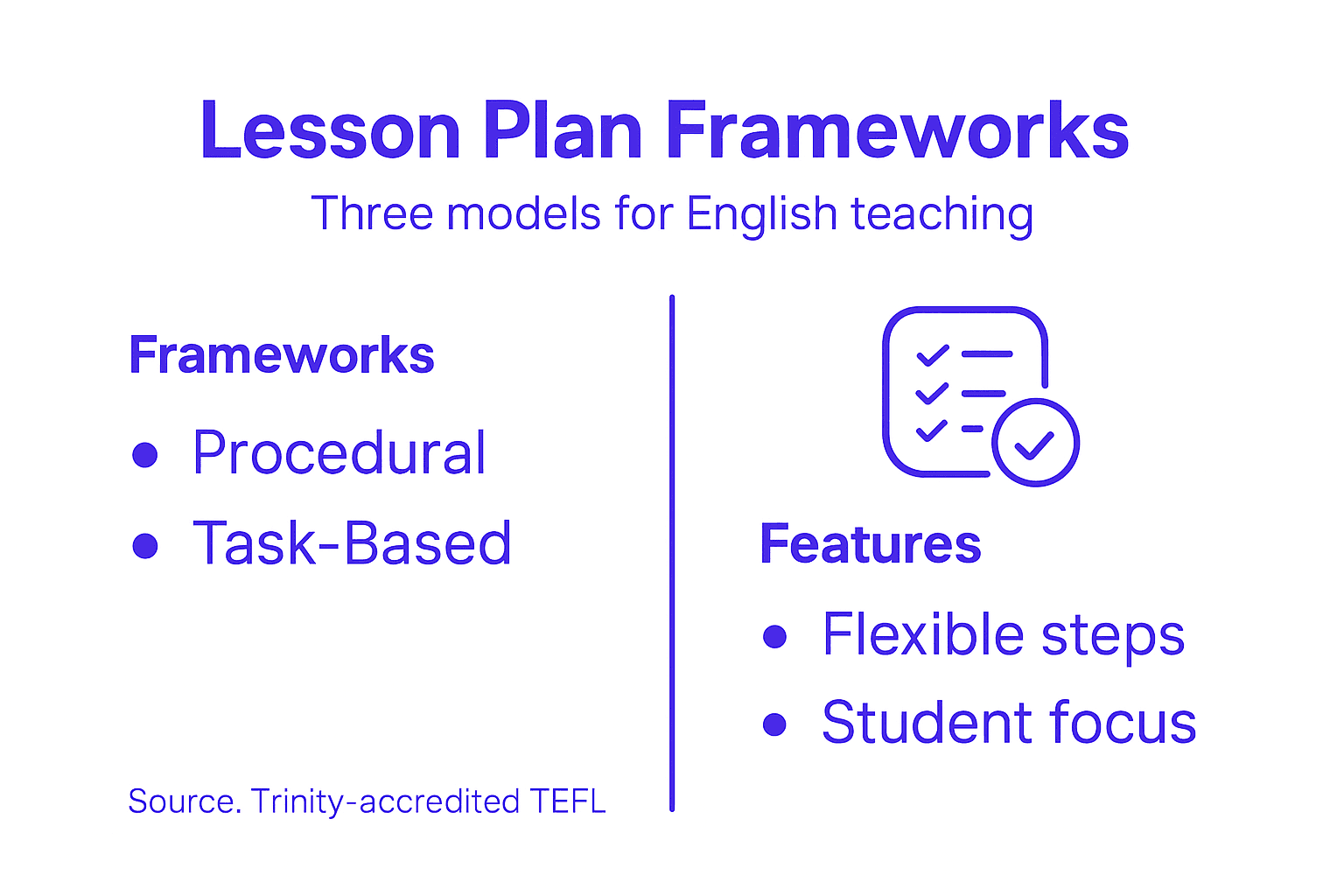
Three primary lesson planning models dominate TEFL instruction: the Procedural Model, the Task-Based Learning Model, and the Communicative Language Teaching Model. The Procedural Model follows a straightforward sequence of objectives, preparation, presentation, practice, and assessment. Task-Based Learning focuses on creating meaningful communicative tasks that simulate real-world language use, encouraging students to solve problems and interact authentically. The Communicative Language Teaching Model prioritises interactive communication, designing activities that promote genuine linguistic exchange and contextual language development.
Each lesson planning framework offers distinct advantages for different teaching contexts. The Procedural Model works exceptionally well for structured grammar lessons, providing clear progression and measurable outcomes. Task-Based Learning excels in developing practical language skills, particularly for intermediate and advanced learners who require authentic communication practice. The Communicative Language Teaching Model proves most effective for developing conversational fluency and cultural understanding, making it ideal for immersive language learning environments.
Here is a summary of the main TEFL lesson planning models and their classroom applications:
| Model Name | Key Features | Best Classroom Use |
|---|---|---|
| Procedural Model | Sequential stages, clear objectives | Grammar or structured language lessons |
| Task-Based Learning | Real-world tasks, authentic use | Intermediate to advanced learners |
| Communicative Language Teaching | Interaction, contextual language | Developing fluency and cultural skills |
Teaching Pro Tip: Experiment with multiple lesson planning frameworks during your teaching practice to understand which models best suit your teaching style and your students’ specific learning needs.
Essential elements of an effective lesson plan
Crafting an effective lesson plan requires careful consideration of multiple interconnected components. Lesson plan characteristics highlight the importance of creating a comprehensive framework that addresses diverse learning needs and educational objectives. A well-designed lesson plan serves as a strategic roadmap, guiding teachers through structured yet flexible learning experiences that maximise student engagement and understanding.

The core elements of an effective lesson plan typically include several critical components. Learning Objectives form the foundation, clearly articulating specific, measurable outcomes students should achieve by the lesson’s conclusion. Context and Background provide essential information about student proficiency levels, cultural considerations, and prior knowledge. Assessment Strategies are equally crucial, incorporating diverse evaluation methods that measure student progress through formative and summative assessment techniques. Additionally, lesson plans must include detailed Activity Sequences that progressively build language skills, incorporating varied instructional strategies to accommodate different learning styles and maintain student motivation.
Successful lesson plans demonstrate remarkable flexibility and inclusivity. They should incorporate multiple learning taxonomies, allowing for differentiated instruction that meets individual student needs. This approach involves designing activities that cater to visual, auditory, and kinesthetic learners, ensuring comprehensive language development. Teachers must also build contingency elements into their plans, preparing alternative activities and approaches to address potential challenges or unexpected classroom dynamics. By maintaining a balance between structured planning and adaptive teaching strategies, educators can create dynamic learning environments that promote genuine linguistic growth and student confidence.
Teaching Pro Tip: Create a digital or physical template for your lesson plans that includes a dedicated section for reflection and potential modifications, allowing you to continuously improve your instructional approach.
Common pitfalls and how to avoid them
Lesson planning presents numerous challenges for both novice and experienced English language teachers. Critical lesson planning challenges reveal that many educators struggle with maintaining flexibility while ensuring structured learning experiences. Understanding these potential pitfalls becomes crucial for developing effective teaching strategies that promote meaningful language acquisition.
One primary challenge involves over-planning or maintaining excessive rigidity in lesson delivery. Teachers often create detailed plans that leave little room for spontaneous learning or student-driven interactions. This approach can stifle classroom creativity and prevent organic language development. Another significant pitfall is insufficient preparation, where teachers fail to anticipate potential student difficulties, classroom management issues, or technical challenges. Effective lesson planning requires developing comprehensive contingency strategies, including backup activities, alternative explanations, and adaptive teaching techniques that can respond to unexpected classroom dynamics.
Successful teachers develop strategies to mitigate these common challenges. This involves creating lesson plans with built-in flexibility, allowing for real-time adjustments based on student engagement and comprehension. Experienced educators recommend developing a robust understanding of your learning objectives while maintaining the ability to deviate from the original plan when necessary. Critical reflection plays a key role in improving lesson planning skills, with teachers regularly reviewing their approaches, identifying areas for improvement, and developing more nuanced instructional strategies that accommodate diverse learning needs.
This table outlines common lesson planning pitfalls and effective strategies to overcome them:
| Pitfall | Impact on Teaching | Mitigation Strategy |
|---|---|---|
| Over-planning | Limits spontaneity and creativity | Allow flexibility and adapt in real time |
| Insufficient prep | Unprepared for challenges | Create backup activities and alternatives |
| Ignoring reflection | Missed improvement opportunities | Regularly review and modify lesson plans |
Teaching Pro Tip: Develop a personal lesson plan review checklist that includes sections for unexpected challenges, student engagement levels, and potential modifications to help you continuously improve your teaching approach.
Lesson planning in Trinity-accredited study abroad programmes
Trinity-accredited study abroad programmes represent a sophisticated approach to English language teacher training, integrating comprehensive lesson planning standards that prepare educators for international teaching environments. These programmes go beyond traditional teaching methodologies, emphasising cultural adaptability, practical skills, and structured instructional design that meets global educational standards. By combining rigorous theoretical training with immersive practical experiences, Trinity programmes ensure that teachers develop nuanced lesson planning skills applicable across diverse international contexts.
The lesson planning framework in these programmes typically incorporates several distinctive elements. Candidates learn to design lessons that are not merely academic exercises but dynamic, contextually responsive learning experiences. This approach involves developing lesson plans that consider multiple dimensions: linguistic objectives, cultural sensitivities, student proficiency levels, and adaptive teaching strategies. Professional development pathways within Trinity programmes focus on creating flexible lesson plans that can be modified in real-time, reflecting the complex, interactive nature of language instruction in international settings.
Participants in Trinity-accredited study abroad programmes undergo intensive training that transforms lesson planning from a theoretical concept into a practical, responsive skill. The programmes emphasise developing lesson plans that are simultaneously structured and flexible, encouraging teachers to anticipate potential classroom challenges while maintaining the ability to adapt spontaneously. This approach recognises that effective lesson planning is not about creating inflexible scripts, but about developing a sophisticated pedagogical toolkit that enables teachers to respond dynamically to student needs, cultural contexts, and emerging learning opportunities.
Teaching Pro Tip: Create a digital lesson planning portfolio during your study abroad programme, documenting your planning evolution and reflecting on how cultural experiences inform your instructional design.
Master Lesson Planning with Trinity-Accredited TEFL Training
Effective lesson planning is the cornerstone of successful English teaching, as highlighted in the article you just read. If you are eager to transform your ability to design flexible, engaging, and outcome-driven lessons that meet diverse learner needs, then EBC TEFL offers the ideal solution. Our Trinity College London accredited courses equip you with practical, hands-on teacher training rooted in proven pedagogical frameworks like Communicative Language Teaching and Task-Based Learning. Through these programmes, you will learn how to create dynamic lesson plans that foster genuine language acquisition and cultural understanding, essential for thriving in global classrooms.
Elevate your teaching career by joining one of our comprehensive 1-year study and work abroad programmes in Spain, France, or Italy. These immersive programmes combine accredited teacher training with language study, visa support, and part-time teaching opportunities, ensuring you develop both professionally and personally. Benefit from our lifetime global job placement assistance, opening doors to teaching roles worldwide, including Asia, Europe, and beyond. Take your next confident step towards becoming an adaptable, culturally aware English teacher by booking a free consultation today at EBC TEFL. Explore how our tailored courses and international opportunities can transform your lesson planning skills into teaching excellence.
Discover more about our Trinity CertTESOL and specialised courses and start your journey with support designed specifically for ambitious educators like you.
Frequently Asked Questions
What is the purpose of lesson planning in English teaching?
Lesson planning serves as a strategic roadmap that helps teachers organise learning experiences, set clear objectives, and adapt instruction to meet specific student needs.
What are some common lesson planning frameworks for TEFL teachers?
Common lesson planning frameworks include the Procedural Model, Task-Based Learning Model, and Communicative Language Teaching Model, each offering distinct advantages for different teaching contexts.
How can I ensure my lesson plans are effective?
Effective lesson plans should include clear learning objectives, assessment strategies, and varied activities that accommodate different learning styles, ensuring that they are both structured and flexible.
What are some pitfalls to avoid when lesson planning?
Common pitfalls include over-planning, which can limit spontaneity, and insufficient preparation that leaves teachers unready for classroom challenges. Incorporating flexibility and contingency strategies can help mitigate these issues.
Recommended
- English language teaching skills for successful TEFL teachers – EBC Trinity CertTESOL and TEFL courses
- Teaching English to children in Asia: All you need to know – EBC Trinity CertTESOL and TEFL courses
- How to Teach Young Learners: A Practical Step-by-Step Guide – EBC TEFL courses
- 200-Hour Online TEFL Certification | EBC with Trainer Support
