
Most aspiring English teachers assume that real skill only develops in front of a full class of learners. That assumption holds teachers back. Microteaching is a structured, evidence-based training method that lets you isolate and sharpen specific classroom skills before you ever face a room of thirty students. Systematic reviews show positive outcomes in pre-service teacher training, with meta-analyses indicating moderate to strong effects on instructional practice. This article explains what microteaching is, how it works, why it matters, and how to use it strategically on your path to a global TEFL career.
At EBC TEFL, microteaching is built directly into our Trinity College London accredited Trinity CertTESOL course, giving you structured, supervised practice to the highest international standards before you teach to you class of English Language Learners. Think of it as a full dry run of your lesson before you step into the classroom.
Table of Contents
- What is microteaching? The essentials explained
- How does microteaching actually work? Session structure and mechanics
- Why do teacher trainers use microteaching? Impact and effectiveness
- When is microteaching most useful—and what can’t it do?
- How to make the most of microteaching for your TEFL certification
- Next steps: turn microteaching practice into a global TEFL career
- Frequently asked questions
Key Takeaways
| Point | Details |
|---|---|
| Microteaching defined | Microteaching is a short, focused teaching practice session with peers, typically lasting 5–20 minutes to build specific teaching skills. |
| Proven effectiveness | Microteaching boosts trainee confidence and is used in over 90 percent of teacher training programmes worldwide. |
| Practical step-by-step process | Sessions follow a repeatable cycle: plan, teach, record, get feedback, reflect, and re-teach. |
| Limits and best uses | It works best for skill isolation and confidence-building but should be combined with real classroom practice. |
| Career advantage | Successfully using microteaching helps you stand out in TEFL job applications and global teaching placements. |
What is microteaching? The essentials explained
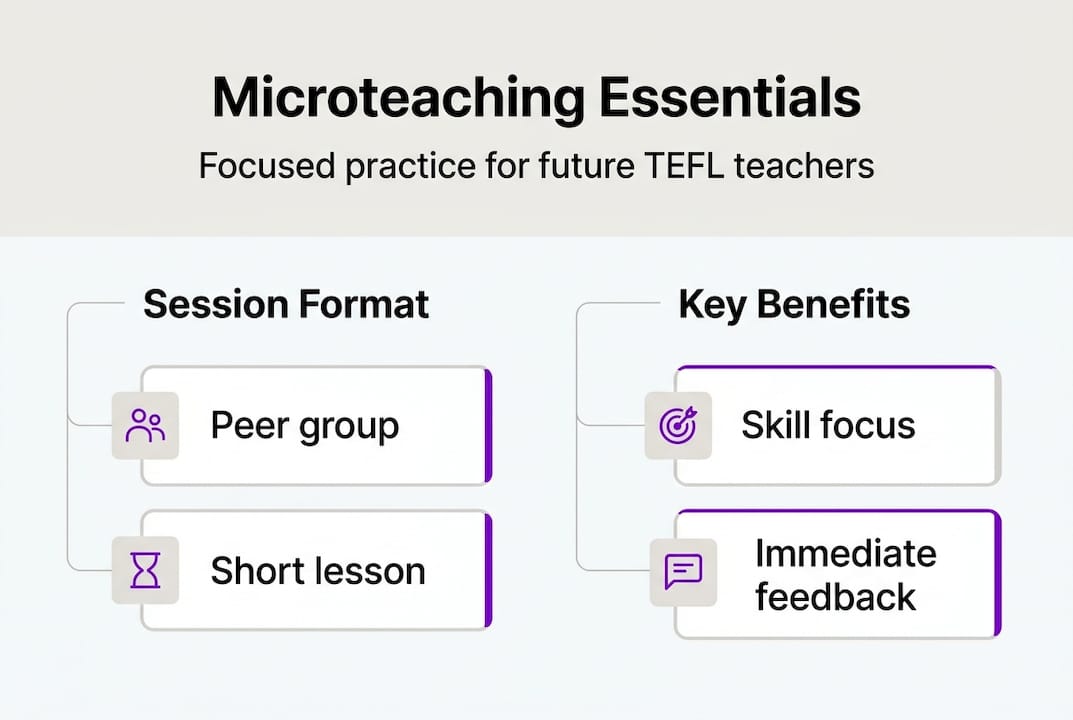
Microteaching is a teacher training technique built around short, focused practice sessions. Instead of teaching a full lesson to a full class, you teach a brief segment to a small group, concentrating on one or two specific skills at a time. The goal is not to deliver a perfect lesson. The goal is to practise deliberately, receive targeted feedback, and improve.
The concept was developed at Stanford University in the 1960s and has since become a cornerstone of teacher education worldwide. For anyone pursuing microteaching and TEFL certification, it offers a genuinely safe space to make mistakes, reflect, and grow without the pressure of a real classroom environment.
According to established teacher training frameworks, sessions run 5 to 20 minutes, involve small groups of 5 to 10 peers or students, and focus on one or two specific teaching skills per session. That tight focus is what makes it so effective. You are not trying to be a perfect teacher all at once. You are building one skill at a time.
The table below summarises the typical formats you will encounter in a microteaching programme:
| Session type | Duration | Group size | Skill focus |
|---|---|---|---|
| Peer microteaching | 5 to 10 minutes | 4 to 6 peers | Single skill (e.g., eliciting) |
| Supervised microteaching | 10 to 15 minutes | 5 to 8 peers | One or two skills |
| Extended microteaching | 15 to 20 minutes | 6 to 10 peers/students | Skill integration |
| Video-reviewed session | 10 to 20 minutes | Any size | Reflection and self-assessment |
Understanding the teaching practicum benefits alongside microteaching gives you a fuller picture of how practical training is structured in quality TEFL programmes.
How does microteaching actually work? Session structure and mechanics
Knowing the definition is useful. Knowing exactly what happens inside a session is what prepares you to get the most from it. A microteaching session follows a clear, repeatable cycle that keeps the focus sharp and the feedback actionable.
Here is the six-step cycle used in most quality teacher training programmes:
- Plan your short lesson segment with a single, clearly defined skill objective.
- Teach the segment to your small group, staying within the agreed time limit.
- Record the session on video wherever possible for objective self-review.
- Observe the playback and note specific moments where the skill was strong or weak.
- Receive feedback from peers, a trainer, or a supervisor focused on that one skill.
- Re-teach the segment, applying what you have learned from the feedback.
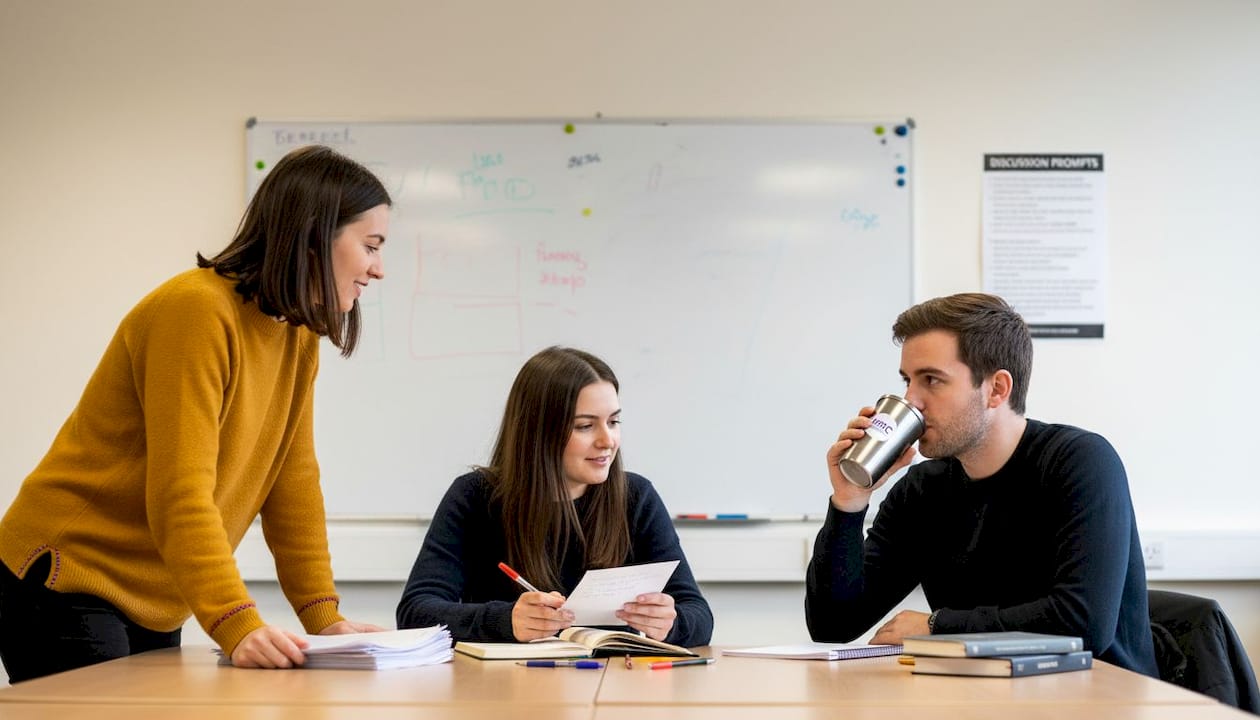
The re-teach step is what separates microteaching from simple observation. You do not just hear what went wrong. You immediately apply the correction. Video recording enables objective feedback in a way that memory alone cannot match, because watching yourself teach reveals habits you never knew you had.
For practicum session formats that complement this cycle, it helps to understand how microteaching fits into a broader supervised teaching schedule. Keeping the feedback focused is equally important. Research on keeping students focussed applies just as much to trainee teachers in a feedback session as it does to learners in a classroom.
Pro Tip: Resist the urge to fix every weakness in one session. Choose one priority skill per cycle and work on it until the improvement is visible on video before moving to the next.
Why do teacher trainers use microteaching? Impact and effectiveness
Microteaching is not popular because it is convenient. It is popular because it works. The evidence base behind it is substantial, and the adoption rates across teacher education tell their own story.
“Microteaching is used in 91% of teacher education programmes globally, with positive meta-analytic effects on teacher efficacy and instructional skill.”
That figure is striking. Nine out of ten teacher education programmes worldwide incorporate microteaching in some form. It is not a niche technique. It is the standard.
The benefits for aspiring English teachers are particularly strong:
- Reduced anxiety: Practising in a small, supportive group lowers the stress of early teaching experiences significantly.
- Skill isolation: Focusing on one technique at a time means you can actually measure your progress rather than feeling overwhelmed.
- Constructive feedback: Targeted, specific feedback from peers and trainers is far more actionable than general classroom observation.
- Bridge to real classrooms: Microteaching builds the habits and reflexes you need before you face a full class of language learners.
The numbers back this up. Meta-analyses show a 0.49 SD effect on instructional practice from structured coaching and microteaching interventions. In practical terms, that is a meaningful, measurable improvement in teaching quality.
Exploring a range of teaching methods in TEFL alongside microteaching gives you a broader toolkit. And understanding teaching practice explained in the context of a full TEFL programme helps you see where microteaching fits in the bigger picture.
When is microteaching most useful—and what can’t it do?
Microteaching is a powerful tool. It is not a complete solution on its own. Knowing when to use it and when to supplement it with other training methods will make your development as a teacher far more efficient.
The table below compares microteaching against alternative training approaches:
| Training method | Best for | Limitations |
|---|---|---|
| Microteaching | Skill isolation, early confidence, targeted feedback | Simulated environment, limited real learner interaction |
| Full teaching practicum | Real classroom experience, classroom management | Less targeted feedback, higher stakes |
| Peer teaching | Collaborative learning, low-pressure practice | Less expert feedback |
| Observation of experienced teachers | Modelling good practice | Passive, no personal skill development |
| Online teaching simulations | Remote teaching skills | Limited physical classroom transfer |
Microteaching shines when you are new to teaching and need to build confidence without the pressure of a full class. It is ideal for isolating a specific weakness, such as unclear instructions or poor board use, and working on it systematically. Simulated environments do limit real-classroom transfer, however, and microteaching alone cannot replicate the complexity of managing thirty learners with different needs, energy levels, and motivations.
Some trainers also note that microteaching can be underutilised due to time constraints in busy training programmes. When it is rushed or treated as a box-ticking exercise, its value drops sharply. Quality matters far more than quantity here.
For a broader view of alternatives to microteaching and how peer teaching fits into EFL training, it is worth exploring how different methods complement each other. Full teaching practice remains essential and should always follow microteaching, not replace it.
Pro Tip: Combine microteaching sessions with supervised practicum placements. Use microteaching to refine a specific skill, then apply it immediately in a real classroom setting to cement the transfer.
How to make the most of microteaching for your TEFL certification
Microteaching only delivers its full value when you approach it strategically. Many trainee teachers treat it as a performance. The ones who progress fastest treat it as a laboratory.
Here are the top strategies for getting the most from every microteaching session:
- Set a precise objective before each session. “I will improve my concept-checking questions” is far more useful than “I will try to teach well.”
- Watch your video recordings critically and look for specific moments, not general impressions.
- Ask for targeted feedback on one skill only. Broad feedback is hard to act on.
- Keep a reflective journal after each session, noting what changed and what still needs work.
- Re-teach deliberately. The re-teach step is where the real learning happens, so never skip it.
Once you have built a body of microteaching experience, it becomes a genuine asset in job applications and interviews. Here is how to talk about it effectively:
- Describe the specific skills you worked on and how you measured your improvement.
- Mention the use of video reflection as evidence of your commitment to self-directed professional development.
- Reference the feedback process to show you can receive and act on constructive criticism.
- Connect your microteaching outcomes to the age groups or contexts you are applying to teach.
Literature reviews confirm that microteaching is highly effective for skill refinement and bridging the gap between theory and practice. Employers in international schools and language academies across Europe, Asia, and Latin America recognise this. Solid lesson planning for TEFL combined with documented microteaching experience tells a hiring manager that you are serious, prepared, and ready to perform from day one.
For further teaching practicum advice on how to structure your practical training, the resources available through accredited TEFL programmes are invaluable. The key is to treat every session as a deliberate step forward, not just a requirement to complete.
Next steps: turn microteaching practice into a global TEFL career
Mastering microteaching is one of the most practical things you can do to accelerate your path into international English teaching. It builds the skills, confidence, and professional habits that employers around the world are looking for.
At EBC TEFL, microteaching is built directly into our Trinity College London accredited Trinity CertTESOL course, giving you structured, supervised practice that meets the highest international standards. Our programmes operate globally, with one-year study and work abroad options in Spain, France, and Italy that combine accredited teacher training, language study, visa support, and real teaching experience. Whether you are just starting out or ready to take the next step, we offer free lifetime job placement support to help you build a career that travels. Explore what TEFL can offer you or book a free consultation call with our team today.
Frequently asked questions
How long does a microteaching session usually last?
Most sessions last 5 to 20 minutes, with small groups of 5 to 10 peers, and focus on practising one or two specific teaching skills at a time.
Does microteaching replace classroom teaching practice?
No. Microteaching prepares you for full teaching practice by building specific skills in a low-pressure setting, but it cannot substitute for the complexity of a real classroom environment with genuine learners.
Why do TEFL courses highlight microteaching?
Because it works. 91% of teacher training programmes worldwide use it, and research consistently shows positive effects on teaching confidence and instructional effectiveness.
What skills can I improve with microteaching?
You can target specific areas such as classroom management, questioning techniques, pacing, board use, and presenting new language, with one skill focused on per session for maximum impact.
