
Most teachers entering the global TEFL field discover that over 60 percent of international employers now recognize advanced certifications as a mark of true expertise. The demand for highly skilled English educators is stronger than ever, with professional development setting apart those who succeed from those who simply get by. Understanding how professional development, accredited qualifications, and global job support influence career opportunities will help educators navigate a world of possibilities with real confidence.
Table of Contents
- Defining Professional Development In TEFL
- Key TEFL Qualifications And Certifications
- How Trinity College London Accreditation Works
- One-Year Study And Work Abroad Programmes
- Global Job Placement And Ongoing Support
Key Takeaways
| Point | Details |
|---|---|
| Continuous Professional Development | TEFL educators should engage in ongoing learning through various forms of training and workshops to enhance teaching effectiveness and cultural competence. |
| Accreditation and Qualifications | Holding internationally recognised qualifications, such as Trinity CertTESOL and DELTA, is essential for establishing credibility and accessing global teaching opportunities. |
| Study Abroad Programmes | One-year study and work programmes provide a unique blend of practical experience and academic training, fostering global competencies in language education. |
| Career Support Services | Comprehensive job placement and ongoing support systems are crucial in helping educators find meaningful employment and develop their careers in international contexts. |
Defining Professional Development in TEFL
Professional development in Teaching English as a Foreign Language (TEFL) represents a strategic approach to continuous learning and skill enhancement for educators committed to excellence in language instruction. Unlike traditional career trajectories, TEFL professional development requires ongoing engagement with emerging teaching methodologies, technological innovations, and cross-cultural communication strategies.
At its core, professional development encompasses both formal and informal learning opportunities designed to expand a teacher’s pedagogical toolkit. Continuing professional development practices in TEFL include structured training programmes, self-directed learning experiences, in-service workshops, and advanced certification pathways. These initiatives aim to progressively improve teaching effectiveness, cultural competence, and instructional adaptability across diverse learning environments.
The landscape of professional development in TEFL is multifaceted, integrating several critical dimensions:
- Pedagogical Skill Enhancement: Mastering contemporary language teaching approaches
- Technological Integration: Developing digital literacy and online teaching capabilities
- Cultural Competence: Understanding nuanced intercultural communication strategies
- Specialisation Pathways: Exploring niche teaching domains like business English or academic language instruction
Successful TEFL professionals recognise that learning is an iterative journey. By consistently investing in their professional growth, educators not only improve their individual practice but contribute to the broader evolution of language education worldwide.
Key TEFL Qualifications and Certifications
Navigating the landscape of TEFL qualifications requires understanding the diverse range of certifications available to aspiring language educators. Professional teaching credentials represent crucial milestones in an educator’s career, providing essential validation of teaching skills and pedagogical knowledge across international contexts.

At the entry level, the Trinity CertTESOL stands as a comprehensive initial qualification designed for individuals with minimal teaching experience. Accredited by Trinity College London, this certification provides foundational training in language teaching methodologies, classroom management, and practical instructional techniques. For educators seeking advanced professional development, the Diploma in Teaching English to Speakers of Other Languages (DELTA) offers a more sophisticated pathway, targeting experienced teachers looking to deepen their theoretical understanding and refine complex teaching strategies.
The primary TEFL qualifications can be categorised into several key levels:
- Initial Certificates: Entry-level qualifications like CertTESOL
- Advanced Diplomas: Professional-level credentials such as DELTA
- Specialised Certifications: Focused programmes in areas like:
- Business English instruction
- Online teaching methodologies
- Academic English preparation
Successful language educators recognise that qualifications are more than mere documents. They represent comprehensive journeys of professional growth, demonstrating commitment to linguistic education and cross-cultural communication. By strategically selecting and pursuing relevant certifications, teachers can unlock global teaching opportunities and establish themselves as credible, skilled professionals in the international language education marketplace.
How Trinity College London Accreditation Works
Trinity College London represents a gold standard in international language teaching certification, offering rigorous accreditation processes that ensure exceptional educational quality. TEFL accreditation fundamentals provide educators with a comprehensive framework for professional recognition and global teaching opportunities.
The accreditation process involves multiple layers of assessment, designed to validate an educator’s theoretical knowledge and practical teaching capabilities. Regulated by the UK’s Office of Qualifications and Examinations Regulation (Ofqual), Trinity CertTESOL and DELTA qualifications undergo stringent evaluation to maintain international educational standards. These certifications require candidates to demonstrate advanced linguistic understanding, sophisticated pedagogical techniques, and a nuanced approach to cross-cultural language instruction.
Key components of Trinity College London’s accreditation framework include:
- Comprehensive Assessment: Multiple evaluation stages testing theoretical and practical skills
- External Moderation: Independent verification of teaching competencies
- International Recognition: Globally acknowledged teaching credentials
- Continuous Professional Development: Ongoing quality assurance mechanisms
- Periodic review of curriculum
- Regular updates to teaching methodologies
- Alignment with contemporary language education research
Prospective language educators should understand that Trinity College London’s accreditation is more than a certificate. It represents a commitment to educational excellence, providing a structured pathway for teachers to develop sophisticated skills, gain international credibility, and contribute meaningfully to global language education.
One-Year Study and Work Abroad Programmes
Emerging professionals in language education are increasingly seeking comprehensive international experiences that blend academic training with practical teaching opportunities. Study abroad programmes represent transformative pathways for educators looking to develop global competencies and immerse themselves in multicultural learning environments.
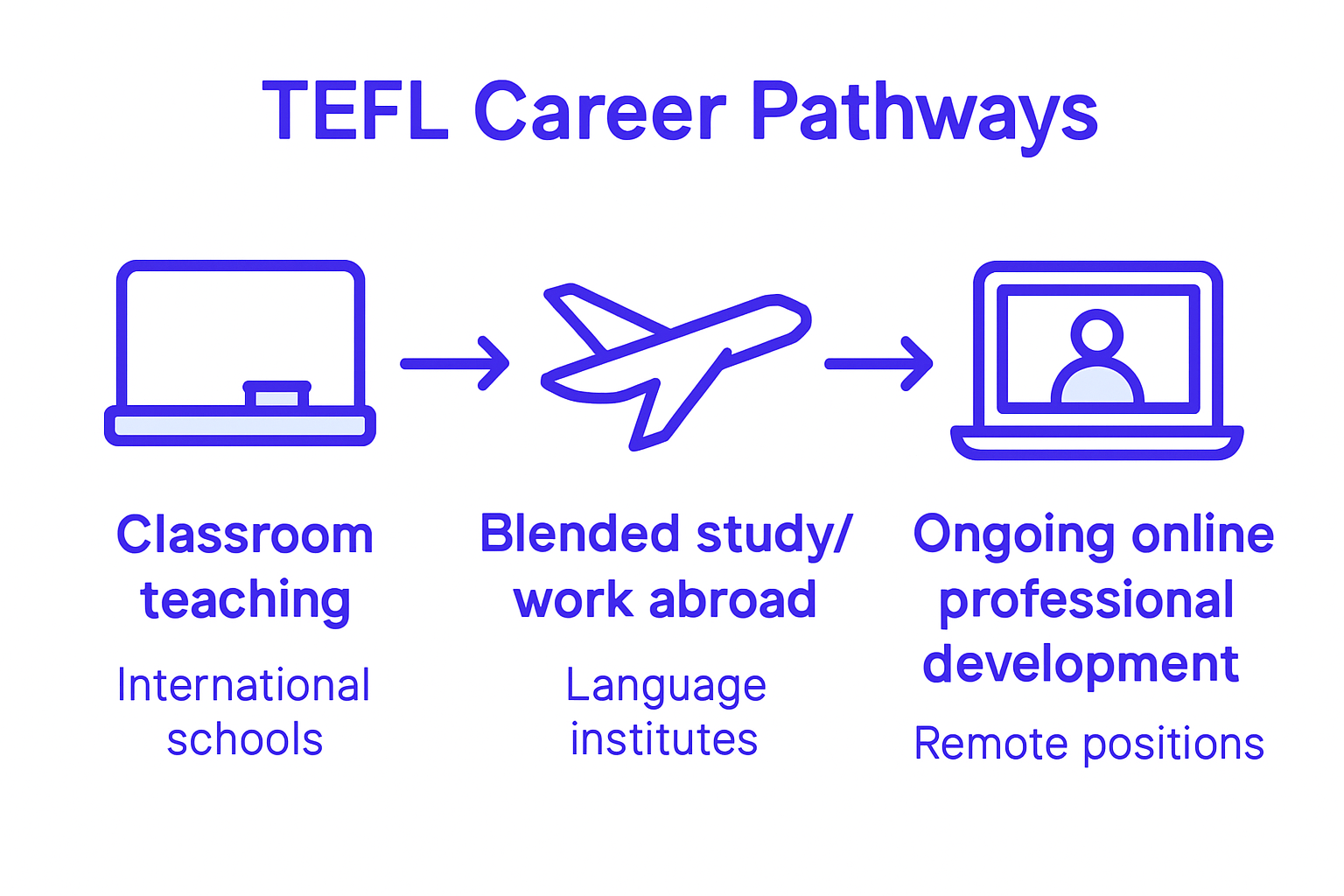
These innovative one-year programmes are meticulously designed to provide a holistic approach to professional development, integrating intensive language training, advanced teaching certification, and real-world work experience. Participants can expect a structured journey that combines academic studies, professional qualifications, and cultural immersion, creating a comprehensive pathway to international teaching careers. The programmes typically encompass multiple strategic components, including Trinity College London accredited teacher training, language acquisition courses, and opportunities for part-time teaching or professional work.
Key features of one-year study and work abroad programmes include:
- Comprehensive Certification: Obtain internationally recognised teaching qualifications
- Language Immersion: Develop advanced language skills in target destinations
- Structured language learning programmes
- Native speaker interactions
- Cultural integration experiences
- Professional Experience: Gain practical teaching and work opportunities
- Visa and Support Services: Comprehensive administrative assistance
- Visa application guidance
- Accommodation support
- Local network connections
Professional educators recognise these programmes as more than just educational experiences. They represent strategic investments in personal and professional growth, offering unparalleled opportunities to develop global perspectives, enhance teaching skills, and build international career foundations in the dynamic world of language education.
Global Job Placement and Ongoing Support
Building a successful international teaching career requires more than just certification. Professional job placement support serves as a critical bridge connecting qualified educators with meaningful employment opportunities across global contexts.
The comprehensive job placement approach encompasses a strategic framework designed to support teachers throughout their professional journey. Global job placement is not merely about finding a position, but about creating meaningful career pathways that align with individual professional goals and organisational requirements. This holistic support system includes personalised career guidance, targeted job matching, interview preparation, and ongoing professional development resources that extend well beyond initial placement.
Key elements of global job placement and support include:
- Career Consultation Services
- Individualised career strategy sessions
- Professional portfolio development
- Personal branding guidance
- Global Job Network
- Partnerships with international schools
- Connections across multiple teaching markets
- Access to exclusive job listings
- Ongoing Professional Development
- Continuous skills enhancement workshops
- Advanced teaching methodology updates
- Mentorship programmes
- Lifetime Career Support
- Job search assistance
- CV and application document refinement
- Interview skill training
Successful international educators understand that career development is an ongoing journey. By leveraging comprehensive support systems, teachers can navigate complex global employment landscapes, continuously expand their professional capabilities, and create meaningful impact in language education across diverse cultural contexts.
Transform Your TEFL Career with Accredited Training and Global Support
If you are ready to elevate your teaching credentials and embrace international opportunities, professional development through Trinity College London accredited courses is essential. The article highlights the importance of continuous learning, cultural competence, and specialised TEFL qualifications like the CertTESOL and DELTA. At EBC TEFL, we offer comprehensive training pathways that align perfectly with these goals, empowering you with recognised certification and practical skills.
Our unique one-year study and work abroad programmes in Spain, France, and Italy combine accredited teacher training, immersive language study, and paid teaching or work experience with visa support and cultural integration. This holistic approach addresses the challenges of developing both teaching expertise and global readiness. Plus, our lifelong global job placement and career support ensure you will never navigate the international teaching market alone.
Take the next step to transform your international teaching career. Discover how EBC TEFL’s accredited Trinity College London courses and comprehensive 1-year study and work abroad programmes can support your professional development goals. Book a free consultation today at EBC TEFL and unlock opportunities across Europe and beyond.
Frequently Asked Questions
What is professional development in TEFL?
Professional development in TEFL involves ongoing learning and skill enhancement for language educators, focusing on emerging teaching methodologies, technological integration, and cross-cultural communication strategies.
What qualifications are necessary for TEFL professionals?
Key TEFL qualifications include initial certificates like Trinity CertTESOL, advanced diplomas such as DELTA, and specialised certifications in areas like business English or online teaching methodologies.
How does Trinity College London accreditation work for TEFL certifications?
Trinity College London accreditation involves a rigorous assessment process ensuring teaching quality, including comprehensive evaluations, external moderation, and ongoing professional development to maintain international educational standards.
What are the benefits of one-year study and work abroad programmes for aspiring TEFL educators?
These programmes offer comprehensive certification, language immersion, practical teaching experience, and extensive support services, providing educators with global competencies and enhancing their employability in international teaching careers.
Recommended
- International TEFL Career Steps: Your Path to Global Teaching – EBC TEFL courses
- What Is International TEFL? Complete Guide and Benefits – EBC Trinity CertTESOL and TEFL courses
- Teach English in Japan | TEFL Certification & Jobs Guide
- 7 Key Steps to Become a TEFL Teacher Abroad Successfully – EBC TEFL courses
- 21st Century Teaching Skills: Everything You Need to Know – Projector Display
