
Over 30,000 English teachers start new positions in Spain every year, drawn by the chance to live and work in a vibrant culture. With growing demand for qualified educators, getting everything right from your initial certification to visa paperwork can make or break your dream job. Understanding the key steps, eligibility rules, and preparation process will help you stand out, avoid mistakes, and smoothly begin your teaching adventure in Spain.
Table of Contents
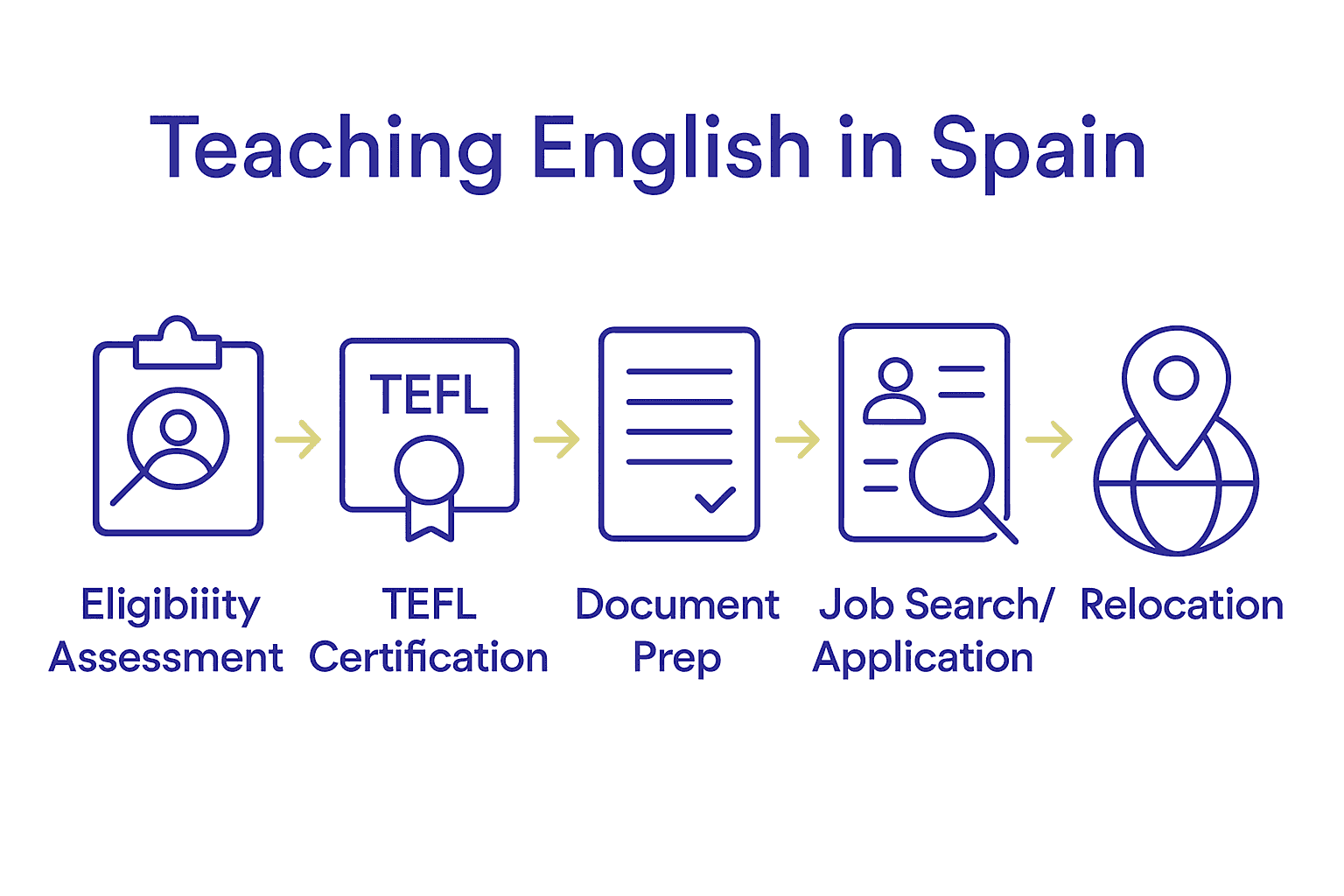
- Step 1: Assess Eligibility And Select Certification
- Step 2: Complete A TEFL Or TESOL Course
- Step 3: Prepare Required Documents And Visa
- Step 4: Search And Apply For Teaching Jobs
- Step 5: Verify Job Offers And Relocate To Spain
Quick Summary
| Key Point | Explanation |
|---|---|
| 1. Assess eligibility for teaching in Spain | Check your qualifications and age requirements to start your teaching journey abroad. |
| 2. Complete a recognized TEFL or TESOL course | Choose courses that offer practical training and job placement support to become a confident instructor. |
| 3. Prepare necessary documents for visa | Gather all required documents early, including translated academic credentials and proof of financial stability. |
| 4. Strategically search for teaching jobs | Utilize online job boards and networking to find suitable positions and tailor your applications. |
| 5. Verify job offers thoroughly before relocating | Research potential employers to ensure job legitimacy and prepare logistically for a smooth transition to Spain. |
Step 1: Assess eligibility and select certification
Preparing to teach English in Spain starts with understanding your certification requirements and personal eligibility. This crucial first step determines your pathway into international teaching and sets the foundation for your exciting career abroad.
To begin your assessment, you will need to evaluate several key factors that impact your potential to teach English in Spain. First, check your basic eligibility criteria: most programmes require you to be a native English speaker or have near native proficiency. You should hold a bachelor’s degree from an accredited university and be between 20 and 45 years old. Native speakers from the United Kingdom, United States, Canada, Ireland, Australia, and New Zealand typically have the strongest applications.
Your certification selection matters tremendously. Look for internationally recognised qualifications like the Trinity CertTESOL or Cambridge CELTA, which are highly respected in Spain. These programmes provide comprehensive training in language teaching methodologies and classroom management. When comparing options, consider factors such as course duration (typically 4 weeks full time), practical teaching hours, and the level of accreditation. Some programmes offer specialised modules in business English or young learner teaching, which can significantly enhance your employability.
Pro Tip: Always verify that your chosen certification is recognised by Spanish educational institutions and meets the specific requirements for work visas.
As you move forward, research specific programme details carefully. Check entry requirements, course costs, and potential job placement support. Some training providers offer end to end support from certification through to securing your first teaching position in Spain. Your next step will involve completing the application process and preparing for your transformative teaching journey.
Step 2: Complete a TEFL or TESOL course
With your eligibility assessed, your next critical step is completing a recognised TEFL or TESOL certification course that will equip you with the necessary skills to teach English effectively in Spain. This comprehensive training programme will transform you from an aspiring teacher into a confident language instructor ready to engage international students.
Choosing the right certification course requires careful consideration. Look for programmes that offer a balanced mix of theoretical knowledge and practical teaching experience. The guide to Trinity CertTESOL certification provides comprehensive insights into what makes an exceptional course. Ideal programmes typically include around 120 hours of training with a minimum of 6 hours of observed teaching practice. Online and in person options are available, allowing flexibility based on your schedule and learning preferences. Courses like Trinity CertTESOL or Cambridge CELTA are internationally recognised and provide robust training in language teaching methodologies, classroom management, lesson planning, and intercultural communication skills.
During your course, you will learn essential teaching techniques such as lesson planning, classroom management, error correction strategies, and techniques for teaching grammar and vocabulary. Most programmes include modules on understanding language learners, designing engaging learning activities, and adapting teaching styles to different student needs. Practical teaching practice is crucial these sessions will help you develop confidence and real world classroom skills.
Pro Tip: Select a course that offers job placement support or connections with schools in Spain to streamline your transition into teaching.
As you complete your certification, start building a professional portfolio of lesson plans, teaching resources, and reflective journals. These materials will be valuable when applying for teaching positions and demonstrating your practical skills to potential employers. Your next step will involve exploring job opportunities and preparing for interviews in the Spanish education market.
Step 3: Prepare required documents and visa
The fastest way is to use EBC’s Road2Spain programme that gives you a one year Student Visa with a 30 hour part-time work allowance.
If you prefer to do it yourself, here are the details.
With your TEFL certification completed, the next critical phase in your journey to teach English in Spain involves preparing the necessary documentation and securing the appropriate work visa. This process requires meticulous attention to detail and careful organisation of various official papers that demonstrate your eligibility to work in the country.
Your document preparation should begin with gathering core paperwork. You will need a valid passport with at least six months remaining before expiration, your original university degree certificate, and official academic transcripts. Critically, all foreign language documents must be professionally translated into Spanish by a certified translator. Criminal background checks from your home country and any countries where you have resided in the past five years are mandatory. Prepare multiple certified copies of each document and ensure they are less than three months old when submitted.
The visa application process typically requires specific supporting documents. These include proof of financial stability demonstrated through recent bank statements showing sufficient funds, a clean criminal record certificate, an official job contract from a Spanish school, and comprehensive health insurance that covers you in Spain. Passport sized photographs meeting Spanish visa requirements are also essential. Some regions might request additional documentation such as medical certificates or proof of language proficiency.
Pro Tip: Start collecting and authenticating your documents at least three months before your intended departure to allow time for potential delays or required corrections.
As you compile your documentation, contact the Spanish consulate in your home country to confirm the most current visa requirements.
 Processing times can vary, so early preparation is key. Your next step will involve submitting your meticulously prepared documents and navigating the final stages of your work visa application.
Step 4: Search and apply for teaching jobs
The fastest way is to use EBC’s worldwide, lifetime job programme that helps you find work where you want to teach.
If you prefer to do it yourself, here are the details.
With your documents prepared and certification complete, you are now ready to launch your job search in Spain. This exciting phase requires strategic planning, persistent networking, and a targeted approach to finding the right teaching opportunities that match your skills and aspirations.
Begin your job search by exploring multiple channels. Online job boards specialising in English teaching positions in Spain are excellent starting points. Websites like English teacher jobs in Madrid and Barcelona provide comprehensive listings across different regions. Network with your TEFL certification programme alumni and instructors who often have connections with schools and language centres. Reach out to international schools, private language academies, public schools through government programmes, and corporate language training centres. Create a professional profile on platforms like LinkedIn, highlighting your TEFL certification, teaching experience, and Spanish language skills if applicable.
Your job application strategy should focus on crafting a compelling CV and cover letter tailored to the Spanish education market. Highlight your Trinity CertTESOL qualification, any specialised teaching modules, and demonstrate your understanding of communicative language teaching approaches. Prepare digital copies of all required documents and create a professional email template for job applications. Many schools conduct initial interviews via video call, so ensure you have a professional online presence and a quiet, well-lit space for virtual interviews.
Pro Tip: Be aware of potential job scams and always verify the legitimacy of job offers through official channels or verified recruitment agencies.
As you apply for positions, remain flexible about location and teaching contexts. Some teachers start with part time or temporary positions to gain local experience. Your next step involves preparing for interviews and potentially relocating to your chosen region in Spain.
Step 5: Verify job offers and relocate to Spain
EBC’s worldwide, lifetime job programme only works with trusted schools we have direct contact with.
If you prefer to do it yourself, here are the details.
After successfully securing potential teaching opportunities, your next critical phase involves thoroughly verifying job offers and preparing for your relocation to Spain. This step requires careful research, strategic planning, and a systematic approach to ensuring the legitimacy and suitability of your professional opportunity.
Verifying job offers demands meticulous attention to detail. How to get English teaching jobs in Spain provides valuable insights into navigating potential employment scenarios. Contact the school directly to confirm the job details, including exact salary, working hours, contract length, and specific responsibilities. Request references from previous teachers, verify the school’s registration details, and cross check their reputation through online forums and professional networks. Authentic employers will be transparent and willing to provide comprehensive information about the position and working environment.
Relocating to Spain involves multiple logistical considerations. Research the specific region where you will be teaching, understand local living costs, and begin arranging accommodation. Many schools assist with initial housing recommendations or can connect you with reliable local resources. Create a comprehensive budget accounting for initial setup expenses, including rental deposits, initial living costs, and potential unexpected expenditures. Familiarise yourself with local banking processes, mobile phone plans, and healthcare registration requirements to ensure a smooth transition.
Pro Tip: Always maintain digital and physical copies of all job offer documentation and keep communication records with your prospective employer.
Prepare for cultural adaptation by learning basic Spanish phrases, researching local customs, and connecting with other expatriate teachers in your region. Your final step will involve finalising travel arrangements and mentally preparing for your exciting new professional adventure in Spain.
Unlock Your Teaching Career in Spain with Confidence
Taking the right steps to teach English in Spain can feel overwhelming with requirements like gaining the Trinity CertTESOL qualification, preparing authentic documents, and navigating job offers safely. If you have identified with challenges such as choosing the best TEFL course, understanding visa essentials, and securing trustworthy teaching positions, you are not alone. Many aspiring educators share the same goal: to embark on their journey with solid training and reliable support.
Our platform at EBC TEFL Course specialises in transforming your teaching ambitions into reality. We offer accredited certification programmes tailored to your needs with practical training and hands-on lesson planning techniques. Beyond certification, we provide personalised guidance on every crucial phase including work visa advice and verified job opportunities in Spain. Why wait to make your dream a certainty Browse our detailed guide to Trinity CertTESOL certification and explore trusted listings on English teacher jobs in Madrid and Barcelona. Take action today by booking a free consultation with our expert team on EBC TEFL Course so you can start your teaching adventure in Spain fully prepared and empowered.
Frequently Asked Questions
What are the eligibility requirements to teach English in Spain?
Most programs require you to be a native or near-native English speaker, hold a bachelor’s degree, and be between 20 and 45 years old. Make sure to verify these criteria before applying to ensure you meet all necessary qualifications.
How do I choose the right TEFL or TESOL certification for teaching in Spain?
Select a certification that is internationally recognized, such as Trinity CertTESOL or Cambridge CELTA, which includes at least 120 hours of training and 6 hours of observed teaching practice. Review options carefully to find a program that fits your schedule and offers practical teaching experience.
What documents do I need to apply for a work visa to teach in Spain?
You will need a valid passport, your university degree certificate and transcripts, a criminal background check, and proof of financial stability. Organize these documents and ensure they are professionally translated into Spanish to facilitate a smooth visa application process.
How can I effectively search for teaching jobs in Spain?
The fastest way is to use EBC’s worldwide, lifetime job programme that helps you find work where you want to teach. Alternatively, use online job boards and networks to find available positions. Tailor your CV and cover letter specifically for each application to highlight relevant qualifications and experience.
How can I prepare for cultural adaptation while teaching in Spain?
Learn basic Spanish phrases and familiarize yourself with local customs to ease your transition. Connect with other expatriate teachers in your area to gain insights and support as you adapt to your new environment.
Find out more – Schedule a call

Recommended
- Three professional tips and advice for teaching English in Spain – EBC Trinity CertTESOL and TEFL courses
- Can an American work legally in Spain as an English teacher? – EBC Trinity CertTESOL and TEFL courses
- How to get English teaching jobs in Spain – EBC Trinity CertTESOL and TEFL courses
- Teaching English in Spain: The Basics – EBC Trinity CertTESOL and TEFL courses
- Mejores cursos de valenciano online – Comparativa 2025 – Academia Atenea
