
Key Points
- Preparing thoroughly involves confirming your interview logistics, bringing original documents, and practicing structured answers. Demonstrating knowledge of safeguarding, delivering a confident micro-teach, and engaging warmly with staff and pupils are crucial to success. Follow up promptly with a concise thank-you note to reinforce your professionalism and genuine interest.
Confirm your attendance, bring original documents, prepare STAR and PEEL answers, rehearse your micro-teach with familiar material, and be ready to explain safeguarding under Keeping Children Safe in Education (KCSIE). Those five actions cover the vast majority of what UK panels actually score.
Quick-reference checklist:
- Confirm the interview slot, who to ask for, and expected timings in writing
- Bring original passport, qualifications, DBS evidence, and right-to-work documents
- Prepare 4–5 STAR stories covering classroom management, differentiation, and parental communication
- Plan and rehearse your micro-teach using content you already know well
- Know KCSIE: be able to name the Designated Safeguarding Lead (DSL) role and describe the observe-record-report sequence
Each item is a direct hireability signal. Panels use them to decide whether you are safe to employ, capable in the classroom, and ready to join their staff on day one.
Table of Contents
- Have you confirmed all your logistics before interview day?
- What documents should you bring to a teaching interview?
- Your interview begins the moment you walk through the door
- How do you answer common teacher interview questions well?
- How do you prepare a micro-teach that impresses the panel?
- What do you need to know about safeguarding for a UK interview?
- What are interviewers actually looking for from you?
- What questions should you ask the panel?
- What should you do immediately after the interview?
- Why these tips translate directly into job offers
- Key takeaways
- Useful sources and further reading
Have you confirmed all your logistics before interview day?
Arriving calm and on time is not a given. Confirm your interview slot by email or phone at least 48 hours beforehand, and ask specifically: who should you ask for at reception, how long is the day, and will there be a tour or informal session before the panel?
Schools often run a full day that includes a tour, an informal chat with pupils, the micro-teach, and the panel interview. Knowing the shape of the day lets you pace yourself and dress appropriately for a classroom.
Practical steps to confirm:
- Send a brief confirmation email the day before, restating the time and your contact number
- Ask whether parking is available or whether there are access requirements to flag in advance
- Plan your route using live travel tools (Google Maps, Citymapper) and build in at least 20 minutes of buffer
- If you need reasonable adjustments, notify the school when you confirm — do not leave it until arrival
Pro Tip: When you confirm, ask whether the micro-teach topic has been set or whether you have freedom to choose. Knowing this 24 hours early gives you time to refine your plan rather than improvise on the day.
What documents should you bring to a teaching interview?
UK schools carry out safeguarding and right-to-work checks as a statutory requirement, and panels expect to see original documents. Disorganisation at this stage creates an immediate negative impression, even before the formal interview begins.
Documents to bring as originals:
- Passport or national identity document (right-to-work evidence)
- Degree certificate and PGCE, QTS, or TEFL/TESOL qualification certificates
- DBS certificate (if you have one; schools will run their own check regardless)
- Two forms of address evidence if requested in the invitation letter
- References contact details, printed and ready
Useful extras:
- A teaching portfolio with anonymised lesson plans and student work samples
- A printed copy of your personal statement or application letter for reference
- A one-page evidence sheet of your STAR stories (see Section 5)
Pro Tip: Organise documents in a labelled, clear-pocketed folder in the order the school is likely to request them. Producing the right document immediately, without rummaging, signals the same organised professionalism you will bring to the classroom.
Your interview begins the moment you walk through the door
The formal panel is not where the assessment starts. Experienced headteachers confirm that interview-day behaviour, written communication, and warmth with pupils and staff are evaluated informally and contribute directly to the hiring decision. Reception staff, teaching assistants, and pupils you meet on a tour are all part of that picture.
Arrival dos:
- Arrive 10–15 minutes early, sign in calmly, and introduce yourself clearly to reception
- Accept any offer of water or a seat with a brief, warm thank-you
- Engage naturally with any pupils you encounter during a tour; show genuine interest
- Keep your phone on silent and out of sight from the moment you enter the building
Arrival don’ts:
- Do not check your phone while waiting, even briefly
- Avoid negative comments about traffic, the weather, or your previous school
- Do not ask reception staff about salary, holidays, or workload
Pro Tip: If a member of staff accompanies you on a tour, ask one genuine question about the school — a recent project, a display you notice, or a subject you spotted on the timetable. It costs nothing and signals the curiosity panels want to see in a colleague.
How do you answer common teacher interview questions well?
The three frameworks that consistently produce strong answers are STAR (Situation, Task, Action, Result), PEEL (Point, Evidence, Explain, Link), and State–Example–Connect. Concrete, tangible examples grounded in classroom practice are more persuasive than theoretical statements, and keeping responses to around two minutes holds the panel’s attention.
| Framework | Best suited to | Strength | Watch out for |
|---|---|---|---|
| STAR | Behavioural questions (“Tell me about a time…”) | Shows evidence of real impact | Can run long; practise cutting to two minutes |
| PEEL | Pedagogical/philosophy questions | Logical, structured argument | Can feel academic if not grounded in examples |
| State–Example–Connect | Short follow-up questions | Fast, clear, memorable | Too brief for complex scenarios |
Common questions and a one-line strategy for each:
- “How do you manage behaviour?” — Lead with a proactive strategy, not a reactive one; name a specific technique and its outcome
- “How do you differentiate?” — Give a concrete example with two distinct student groups and what changed for each
- “How do you use assessment?” — Describe a specific formative tool (exit tickets, mini whiteboards) and how you acted on the data
- “Tell me about a difficult conversation with a parent.” — Use STAR; end on the relationship outcome, not the conflict
- “Why this school?” — Reference something specific from the school’s website, Ofsted report, or ethos statement
- “What is your teaching philosophy?” — Use PEEL; anchor it in one classroom moment
Prepare 4–5 STAR stories covering management, differentiation, a challenging student, and parental communication before the interview. That bank covers most behavioural questions without improvisation.
Sample STAR answer (behaviour management):
“A Year 9 class I inherited mid-year had a pattern of low-level disruption during independent work. I introduced a silent signal system and restructured the task into shorter timed chunks with visible progress markers. Within three weeks, on-task time in that lesson increased noticeably, and two students who had previously disengaged began completing work independently.”
Sample PEEL answer (differentiation):
“My starting point with differentiation is always the learning objective, not the ability label. In a recent reading lesson, I used the same core text for all students but varied the scaffolding: some had sentence starters, others had a glossary, and the most confident students had an extension question that required inference. Every student reached the objective; the route was different.”
For more sample TEFL interview questions and answers, EBC has a dedicated preparation resource covering classroom management and differentiation scenarios.
How do you prepare a micro-teach that impresses the panel?
The demo lesson is the single most decisive element in many interview processes. Panels use it to see real-time adaptation, student interaction, and your instinct for the room — not a polished performance of new content. Use a topic you have taught before so your attention stays on the learners, not the material.
Micro-teach planning template:
- Write one clear learning objective (not a topic; a measurable outcome)
- Define two success criteria students can self-assess against
- Plan a brief starter that activates prior knowledge (2–3 minutes)
- Design the main activity around visible student output, not teacher talk
- Build in at least one check for understanding (mini whiteboards, show of hands with follow-up, think-pair-share)
- Plan a plenary or exit ticket that links back to the objective
- Prepare a differentiation note for each activity (scaffold and stretch)
Typical micro-teach timing:
| Phase | Duration | Purpose |
|---|---|---|
| Starter / hook | 5 minutes | Activate prior knowledge; settle the group |
| Main activity | 15 minutes | Core learning; visible student output |
| Check for understanding | 5 minutes | Formative assessment; address misconceptions |
| Plenary / exit ticket | 5 minutes | Consolidate; link back to objective |
Dos and don’ts in the lesson:
- Do address misconceptions openly rather than moving past them
- Do use students’ names if you learn them before the lesson
- Do narrate your thinking briefly if something goes off plan (“Let me adjust this slightly so everyone can access it”)
- Do not lecture for more than three minutes without student interaction
- Do not ignore a student who is struggling in favour of keeping to the plan
Mock practice steps: run the lesson once with a colleague or friend as the audience, record a single practice run on your phone, watch it back and identify one concrete improvement, then note that improvement to mention in the post-lesson reflection. Panels value candidates who can self-assess accurately.

What do you need to know about safeguarding for a UK interview?
Knowledge of KCSIE and a clear process for recognising and reporting concerns is non-negotiable in UK panels. Failing to articulate recognition and reporting procedures is a common reason for failing an interview. This is not a box-tick question; it is a statutory check.
What to know from KCSIE:
- The four categories of abuse (physical, emotional, sexual, neglect) and common indicators
- Your duty to act on concerns immediately, not investigate them yourself
- The role of the Designated Safeguarding Lead (DSL) and how to locate them in a new school
- The requirement to record concerns in writing, with dates and direct observations rather than interpretations
- The principle that a child’s welfare is paramount and overrides confidentiality
If asked about safeguarding, describe what you would observe, how you would record it, and who you would report it to. To name the DSL role specifically. Reference the school’s safeguarding policy and Keeping Children Safe in Education rather than personal procedures — this shows you understand the statutory framework rather than improvising a personal approach.
When answering, use language like: “My first step would be to record exactly what I observed, without interpretation, and report it to the Designated Safeguarding Lead that same day. I would follow the school’s safeguarding policy and KCSIE guidance throughout.”
What are interviewers actually looking for from you?
Interviewers want evidence that you can reach all students, collaborate with colleagues, and improve your own practice. Principals flag five common red flags: reactive-only behaviour strategies, narrow differentiation, vague use of technology, data without decision evidence, and lack of school awareness. Avoiding those five pitfalls is as important as landing strong answers.
High-value behaviours panels want to see:
- Concrete examples with specific student outcomes, not general descriptions of good practice
- Positive, professional language about former colleagues, parents, and pupils
- Evidence of using data to make a decision, not just to describe a situation
- Visible differentiation in the micro-teach, not just a mention of it in answers
- A growth mindset: reference CPD, feedback you have acted on, or a lesson that did not go to plan and what you changed
Red flags and how to avoid them:
- Vague answers (“I use a variety of strategies”) — replace with a named technique and its outcome
- Negative language about a previous school or colleague — reframe as a learning experience
- A rehearsed lecture-style demo with no student interaction — build interaction into every five-minute block
- Claiming technology use without explaining the pedagogical purpose — name the tool and the learning outcome it served
Pro Tip: Headteachers report that candidates who interact warmly with pupils during a tour, ask staff a genuine question, and thank reception on the way out consistently leave a stronger impression than those who save all their energy for the panel room. Those small moments are assessed.
What questions should you ask the panel?
Always ask 2–3 high-quality questions at the end of the interview. Asking nothing signals low interest; asking about pay or holidays signals the wrong priorities. Questions that show interest in professional development and school priorities are valued more highly than logistical queries.
Suggested questions by category:
Teaching and learning:
- “How does the school approach formative assessment across departments?” (shows pedagogical awareness)
- “What does a typical lesson observation cycle look like here?” (signals you welcome feedback)
Professional development:
- “What CPD opportunities are available in the first year?” (demonstrates growth mindset)
- “How does the school support early-career teachers or those new to the role?” (practical and forward-looking)
Pupils and context:
- “What are the biggest challenges pupils in this year group face, and how does the school address them?” (shows you have thought about the students, not just the job)
- “How does the school involve parents in supporting learning?” (signals collaborative values)
Practical onboarding:
- “When would you expect to make a decision, and what are the next steps?” (professional, not pushy)
- “Is there anything from today you would like me to clarify or expand on?” (confident and open)
For more thoughtful questions to ask at interview, EBC has a dedicated resource with examples that demonstrate school awareness and professional maturity.
What should you do immediately after the interview?
Send a brief follow-up email within 24–48 hours. One sentence restating your interest and one sentence connecting your skills to something specific from the day is enough. It is not common practice in every UK school, but it is always noticed positively.
Follow-up email template:
Subject: Thank you — ,
Dear , thank you for the opportunity to interview for today. I left genuinely excited about , and I am confident my experience in would contribute well. Please do not hesitate to contact me if you need anything further. Kind regards, .
Post-interview reflection checklist:
- Which questions did you answer most confidently, and why?
- Which answer felt weakest, and what would you change?
- Did the micro-teach go to plan? What would you adjust?
- What did you learn about the school that you did not know before?
If you are unsuccessful, request feedback within a week. A short, polite email asking for one or two specific areas to develop is almost always answered. That feedback is preparation for the next interview.
Pro Tip: Write your reflection notes within two hours of leaving the building, while the detail is fresh. Candidates who do this consistently improve faster across multiple interview rounds than those who rely on memory alone.
Why these tips translate directly into job offers
The demo lesson, safeguarding knowledge, and concrete structured answers are the three elements that determine outcomes in UK teaching interviews. That is not opinion; it reflects both headteacher experience and statutory expectations built into the hiring process.
Three practical takeaways from that evidence:
- In your answers: ground every claim in a named technique, a specific student group, and a measurable outcome. Panels visualise you in their classrooms through those stories.
- In the micro-teach: show adaptation. If a student looks confused, address it visibly. That moment of responsiveness tells the panel more than a polished plan.
- In safeguarding: name KCSIE, name the DSL role, and describe the observe-record-report sequence without being prompted. It signals you are safe to employ.
These skills also travel. Whether you are preparing for a UK state school panel, an international school interview, or a TEFL position abroad, the ability to structure answers, demonstrate classroom impact, and articulate your professional values opens doors globally. Formal accreditation through a programme like the Trinity CertTESOL strengthens every one of these areas and gives you internationally recognised credentials to back your interview performance.
Key takeaways
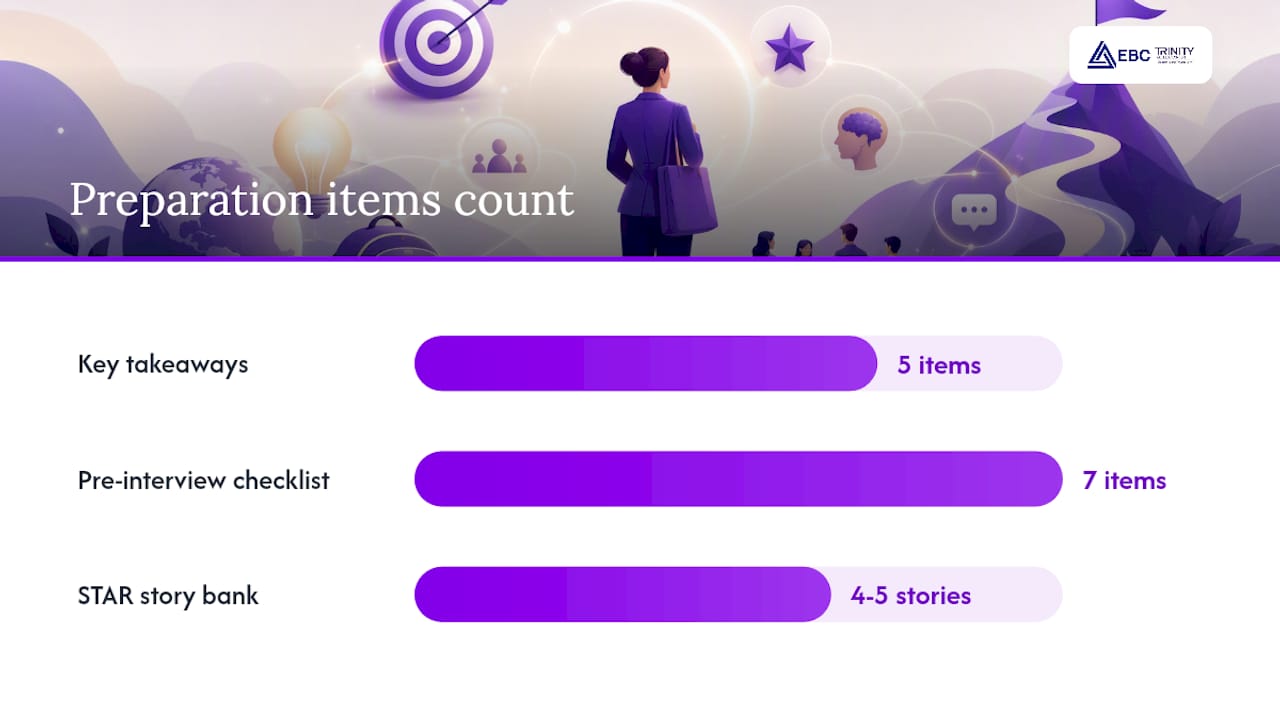
Strong teacher interview preparation comes down to five things: organised logistics, complete documentation, structured answers with concrete examples, a rehearsed micro-teach using familiar material, and clear safeguarding knowledge referenced to KCSIE.
| Point | Details |
|---|---|
| Safeguarding is non-negotiable | Name the DSL role and the observe-record-report sequence; reference KCSIE in every safeguarding answer. |
| The micro-teach decides most offers | Use familiar content, build in visible differentiation, and address misconceptions in real time. |
| Prepare a STAR story bank | Build 4–5 stories covering management, differentiation, a challenging student, and parental communication before the day. |
| The interview starts on arrival | Warmth with reception, pupils, and staff is assessed informally and contributes to the hiring decision. |
| Follow up within 48 hours | A brief, specific thank-you email after the interview signals professionalism and genuine interest. |
48-hour pre-interview checklist:
- Print and organise all original documents in a labelled folder
- Run one full mock micro-teach with a colleague or record yourself
- Practise your two weakest STAR answers aloud, timed to two minutes each
- Read the school’s website, Ofsted report, and any recent news
- Plan and test your travel route, including a contingency
- Prepare your one-page STAR evidence sheet to bring on the day
- Get a full night’s sleep — fatigue is the most common cause of vague answers
Useful sources and further reading
The most authoritative preparation resources for teaching interviews combine statutory guidance with practical professional development. Start with the official sources below, then use EBC’s own preparation guides for step-by-step interview practice.
- Get Into Teaching: Teacher Training Interview Guidance — the UK government’s official preparation advice for teacher training interviews, including what panels look for and how to structure answers
- TEFL interview preparation guide — EBC’s step-by-step preparation timeline and practice checklist, covering the full interview process from logistics to follow-up
- TEFL job interview questions and advice — EBC’s guide to general interview strategy, expectations, and structure for teaching roles worldwide