
More than 80 percent of TEFL trainees credit reflective teaching practices with accelerating their professional development. If you’re aiming for Trinity College London certification and a teaching career abroad, understanding teacher reflection is essential. In this guide, discover how structured reflection methods shape success for aspiring English teachers, helping you turn classroom insights into long-term professional growth.
Table of Contents
- Defining Teacher Reflection In TEFL Context
- Types Of Teacher Reflection Methods Explained
- Benefits For Professional Growth And Success
- Common Challenges And Solutions For New Teachers
- Embedding Reflection In Accredited TEFL Training
Key Takeaways
| Point | Details |
|---|---|
| Importance of Teacher Reflection | Teacher reflection is crucial for professional growth, enabling educators to analyse and enhance their teaching methods systematically. |
| Diverse Reflection Methods | Effective reflection methods include self-documentation, peer collaboration, and critical incident analysis, each offering unique insights for improvement. |
| Impact on Professional Development | Consistent reflective practice leads to increased self-awareness, problem-solving skills, and adaptability in the classroom. |
| Challenges for New Teachers | New teachers often face time management and self-doubt challenges, which can be addressed through mentorship and structured reflection strategies. |
Defining Teacher Reflection in TEFL Context
Teacher reflection represents a foundational practice in English language teaching, enabling educators to systematically analyse their instructional approaches and professional growth. Reflective practice in language education fundamentally transforms how teachers understand their professional development, moving beyond routine teaching into a critically engaged learning process.
At its core, teacher reflection involves a deliberate and structured examination of teaching experiences, pedagogical decisions, and classroom interactions. Drawing from seminal theories by educational philosophers like Dewey and Schön, teacher reflection research emphasises metacognitive strategies that help educators continuously improve their instructional methods. This process involves critically examining teaching practices, student responses, and personal assumptions about language learning.
Effective teacher reflection in TEFL contexts typically encompasses several key dimensions: self-assessment, peer collaboration, documentation of teaching experiences, and systematic analysis of classroom dynamics. Practitioners engage in structured activities like maintaining reflective journals, participating in peer discussions, recording classroom interactions, and conducting systematic self-evaluations. These approaches enable language teachers to develop deeper insights into their teaching methodologies, student learning patterns, and personal professional growth trajectories.
Pro tip: Start your reflection practice by dedicating 15 minutes after each teaching session to write concise, objective observations about your classroom interactions, student engagement, and personal teaching strategies.
Types of Teacher Reflection Methods Explained
Teacher reflection encompasses diverse methodological approaches that enable educators to critically analyse their professional practice. Reflective coaching frameworks provide structured strategies for systematically examining teaching experiences, offering teachers multiple pathways to enhance their instructional effectiveness.
Key reflection methods in TEFL contexts include self-documentation, peer collaboration, and critical incident analysis. Teacher self-study approaches reveal how practitioners can leverage different reflective techniques to develop deeper pedagogical insights. These methods typically involve maintaining detailed reflective journals, engaging in structured peer discussions, recording classroom interactions, and conducting systematic self-evaluations that promote continuous professional growth.
Each reflection method offers unique benefits for language educators. Self-documentation through reflective journals allows teachers to track their personal development, identify recurring challenges, and document successful instructional strategies. Peer collaboration enables educators to share experiences, receive constructive feedback, and gain diverse perspectives on teaching practices. Critical incident analysis helps teachers deconstruct complex classroom interactions, understand student dynamics, and develop more nuanced instructional approaches.
The following table compares core teacher reflection methods and highlights their unique advantages in TEFL settings:
| Reflection Method | Main Focus | Impact on Practice |
|---|---|---|
| Self-documentation | Personal teaching analysis | Identifies growth areas, tracks progress |
| Peer collaboration | Shared professional feedback | Shares strategies, expands perspectives |
| Critical incident analysis | Deconstructing key events | Deepens understanding, fosters adaption |
Pro tip: Create a structured reflection template with specific categories like classroom management, student engagement, and personal teaching goals to make your reflective practice more systematic and actionable.
Benefits for Professional Growth and Success
Teacher reflection serves as a transformative mechanism for professional development in language education. Teacher self-efficacy research demonstrates that systematic reflection directly correlates with enhanced work engagement, resilience, and overall professional effectiveness for English language educators.
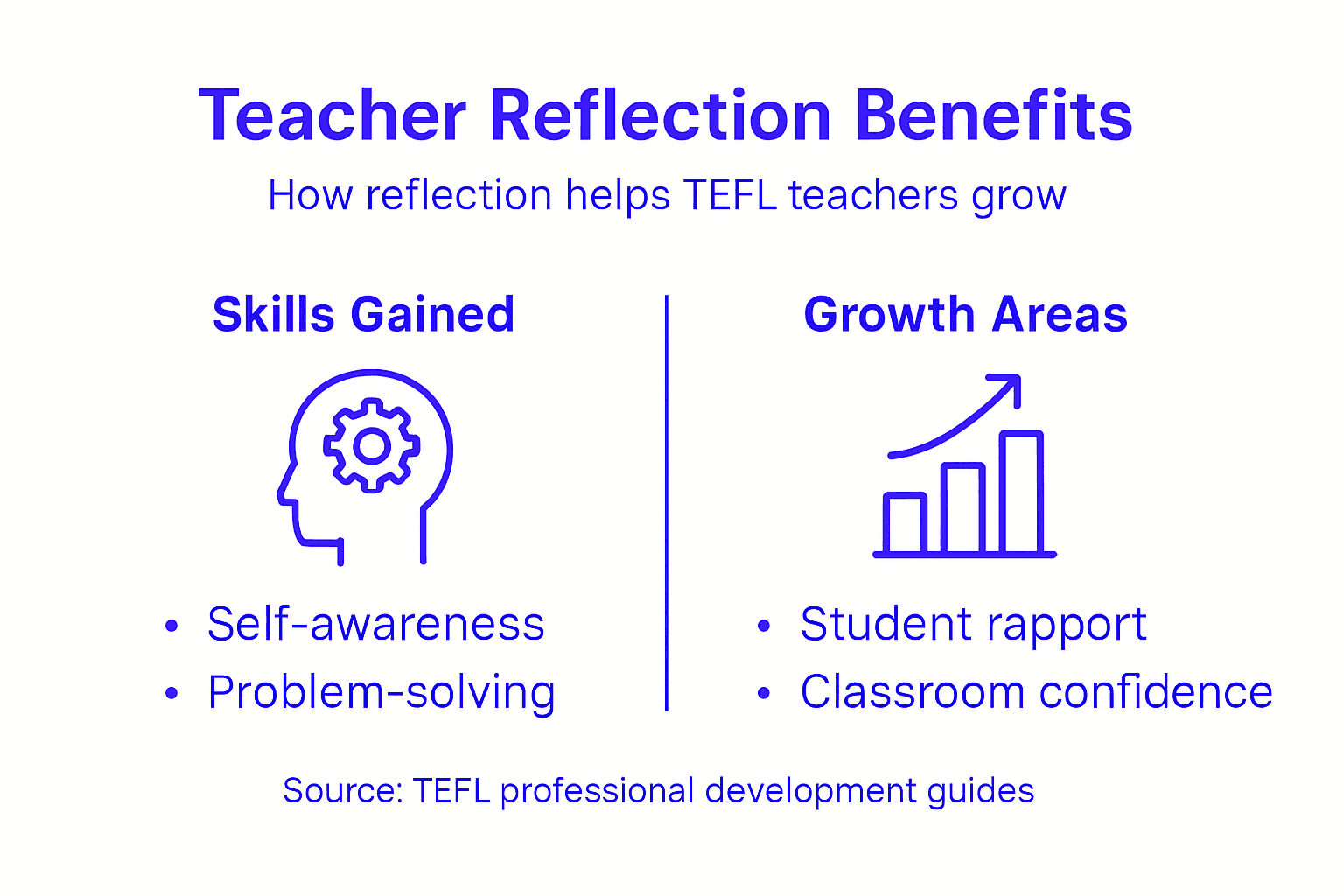
The benefits of consistent reflective practice extend across multiple dimensions of professional growth. Self-awareness emerges as a critical outcome, enabling teachers to identify personal strengths and development areas with precision. Reflective teaching practices cultivate a profound understanding of individual teaching approaches, allowing educators to adapt their methodologies more strategically and respond more effectively to diverse classroom challenges.

Professional growth through reflection manifests in several key areas. Teachers develop enhanced problem-solving skills, become more adaptable to changing educational environments, and build greater emotional resilience. The continuous process of critical self-examination helps language educators refine their instructional techniques, develop more nuanced communication strategies, and maintain high levels of motivation throughout their careers. Moreover, reflective practitioners are more likely to embrace innovative teaching approaches, maintain intellectual curiosity, and contribute meaningfully to their professional communities.
Pro tip: Establish a monthly reflection journal where you document three professional achievements, two challenges encountered, and specific strategies for personal improvement to track your continuous professional development.
Common Challenges and Solutions for New Teachers
New English language teachers frequently encounter significant obstacles that can undermine their professional confidence and effectiveness. Reflective practice challenges reveal that novice educators typically struggle with time management, self-doubt, and uncertainty about implementing effective teaching strategies in real classroom environments.
The primary challenges for emerging TEFL professionals include managing classroom dynamics, developing personalised teaching approaches, and maintaining professional resilience. Emotional vulnerability and imposter syndrome often emerge as critical barriers, preventing new teachers from fully embracing their instructional potential. Reflective coaching frameworks provide structured approaches to help teachers navigate these initial professional hurdles, offering systematic methods for self-assessment and continuous improvement.
Addressing these challenges requires a multifaceted approach. New teachers benefit from structured mentorship programmes, peer support networks, and systematic reflection strategies. By developing robust coping mechanisms, educators can transform initial uncertainties into opportunities for professional growth. Key solutions include creating detailed lesson plans, seeking regular feedback, participating in collaborative teaching communities, and maintaining a growth mindset that views challenges as learning experiences rather than insurmountable obstacles.
Here is a summary of common challenges faced by new teachers alongside effective solutions for each:
| Challenge | Potential Solution | Expected Outcome |
|---|---|---|
| Classroom dynamics | Structured lesson planning | Improved classroom control |
| Emotional vulnerability | Mentorship and peer support | Increased teacher resilience |
| Self-doubt | Regular feedback and reflection | Enhanced professional confidence |
Pro tip: Create a weekly support network with fellow new teachers where you share challenges, exchange practical strategies, and provide mutual emotional encouragement to build professional resilience.
Embedding Reflection in Accredited TEFL Training
Accredited TEFL training programmes increasingly recognise reflection as a fundamental component of professional teacher development. Systematic reflection models demonstrate how structured reflective practices can be strategically integrated into teacher training curricula to enhance instructional effectiveness and professional self-awareness.
The integration of reflection within accredited TEFL courses involves carefully designed learning cycles that encourage teachers to critically examine their teaching practices. Reflective practice frameworks provide comprehensive guidelines for embedding systematic reflection throughout teacher training. These approaches typically include structured observation, peer feedback, self-assessment, and critical incident analysis as core components of professional development.
Effective reflection integration requires a holistic approach that goes beyond traditional assessment methods. Accredited programmes now design curriculum elements that encourage teachers to document their learning journey, analyse classroom interactions, and develop metacognitive skills. This approach transforms reflection from a theoretical concept into a practical tool for continuous professional growth, enabling teachers to develop adaptive teaching strategies, understand their personal pedagogical approaches, and build resilience in diverse educational contexts.
Pro tip: Create a digital reflection portfolio during your TEFL training that captures your teaching experiences, challenges, and insights, demonstrating your professional growth to potential employers and accreditation bodies.
Unlock Your Confident TEFL Career with Expert Guidance and Accredited Training
Teacher reflection is key to building self-awareness and professional growth as you embark on your TEFL journey. If you find yourself facing challenges like managing classroom dynamics or developing effective teaching strategies, you are not alone. Our Trinity College London accredited certifications combined with practical reflection techniques prepare you to transform those challenges into strengths. With global job placement support and ongoing mentorship, you will gain confidence and adaptability to thrive as an English language teacher anywhere in the world.
Take the next step towards a rewarding career by exploring our comprehensive Trinity CertTESOL and specialised courses. Elevate your skills through our unique one-year study and work abroad programmes in Spain, France, and Italy, which integrate accredited training, language study, visa assistance, and cultural immersion. Discover how systematic reflection embedded in your training leads to sustained professional success. Connect with us today for a free consultation and start shaping your future with EBC TEFL.
Frequently Asked Questions
What is teacher reflection in the TEFL context?
Teacher reflection in the TEFL context is a systematic practice where educators analyse their instructional approaches, classroom interactions, and professional growth to enhance their teaching effectiveness and adapt strategies to better meet the needs of their students.
What are some methods of teacher reflection used in TEFL?
Common methods of teacher reflection in TEFL include self-documentation through reflective journals, peer collaboration for shared feedback, and critical incident analysis to understand significant classroom events and dynamics.
How does teacher reflection benefit professional growth in TEFL?
Teacher reflection fosters self-awareness, enhances problem-solving capabilities, and builds emotional resilience, thus leading to improved instructional techniques and greater adaptability in varied educational environments.
What challenges do new teachers face in implementing reflection, and how can they address these?
New teachers may struggle with time management, self-doubt, and emotional vulnerability. They can address these challenges by developing detailed lesson plans, seeking mentorship, and participating in support networks to foster professional resilience.
