
Every year, thousands of aspiring teachers aim for a british TEFL certification, hoping for a career teaching English around the globe. The choices and requirements can feel confusing, especially with over 25 percent of applicants unsure where to start. Understanding the right steps is vital for anyone serious about becoming an international educator. This guide demystifies the process and shows you how to confidently move from research to placement in the competitive world of british TEFL programmes.
Table of Contents
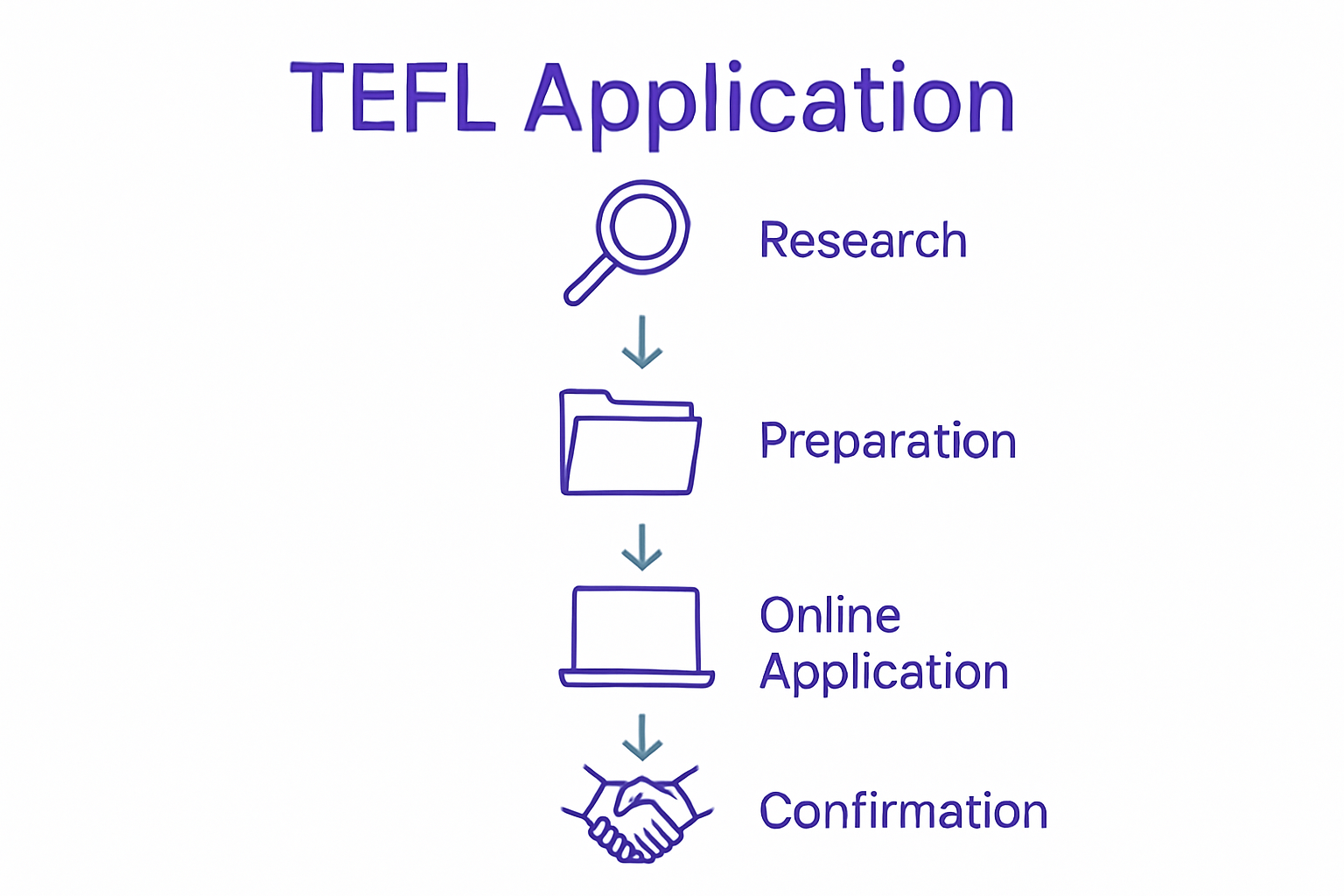
- Step 1: Review TEFL Programme Requirements And Options
- Step 2: Prepare Essential Documents And Credentials
- Step 3: Submit Your TEFL Application Online
- Step 4: Attend Interview And Assessment Stage
- Step 5: Confirm Your Enrolment And Secure Your Placement
Quick Summary
| Key Point | Explanation |
|---|---|
| 1. Research TEFL programmes thoroughly | Understanding different TEFL certifications helps you choose the best pathway for your teaching career. |
| 2. Organise essential documents carefully | Make sure all necessary paperwork, including certifications and background checks, is current and well-prepared for job applications. |
| 3. Submit application with precision | Double-check your online application for accuracy as many systems do not allow edits post-submission. |
| 4. Prepare thoroughly for interviews | Anticipate interview formats and practice demonstrating your teaching abilities to enhance your chances of success. |
| 5. Confirm enrolment and understand obligations | Thoroughly review terms and conditions of your programme and keep organised records to facilitate your transition into teaching. |
Step 1: Review TEFL programme requirements and options
Understanding the landscape of TEFL certification requires careful research and strategic planning. When exploring your teaching pathway, you will discover multiple programme options designed to prepare educators for international English language instruction.
The core requirements for most TEFL programmes typically involve completing an accredited course that provides comprehensive training in language teaching methodologies. Understanding the nuanced differences between TEFL certification types will help you select the most appropriate programme for your professional goals. Most programmes expect candidates to have a university degree and demonstrate proficient English language skills, though specific entry requirements can vary.
Key programme options range from online self-paced courses to intensive in-person training programmes. Trinity College London accredited courses offer structured pathways with practical teaching experience, ensuring you receive high-quality professional preparation. When comparing programmes, consider factors like course duration, practical teaching hours, international recognition, and job placement support.
A practical tip for prospective teachers: Always verify the accreditation and global recognition of your chosen TEFL certification. Not all programmes provide equivalent credentials, and selecting a well-respected course can significantly impact your future teaching opportunities.
Next, you will explore specific programme details and align your personal career objectives with the most suitable training pathway.
Step 2: Prepare essential documents and credentials
Successfully launching your TEFL teaching career requires meticulous document preparation and credential organisation. This stage involves gathering and verifying all necessary paperwork that demonstrates your professional readiness and eligibility for international teaching positions.

Specialised TEFL courses often have specific documentation requirements that vary depending on your chosen programme and target teaching destination. Essential documents typically include your passport, academic degrees, TEFL certification, passport photographs, criminal background checks, and proof of English language proficiency. For international opportunities, you will need to ensure all documents are current, translated if necessary, and authenticated.
When compiling your documentation, create a comprehensive digital and physical portfolio. Digital copies should be high-resolution scans saved in PDF format, while physical copies should be professionally organised in a dedicated folder. International employers and visa processing authorities require pristine, well-presented documentation that reflects your professionalism and attention to detail.
A critical tip for document preparation: Always maintain multiple backup copies of your essential credentials. Store digital copies securely in cloud storage and keep certified physical copies in separate locations to prevent potential loss or damage.
With your documents prepared, you will be ready to progress to the next stage of your TEFL application journey.
Step 3: Submit your TEFL application online
Submitting your TEFL application marks a pivotal moment in your international teaching journey. This crucial stage transforms your carefully prepared documents and credentials into a formal pathway towards your teaching career.
How to make a CV for a TEFL job and impress hiring managers becomes essential when completing your online application. Most TEFL programmes require a comprehensive digital submission that includes your academic credentials, professional CV, passport details, and supporting documentation. Ensure you have a stable internet connection and allocate sufficient time to complete the application thoroughly.
Carefully review each section of the online application form, paying special attention to accuracy and completeness. Double check all entered information against your original documents, verifying that names, dates, and qualifications are identical to your supporting paperwork. Many online application systems do not allow subsequent editing, so precision during your initial submission is critical.
A practical tip for online applications: Create digital copies of your entire application submission for personal records. Screenshot each completed page and save a PDF version of your final submission to maintain a comprehensive personal archive.
Once your application is successfully submitted, you will move forward to the assessment and interview stages of your TEFL certification process.
Step 4: Attend interview and assessment stage
The interview and assessment stage represents a critical milestone in your TEFL certification journey. This comprehensive evaluation allows programme providers to assess your potential as an effective English language educator and determine your readiness for international teaching opportunities.
7 Key Steps to Become a TEFL Teacher Abroad Successfully highlights the importance of preparing thoroughly for this stage. Most TEFL interviews combine online video conferencing and practical teaching demonstrations, designed to evaluate your communication skills, subject knowledge, and pedagogical approach. Expect a multi stage process that may include a preliminary screening interview, a skills assessment, and a potential micro teaching session where you demonstrate your instructional capabilities.
During the assessment, programme evaluators will be looking for key attributes including language proficiency, cultural awareness, adaptability, and your genuine passion for teaching. Prepare by researching common interview questions, practising your teaching methodology explanations, and developing concise responses that showcase your motivation and understanding of international English language education.
A critical preparation tip: Record yourself delivering a short teaching demonstration and review it critically. This will help you identify areas of improvement in your presentation style, clarity of instruction, and non verbal communication skills.
Successful completion of this stage will propel you towards the final steps of your TEFL certification process.
Step 5: Confirm your enrolment and secure your placement
Confirming your TEFL programme enrolment represents the culmination of your extensive preparation and marks the beginning of your international teaching adventure. This critical stage transforms your aspirations into a concrete professional pathway.
Master the TEFL Job Placement Process for Global Teaching becomes essential as you navigate the final steps of securing your educational and professional commitment. Carefully review the programme’s official enrolment documentation, ensuring you understand all terms including course duration, payment schedules, and specific programme requirements. Most TEFL providers will require you to complete an official acceptance form and potentially pay an initial deposit to confirm your place on the programme.
Pay close attention to the specific requirements of your chosen certification pathway. Some programmes offer immediate placement support, while others provide comprehensive job search assistance upon successful course completion. Verify the specific job placement services included in your programme, including potential support for visa applications, interview preparation, and international recruitment networking.
A practical tip for enrolment confirmation: Create a dedicated email folder to store all correspondence related to your TEFL programme. Maintain organised digital and physical copies of all communications, payment receipts, and acceptance documents to ensure smooth processing and future reference.
With your enrolment confirmed, you are now prepared to embark on your transformative journey into international English language education.
Take Control of Your TEFL Journey with Trusted Accreditation and Global Support
Navigating the TEFL application process can feel overwhelming as you balance document preparation, course selection and career goals. This guide highlights common challenges like ensuring programme accreditation and coordinating visa and placement logistics. If you want to overcome these hurdles with confidence join the many successful educators trained by EBC TEFL. Our Trinity College London accredited courses deliver practical, hands-on teacher training recognised worldwide which opens doors to international teaching jobs. Plus our free lifetime job placement support means you are never alone in finding the right global opportunity.
Explore our comprehensive 1-year study and work abroad programmes in Spain, France, and Italy that combine accredited teacher training with cultural immersion and language study. These unique pathways include visa assistance and part-time teaching roles ensuring your teaching career launch is smooth and enriching. Discover detailed course options including specialised TEFL certification and read inspiring graduate success stories when you book a free consultation with us today. Take the next step with EBC TEFL to secure your teaching career abroad with confidence and expert guidance. Visit EBC TEFL now to get started.
Frequently Asked Questions
What are the core requirements for a TEFL programme?
Most TEFL programmes require candidates to complete an accredited course that teaches language teaching methodologies. Typically, you need a university degree and proficient English language skills. Research different programmes to find one that aligns best with your professional goals.
How can I prepare my documents for the TEFL application process?
To prepare your documents, gather your passport, academic degrees, TEFL certification, and proof of English proficiency. Organise these documents in a digital portfolio and a physical folder, ensuring they are up-to-date and presentable for potential employers.
What should I include in my online TEFL application?
Your online TEFL application should include your academic credentials, professional CV, passport details, and any supporting documentation required by the programme. Pay close attention to accuracy to ensure all information matches your original documents to avoid issues during the submission process.
How do I prepare for the interview and assessment stage of my TEFL application?
To prepare for the interview and assessment stage, research common interview questions and practice your teaching methodology explanations. Conduct a mock teaching demonstration and review it to improve your presentation skills and communication style.
What should I do after confirming my TEFL enrolment?
After confirming your enrolment, carefully review the programme documentation, including course requirements and payment details. Create a dedicated email folder to keep all related correspondence organised for future reference and to ensure smooth processing throughout your TEFL journey.
Recommended
- International TEFL Career Steps: Your Path to Global Teaching – EBC TEFL courses
- How to make a CV for a TEFL job and impress hiring managers – EBC Trinity CertTESOL and TEFL courses
- Master the TEFL Job Placement Process for Global Teaching – EBC TEFL courses
- 7 Key Steps to Become a TEFL Teacher Abroad Successfully – EBC TEFL courses
