
Most graduates are surprised by how quickly international teaching careers can start with the right TEFL qualifications. The demand for English instructors is growing, offering exciting prospects beyond the usual graduate jobs at home. Understanding which accredited TEFL certifications open doors and knowing how each credential affects your job placement will help you make confident choices and plan your next steps for teaching abroad.
Table of Contents
- Step 1: Identify Your Accredited TEFL Qualifications
- Step 2: Research Global Teaching Markets and Opportunities
- Step 3: Create a Professional TEFL Job Application Toolkit
- Step 4: Apply Strategically to Targeted Schools and Programmes
- Step 5: Verify Job Offers and Secure Post-Placement Support
Quick Summary
1. Identify Accredited TEFL QualificationsEvaluate various TEFL courses and certifications to enhance employability in international teaching.
| Key Point | Explanation |
|---|---|
| 2. Research Global Teaching Markets | Focus on regions where English teachers are in high demand to maximize job opportunities. |
| 3. Build a Professional Application Toolkit | Prepare a comprehensive set of documents showcasing your teaching credentials and experiences. |
| 4. Apply Strategically to Targeted Schools | Create tailored applications for schools that align with your qualifications and career goals. |
| 5. Verify Job Offers and Support | Carefully review job offers and establish a support network for a smooth transition to teaching abroad. |
Step 1: Identify your accredited TEFL qualifications
Understanding your professional teaching credentials is crucial for launching an international English teaching career. Your journey begins by carefully evaluating the types of accredited TEFL courses available and determining which qualifications will open global teaching opportunities.
Start by examining your current teaching certifications. Professional TEFL qualifications typically fall into several categories: internationally recognised certificates like Trinity CertTESOL, university validated programmes, and specialised teaching credentials. The most respected qualifications are those accredited by recognised bodies such as Trinity College London and recognised within international education networks. Look for programmes that offer practical teaching experience, observed teaching practice, and comprehensive language teaching methodology training.
Each TEFL certification carries different weight in the international job market. Entry level certificates might suffice for some positions, while more advanced credentials like the Trinity CertTESOL can significantly enhance your employability across multiple countries. Research specific requirements for regions you are interested in teaching international English, as credential expectations can vary between countries in Europe, Asia, and beyond.
Top tip: Contact previous programme graduates or international recruiters to understand precisely which qualifications will best support your specific teaching destination and career goals.
Here is a comparison of internationally recognised TEFL qualifications and their key features:
| Qualification Type | Accreditation Body | Typical Course Length | Practical Component |
|---|---|---|---|
| Trinity CertTESOL | Trinity College London | 130 hours | Observed teaching practice |
| University Validated Programme | University institutions | 120–160 hours | Supervised classroom work |
| Specialised TEFL Certificates | Professional TEFL providers | 40–100 hours | Limited practical tasks |
Step 2: Research global teaching markets and opportunities
Researching global teaching markets is essential for launching a successful international teaching career. Your goal is to understand where English teachers are most needed and which regions offer the most promising employment prospects. Global teaching insights reveal significant variations in teacher demand across different countries and educational systems.
Begin by investigating regional job markets systematically. The UNESCO Global Report highlights a worldwide shortage of 44 million teachers by 2030, which means extraordinary opportunities exist for qualified English language instructors. Focus on regions with strong demand such as South Korea, Japan, China, Middle Eastern countries, and parts of Europe. Each region has unique requirements, salary scales, and cultural expectations. For instance, Asian markets often require different credentials compared to European teaching positions, so tailor your research to specific geographical contexts.
Utilise multiple research channels including professional teaching networks, recruitment websites, international education forums, and government education department resources. Pay close attention to visa regulations, minimum qualification requirements, and typical contract structures in your target countries. Some regions offer comprehensive packages including housing and travel allowances, while others provide more basic compensation.
Expert advice: Create a detailed spreadsheet tracking job markets, average salaries, required qualifications, and living costs in potential teaching destinations to make an informed decision about your international teaching career.
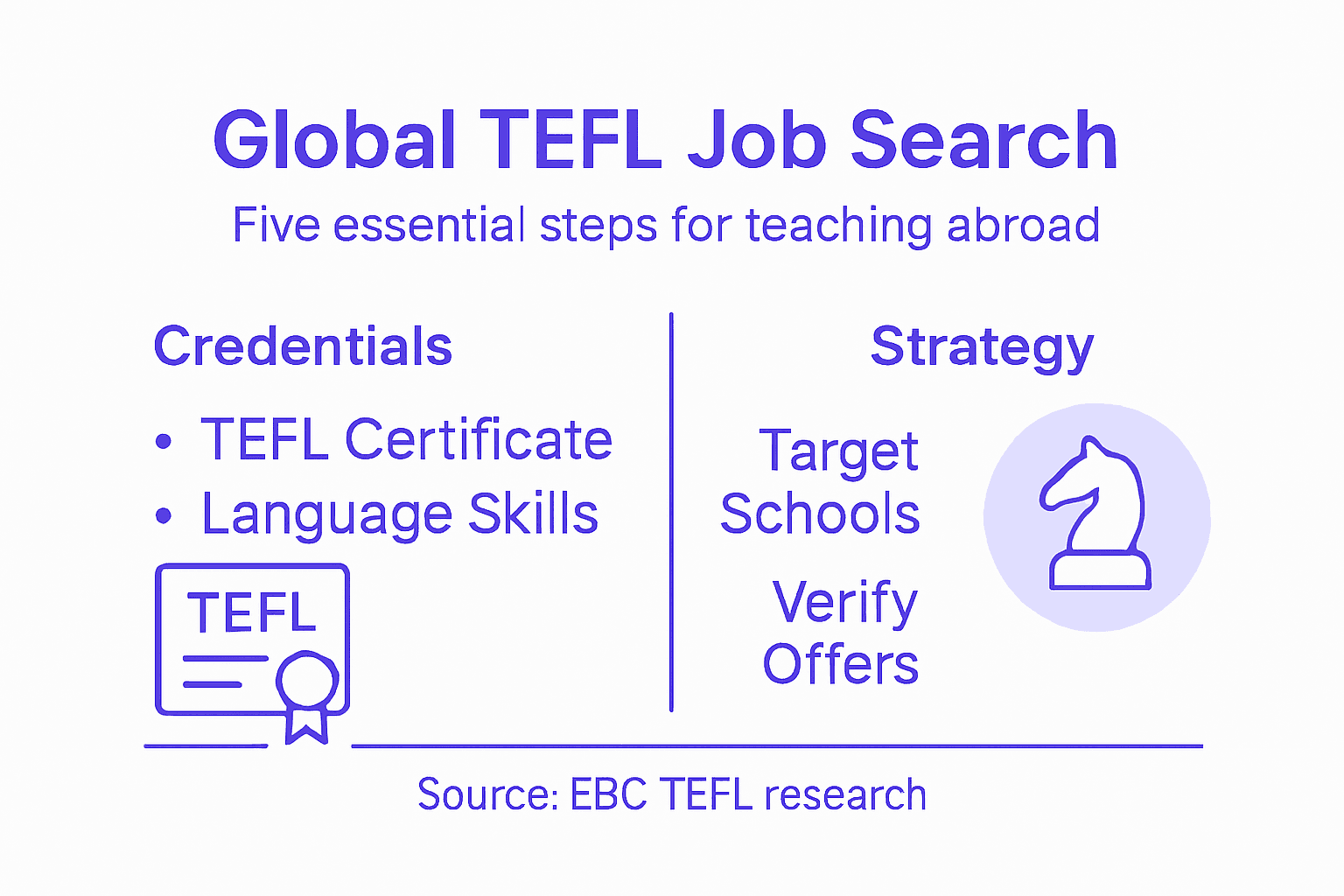
Below is a summary of English teaching demand and benefits across global regions:
| Region | Teacher Demand Level | Common Benefits | Typical Requirements |
|---|---|---|---|
| East Asia | Very high | Housing, travel, health | Bachelor’s, accredited TEFL |
| Middle East | High | Tax-free salary, housing | Degree, experience, TEFL |
| Western Europe | Moderate | Health insurance, paid leave | TEFL, degree, local language skills |
| Eastern Europe | Growing | Basic accommodation | TEFL certificate |
Step 3: Create a professional TEFL job application toolkit
Building a robust job application toolkit is crucial for securing international teaching positions. Your goal is to compile a comprehensive set of professional documents that showcase your teaching potential and cultural adaptability. Crafting a standout TEFL job application requires strategic preparation and attention to detail.

Start by developing a targeted curriculum vitae that highlights your teaching qualifications, language skills, and international experience. Include your Trinity CertTESOL or relevant TEFL certification prominently. Prepare digital and physical copies of essential documents such as academic transcripts, teaching certificates, passport, professional references, and a comprehensive portfolio demonstrating your teaching methodology and classroom experience. International recruiters typically require colour scans of original documents, so ensure high quality digital versions are readily available.
Organise your application toolkit into both digital and physical formats. Create a professional email address using your full name, develop a concise yet comprehensive teaching philosophy statement, and prepare a portfolio that includes lesson plans, teaching reflections, and evidence of your linguistic and cultural adaptability. Consider creating separate application packages tailored to different regional job markets, as requirements can vary significantly between European, Asian, and Middle Eastern teaching environments.
Expert advice: Invest in a professional digital storage system that allows you to quickly access and update your application materials, ensuring you can respond promptly to international teaching opportunities.
Step 4: Apply strategically to targeted schools and programmes
Successful international teaching recruitment requires a targeted and strategic approach to job applications. Your mission is to transform your carefully prepared application toolkit into meaningful connections with educational institutions that match your professional aspirations. Navigating the TEFL application process demands precision, research, and tailored communication.
Begin by creating a comprehensive list of potential schools and programmes that align with your teaching qualifications, geographical preferences, and career objectives. Research each institution thoroughly, understanding their specific requirements, teaching philosophies, and cultural contexts. For European destinations like Spain and France, focus on language schools, international academies, and state education programmes. In Asian markets such as South Korea and Japan, investigate private language institutes, international schools, and government sponsored teaching programmes like JET and EPIK.
Develop a personalised application strategy for each target institution. Customise your cover letters to demonstrate specific knowledge about the school, highlight relevant teaching experiences, and explain why you are an exceptional candidate for their unique educational environment. Prepare to submit multiple application versions, each meticulously adapted to showcase how your skills and background precisely match the specific institutional needs. Follow up professionally after submission, maintaining a polite and proactive communication approach.
Expert advice: Create a detailed tracking spreadsheet to monitor application status, submission dates, and follow up communications for each targeted school or programme.
Step 5: Verify job offers and secure post-placement support
The final stage of your international teaching journey involves carefully verifying job offers and establishing robust support systems to ensure a successful transition. Mastering the TESOL application workflow requires meticulous attention to contractual details and professional networking.
Carefully review every aspect of potential job offers, examining salary structures, contract terms, housing provisions, travel allowances, and health insurance coverage. Request comprehensive documentation including official employment contracts, visa sponsorship details, and clear explanations of workplace expectations. Contact previous programme participants or professional networks to validate the reputation of potential employers. Pay special attention to specific regional requirements such as work permit regulations, tax implications, and cultural workplace norms in countries like Spain, France, South Korea, and Japan.
Establish multiple layers of post placement support before accepting any teaching position. Connect with professional teaching associations, international educator networks, and recruitment organisations that can provide ongoing guidance. Ensure you have access to emergency support channels, legal advice resources, and professional development opportunities. Maintain communication with your original TEFL certification provider, as many programmes offer lifetime job placement assistance and career guidance for their graduates.
Expert advice: Create a comprehensive checklist of verification requirements and support network contacts before finalising any international teaching commitment.
Unlock Your Global English Teaching Career with EBC TEFL
Navigating the complex TEFL job search process requires not only accredited qualifications but also strategic support and practical experience. The article highlights challenges such as understanding reputable TEFL credentials like the Trinity CertTESOL, researching diverse global teaching markets, and assembling professional application toolkits. At EBC TEFL, we address these pain points by offering Trinity College London accredited courses that combine expert-led, hands-on teacher training with comprehensive global job placement support and free lifetime assistance. This ensures you are not only qualified but fully prepared to thrive in demanding international teaching environments.
For those seeking immersive career and cultural experiences, our exclusive 1-year study and work abroad programmes in Spain, France, and Italy offer a perfect solution. These programmes include:
- Accredited Trinity TEFL teacher training
- One-year postgraduate language study
- Visa and work permit support
- Opportunities to teach or work part-time
- Cultural immersion and professional development
EBC TEFL stands out by bridging certification with real-world teaching opportunities in Europe and Asia, backed by expert guidance tailored to your goals. Take control of your teaching journey today and discover how our proven pathways can accelerate your success worldwide.
Explore our Trinity College London accredited courses
Ready to transform your TEFL job search into a global teaching career? Book your free consultation now at EBC TEFL and start your journey with a trusted partner dedicated to your international teaching success.
Frequently Asked Questions
What are the key qualifications needed for international TEFL teaching positions?
To teach internationally, you typically need an accredited TEFL qualification such as the Trinity CertTESOL or a university-validated programme. Start by evaluating your current certifications and researching the specific requirements of your target regions to ensure you meet their qualifications.
How can I effectively research global teaching markets?
You can effectively research global teaching markets by focusing on regions with high demand for English teachers, such as East Asia and the Middle East. Create a spreadsheet to track job markets, salary levels, and qualification requirements, ensuring you compare different locations systematically.
What should be included in my TEFL job application toolkit?
Your TEFL job application toolkit should include an updated curriculum vitae, teaching certificates, academic transcripts, and a portfolio showcasing your teaching methods and experiences. Prepare both digital and physical versions of these documents to streamline your application process whenever opportunities arise.
How do I tailor my application for specific schools or programmes?
To tailor your application for specific schools, research each institution thoroughly and customise your cover letter to reflect your understanding of their mission and needs. Highlight relevant experiences that align with their teaching philosophy, increasing your chances of standing out as a candidate.
What steps should I take to verify job offers before accepting?
You should carefully review the details of any job offer, including salary, contract terms, and housing provisions. Create a checklist to ensure you confirm all essential elements, and reach out to previous employees to validate the reputation of the employer before you make a decision.
How can I establish post-placement support after securing a teaching position?
Establishing post-placement support involves connecting with teaching associations and professional networks that can offer ongoing guidance. Identify at least three relevant contacts or organisations to ensure you have access to resources that can assist you throughout your teaching journey.
Recommended
- International TEFL Career Steps: Your Path to Global Teaching – EBC TEFL courses
- Which Country Needs English Teachers Most in 2025? Top 5 Revealed
- Get a job teaching English abroad | 3 foundation ‘how’ to tips – EBC Trinity CertTESOL and TEFL courses
- Master the TEFL Job Placement Process for Global Teaching – EBC TEFL courses
