
Every year, thousands of teachers set out to launch international teaching careers, but nearly half find the paperwork and eligibility checks the hardest part. Navigating academic requirements, language tests, and document verification can feel daunting whether you are a new graduate or a seasoned educator. With clear steps for assessing qualifications, choosing accredited TESOL programmes, and managing vital paperwork, this guide simplifies your path to teaching abroad.
Table of Contents
- Step 1: Assess Eligibility And Gather Essential Documents
- Step 2: Select Accredited TESOL Programmes And Pathways
- Step 3: Submit Applications For Training And Work Abroad
- Step 4: Secure Visa And Prepare For International Relocation
- Step 5: Verify Acceptance And Access Lifetime Job Support
Quick Summary
| Key Point | Explanation |
|---|---|
| 1. Evaluate Academic Qualifications | Ensure you possess a relevant bachelor’s degree and language proficiency proof for TESOL applications. |
| 2. Select Recognised TESOL Programmes | Choose accredited programmes that enhance employability and meet international hiring standards. |
| 3. Prepare a Comprehensive Application Package | Include high-quality documentation, updated CV, and lesson plans tailored to each programme’s requirements. |
| 4. Understand Visa Requirements | Research specific visa documentation needed for your destination country and prepare well in advance. |
| 5. Access Ongoing Career Support | Utilize the job placement resources and career guidance provided by your TESOL programme after acceptance. |
Step 1: Assess Eligibility and Gather Essential Documents
Kicking off your international teaching journey requires careful preparation and understanding of the essential eligibility criteria and documentation. This step involves evaluating your qualifications and compiling the necessary paperwork to support your TESOL application.
First, check your academic background. Most programmes require a bachelor’s degree or equivalent, with universities like Manchester preferring candidates with an Honours degree in Education, Teaching, or English. If English is not your native language, you will need to demonstrate proficiency through standardised tests such as IELTS or TOEFL. Typically, institutions expect scores around 6.5 to 7.0 in IELTS or equivalent TOEFL scores.
Gather your core documents systematically. You will need certified copies of your academic transcripts, degree certificates, passport, and any professional teaching credentials. For international applications, have your documents translated and notarised if they are not in English. Create a dedicated folder or digital portfolio to keep everything organised and easily accessible.
Here is a summary of essential documents and their purpose for TESOL applications:
| Document Type | Purpose | Tips for Preparation |
|---|---|---|
| Degree Certificate | Proves academic qualifications | Obtain certified copies |
| Academic Transcript | Details coursework and grades | Have translated if not in English |
| Passport | Confirms identity and nationality | Maintain validity throughout process |
| Teaching Credentials | Shows professional standards | Include all relevant certifications |
| Language Proficiency Scores | Demonstrates English ability | Ensure scores are up-to-date |
Pro tip: Prepare digital and physical copies of all documents. Scan high-quality versions and save them in multiple secure locations to prevent last-minute document stress.
Step 2: Select Accredited TESOL Programmes and Pathways
Selecting the right TESOL programme is crucial for launching your international teaching career. This step involves identifying reputable, internationally recognized certification pathways that will enhance your professional credibility and employability.
Start by understanding accreditation standards. The Commission on English Language Program Accreditation recognizes over 330 English language programmes, ensuring you choose a programme that meets rigorous educational quality benchmarks. Look for certifications that offer comprehensive training including theoretical knowledge and practical teaching experience. Some standout options include the Trinity CertTESOL, Certificate IV in TESOL, and other internationally recognized qualifications.
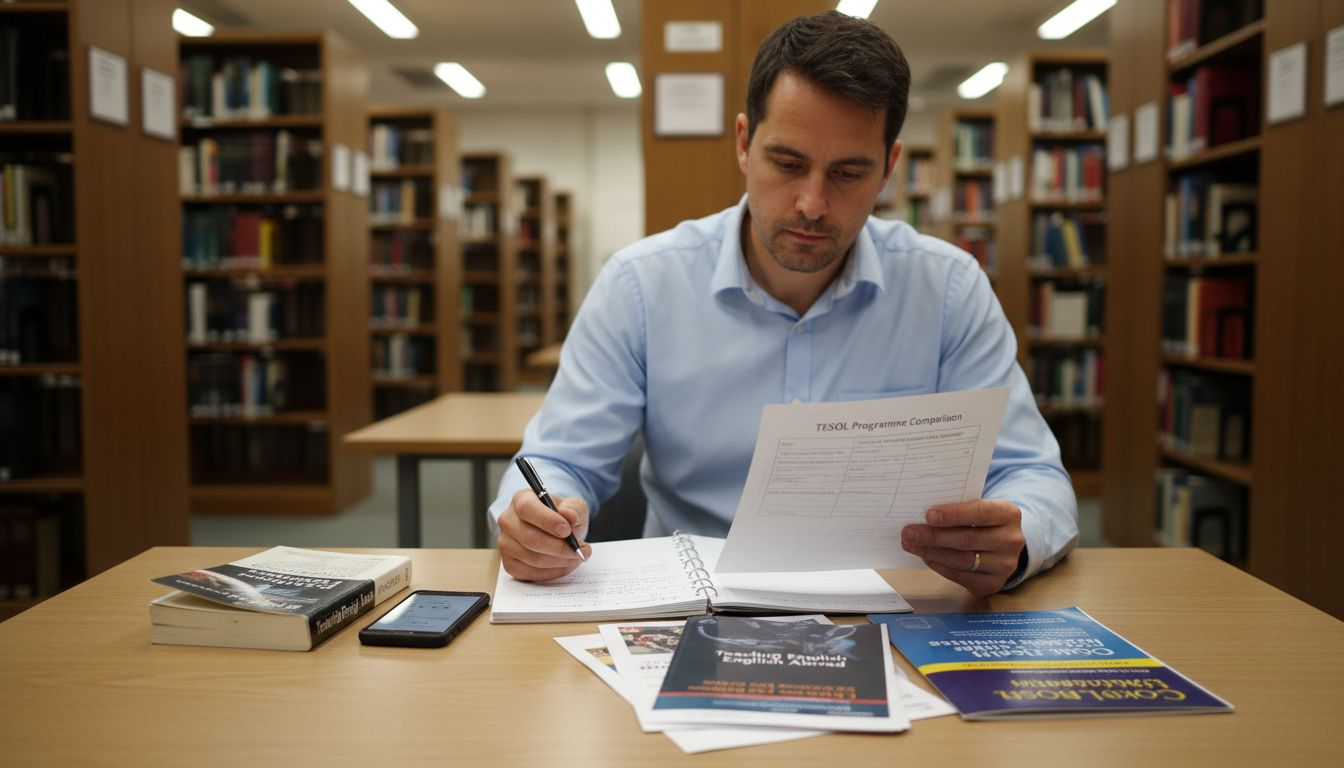
Consider the specific requirements of your target teaching destinations. Some countries and institutions have specific certification preferences, so research the local requirements thoroughly. Certificate programmes like the Certificate IV in TESOL provide structured learning with a minimum of 100 contact hours and supervised teaching practice, which can significantly boost your teaching credentials.
Below is a comparison of popular TESOL certification pathways:
| TESOL Qualification | Key Feature | Typical Duration | International Recognition |
|---|---|---|---|
| Trinity CertTESOL | Strong practical focus | 4-12 weeks | Widely accepted globally |
| Certificate IV in TESOL | Minimum 100 contact hours | 3-6 months | Preferred in Australia and Asia |
| CELTA | Cambridge University backing | 4-6 weeks | Highly respected worldwide |
Pro tip: Verify the global recognition of your chosen TESOL programme by checking its accreditation status with international educational bodies and consulting current English language teaching professionals about their programme experiences.
Step 3: Submit Applications for Training and Work Abroad
Submitting your applications marks the pivotal moment in transforming your international teaching aspirations into reality. This step requires meticulous preparation and strategic approach to present your professional profile effectively.
English Language Programs outline specific application requirements that provide an excellent template for international teaching applications. Prepare a comprehensive application package that includes your updated curriculum vitae, academic transcripts, TESOL certification documents, original lesson plans, and professional references. Ensure each document is professionally formatted and free from errors. Digital submissions are increasingly common, so scan your documents at high resolution and create a structured digital folder with clearly labelled files.
Different institutions and programmes have unique application protocols. Universities like Sookmyung Women’s University recommend downloading specific application forms and following their precise submission guidelines. Research each programme’s specific requirements meticulously. Pay close attention to application deadlines, submission platforms, and any additional supporting materials they might request. Some programmes review applications on a rolling basis, so submitting early can significantly improve your chances of acceptance.
Pro tip: Create a personalised tracking spreadsheet for your applications, recording submission dates, required documents, contact information, and follow up dates to ensure no opportunity slips through the cracks.
Step 4: Secure Visa and Prepare for International Relocation
Preparing for international relocation represents a complex yet exciting phase in your teaching abroad journey. This critical step transforms your professional aspirations into a tangible international experience, requiring careful planning and strategic preparation.
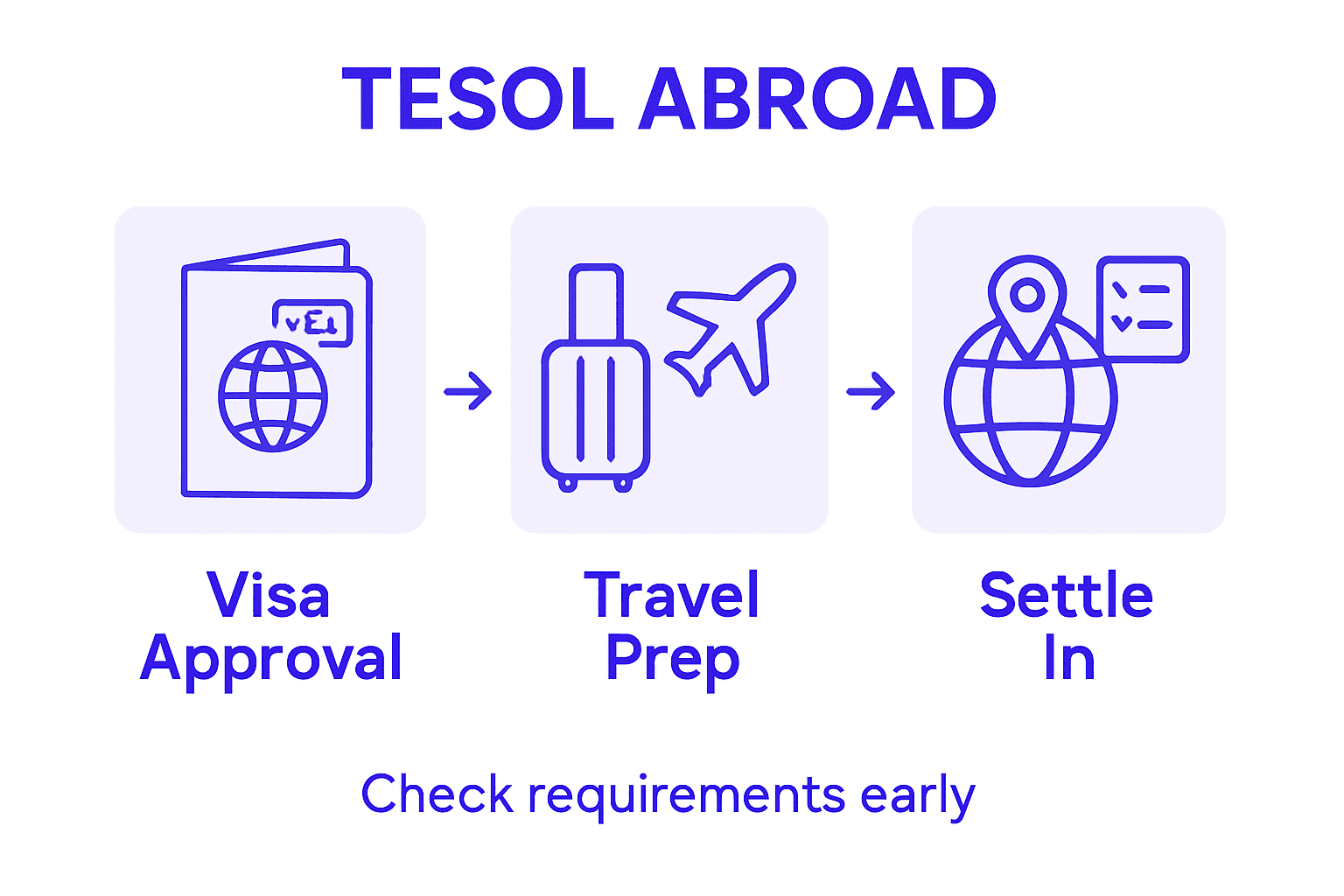
Navigate the visa application process methodically by first understanding the specific requirements for your destination country. Each nation has unique documentation standards, so contact the respective embassy or consulate well in advance. Gather essential documents including your passport, employment contract, university acceptance letter, TESOL certification, and proof of financial stability. Compile multiple certified copies of each document and create digital backups. Some countries require additional documentation such as medical clearance certificates, background checks, or proof of vaccination.
Beyond visa logistics, prepare for cultural and practical challenges of international relocation. Research local customs, language basics, accommodation options, and healthcare systems in your destination country. Create a comprehensive relocation checklist covering critical aspects like banking arrangements, international mobile phone plans, travel insurance, and emergency contacts. Budget carefully for initial setup costs, including potential temporary housing, shipping personal belongings, and establishing a local bank account.
Pro tip: Create a dedicated digital and physical folder containing all your important documents, with both scanned and original copies, and consider using a secure cloud storage service for critical paperwork to ensure you always have backup access.
Step 5: Verify Acceptance and Access Lifetime Job Support
Verifying your programme acceptance marks the culmination of your intensive preparation and the gateway to your international teaching adventure. This final step transforms your professional aspirations into concrete opportunities for global education experience.
Upon receiving your acceptance notification, carefully review all documentation and communication from your chosen programme. Confirm every detail including start dates, programme specifics, and any additional requirements. Contact the programme coordinator directly to clarify any uncertainties and establish a professional communication channel. Request a formal acceptance letter that you can use for visa applications, employment documentation, and personal records.
Accessing lifetime job support represents one of the most valuable resources in your international teaching journey. Most reputable TESOL programmes offer comprehensive career guidance that extends well beyond your initial certification. Schedule an initial consultation with your programme’s career support team to understand the full spectrum of assistance available. This typically includes job placement resources, interview preparation, CV refinement, international job market insights, and ongoing professional development opportunities. Create a strategic relationship with your career support team, maintaining regular communication and staying proactive about your professional growth.
Pro tip: Maintain a professional digital portfolio documenting your certifications, teaching experiences, and professional development milestones to maximise the effectiveness of your lifetime job support services.
Take the Next Step Towards Teaching English Abroad with Confidence
Navigating the TESOL abroad application process involves meeting key eligibility criteria, selecting accredited programmes, and managing complex visa requirements. If you want to accelerate your journey and gain internationally recognised certification, the Trinity College London accredited courses at EBC TEFL offer the credibility and practical training you need. Our programmes not only prepare you thoroughly but also provide global job placement support with free lifetime assistance to ensure you secure teaching roles worldwide — from Spain and France to Italy and Asia.
Ready to launch your international teaching career with expert guidance and exceptional support? Discover our comprehensive 1-year study and work abroad programmes in Spain, France, and Italy that combine accredited TESOL training, language study, visa assistance, and valuable teaching experience. Take the stress out of preparation with personalised application help and ongoing career coaching. Connect with us today to explore how EBC TEFL can make your teaching dreams a reality by booking a free consultation at Start Your TESOL Journey. Also explore our full range of courses including the Trinity CertTESOL and specialised options for business and online teaching to find the perfect fit for you.
Frequently Asked Questions
What eligibility criteria do I need to meet for TESOL programmes?
To apply for TESOL programmes, you generally need a bachelor’s degree or equivalent. Ensure you check specific requirements for the programmes you are interested in, as some may prefer candidates with degrees in Education, Teaching, or English.
How do I demonstrate my English language proficiency for TESOL applications?
If English is not your native language, you must provide proof of proficiency through standardised tests like IELTS or TOEFL. Aim for a minimum score of 6.5 to 7.0 in IELTS or an equivalent TOEFL score to strengthen your application.
What essential documents should I gather for my TESOL application?
Your TESOL application should include a degree certificate, academic transcripts, a valid passport, teaching credentials, and language proficiency scores. Prepare certified copies of these documents and ensure any translations are accurate and professionally done.
How can I find accredited TESOL programmes that suit my career goals?
To find suitable accredited TESOL programmes, research options that are recognised internationally and meet the standards of the Commission on English Language Program Accreditation. Identify certification pathways that provide both theoretical training and practical teaching experience.
What steps should I take after receiving programme acceptance?
After receiving your programme acceptance, review all details carefully, including start dates and requirements. Contact the programme coordinator to clarify any questions and request a formal acceptance letter for visa purposes.
How can I benefit from lifetime job support after completing a TESOL programme?
Upon completing a TESOL programme, access lifetime job support, which typically includes job placement resources, interview preparation, and CV refinement. Schedule an initial consultation with the career support team to explore the full range of available assistance.
