
Did you know that over 1.5 billion people are learning English worldwide? Breaking into the field as a qualified instructor starts with choosing the right TESOL certification. The process can feel overwhelming, especially with so many program options and requirements. You will learn what to expect from accredited training, what documents you need, and how flexible study formats and job support can shape your global teaching career.
Table of Contents
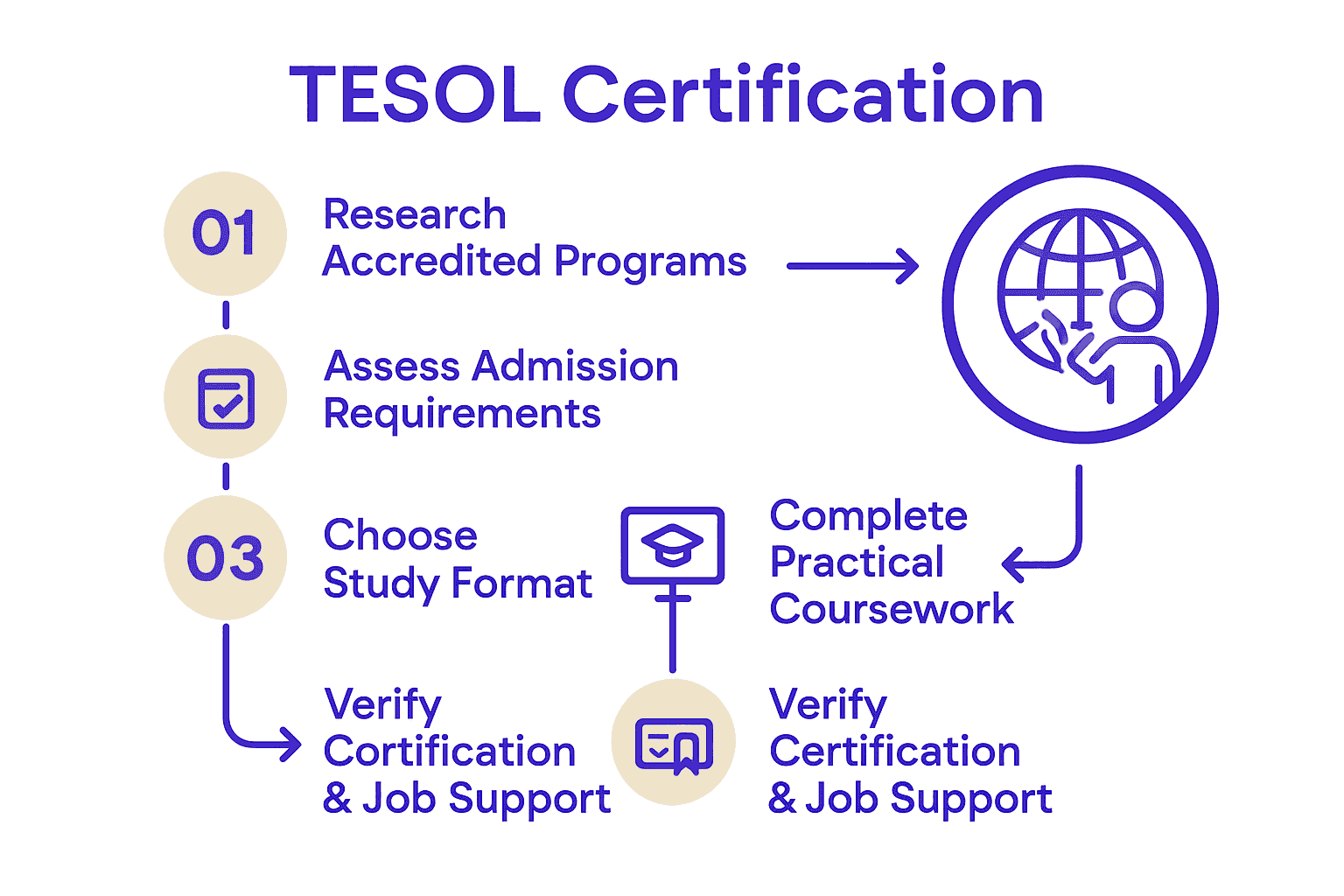
- Step 1: Research Accredited TESOL Programs
- Step 2: Assess Admission Requirements and Eligibility
- Step 3: Choose a Flexible Study Format
- Step 4: Complete Practical Coursework and Assessments
- Step 5: Verify Certification and Access Job Placement Support
Quick Summary
| Key Point | Explanation |
|---|---|
| 1. Research accredited TESOL programs | Focus on programs with recognized accreditations to ensure quality and global recognition. |
| 2. Assess admission requirements carefully | Each program has specific entry criteria; prepare documents early to avoid delays. |
| 3. Choose a flexible study format | Select learning formats that fit your lifestyle, like online or hybrid options, for better balance. |
| 4. Complete practical coursework thoroughly | Engage in practical assessments to gain hands-on teaching skills and enhance your employability. |
| 5. Verify certification and seek job support | Ensure your certification is recognized and utilize job placement services to connect with opportunities. |
Step 1: Research Accredited TESOL Programs
Researching accredited TESOL programmes is your critical first step towards becoming a recognised international English language instructor. Your goal is to find a certification programme that meets global professional standards and provides genuine career opportunities.
Start by investigating programmes with recognised accreditations. Reputable programmes should have endorsements from established educational bodies. Look for certifications approved by national education bureaus or international teaching organisations.
When evaluating programmes, focus on key criteria: international recognition, comprehensive curriculum, practical teaching components, and job placement support. Verify the programme’s credentials through official educational websites, professional teaching associations, and alumni testimonials. Pay special attention to accreditations from respected institutions like Trinity College London or recognised national education departments. A well researched TESOL certification will open doors to teaching positions worldwide and provide a solid foundation for your international teaching career.
Warning: Not all online TESOL courses are created equal. Thoroughly investigate the programme’s reputation, trainer qualifications, and global acceptance before committing your time and resources. Choosing an unaccredited programme could limit your future teaching opportunities.
Ready to move forward? The next step involves comparing specific programme details and understanding their unique features.
Step 2: Assess Admission Requirements and Eligibility
Assessing admission requirements for TESOL programmes is your roadmap to understanding what qualifications you need to pursue professional English language teaching certification. This critical step helps you prepare a strong application and avoid potential roadblocks in your teaching career journey.
Most accredited TESOL programmes have specific entry criteria. Typical requirements often include a bachelor’s degree with a minimum grade point average of 3.0. Many programmes also request supplementary documentation such as recommendation letters and a personal statement explaining your teaching aspirations. For international applicants or non native English speakers, additional language proficiency evidence through TOEFL or IELTS scores is frequently mandatory.
Specific requirements can vary between institutions. When preparing your application, gather all necessary documents early and carefully review each programme’s unique specifications to ensure you meet their exact criteria.

Warning: Do not assume requirements are universal. Each TESOL programme has distinct admission standards, and failing to meet specific criteria could delay or prevent your certification process.
With your eligibility assessment complete, you are now ready to prepare a compelling application package that showcases your potential as an international English language educator.
Step 3: Choose a Flexible Study Format
Choosing the right study format for your TESOL certification is crucial to balancing your learning goals with your existing personal and professional commitments. Understanding your available options will help you select a programme that fits seamlessly into your lifestyle.
Modern TESOL programmes offer diverse learning formats to accommodate different student needs. A variety of approaches are available, with graduate level curricula that include supervised teaching experiences. Online programmes have become increasingly popular, providing flexibility for working professionals. Online TESOL certifications can accommodate students with existing teaching backgrounds or those simultaneously enrolled in teacher preparation programmes.
When evaluating study formats, consider key factors such as your current work schedule, learning preferences, and career objectives. Some programmes offer full time intensive courses, while others provide part time or weekend options. Online programmes typically allow you to complete coursework at your own pace, with asynchronous learning modules that can be accessed from anywhere in the world. Hybrid programmes combine online learning with occasional in person workshops or teaching practicums, offering a balanced approach for those seeking comprehensive training.
Warning: Not all study formats are created equal. Thoroughly investigate the programme’s accreditation, practical teaching components, and global recognition to ensure your chosen format provides genuine professional value.
With your ideal study format identified, you are now prepared to take the next step in your international teaching journey.
Step 4: Complete Practical Coursework and Assessments
Completing practical coursework and assessments is the most critical phase of your TESOL certification journey, transforming theoretical knowledge into real world teaching skills. This stage will challenge you to apply linguistic theories, classroom management techniques, and instructional strategies in authentic learning environments.
Accredited TESOL programmes typically structure their coursework to provide comprehensive training. The curriculum usually encompasses language teaching methodology, second language acquisition theories, curriculum design, and assessment strategies. Advanced programmes, like the Trinity CertTESOL prepare educators for professional careers by offering comprehensive training that can lead to state teaching certifications.
Your practical assessments will likely include microteaching sessions, lesson planning exercises, classroom observation reports, and potential practicum experiences where you demonstrate your teaching skills in real classroom settings. These components are designed to evaluate your ability to create engaging lesson plans, manage student interactions, adapt to diverse learning needs, and apply linguistic teaching methodologies effectively. Focus on developing strong reflective practice skills, seeking feedback from instructors, and documenting your teaching experiences thoroughly.
Warning: Practical assessments are more than mere academic exercises. They represent your professional introduction to international English language teaching, so approach each task with dedication and professional commitment.
With your practical coursework completed, you are now preparing to showcase your newly acquired teaching expertise and move closer to your global teaching career.
Step 5: Verify Certification and Access Job Placement Support
Verifying your TESOL certification and accessing robust job placement support marks the final milestone in your international teaching journey. This crucial step transforms your hard earned credentials into tangible career opportunities across the global education landscape.
TESOL Training International demonstrates the importance of comprehensive job support, offering graduates direct access to employment platforms like ESLBoards.com that connect teachers with international teaching opportunities. Verification involves carefully reviewing your certification documents, ensuring all requirements have been met, and confirming the global recognition of your specific programme. Many TESOL certifications do not technically expire, but ongoing professional development remains key to maintaining your competitive edge in the international teaching market.
When accessing job placement support, be proactive and strategic. Request comprehensive documentation from your training programme, including official transcripts, certification letters, and any additional credentials that enhance your employability. Many programmes offer career counselling, resume workshops, and direct connections with international schools and language centres. Prepare a professional teaching portfolio showcasing your practical skills, lesson planning abilities, and cross cultural communication expertise.
Warning: Not all job placement services are created equal. Thoroughly investigate the specific support mechanisms offered by your certification programme and be prepared to supplement their assistance with your own networking and job search strategies.
With your certification verified and job placement support activated, you are now ready to embark on an exciting international teaching adventure.
Take the Next Step to Global TESOL Certification
Feeling overwhelmed by the detailed steps to achieve your TESOL certification and worried about choosing the right accredited programme with practical training and global job support We understand the challenge of navigating admission requirements, study formats, and hands on assessments while aiming for an internationally recognised certification that opens doors worldwide Our platform specialises in simplifying this journey by offering expertly designed TEFL and TESOL courses that hold accreditation from Trinity College London and provide lifelong career placement assistance

Explore how you can transform your passion for teaching English into a rewarding international career with our flexible certification options including specialised pathways like Business English and online teaching Visit https://www.ebcteflcourse.com/#book-a-call to book a free consultation today and start building your teaching portfolio and global network with confidence Let us guide you through successful admission, practical training, and job placement so you can begin your teaching adventure without delay
Frequently Asked Questions
What are the key steps to obtain TESOL certification?
To obtain TESOL certification, research accredited programs, assess admission requirements, choose a flexible study format, complete practical coursework, and verify your certification while accessing job placement support. Start by listing prospective programs and noting their specific criteria to align your application efforts.
How do I know if a TESOL program is accredited?
You can determine if a TESOL program is accredited by checking for endorsements from recognized educational bodies and reviewing the program’s official website for accreditation information. Look for confirmation from national education bureaus or established teaching organizations to ensure your certification holds professional value.
What qualifications are typically required for TESOL program admission?
Typical qualifications for TESOL program admission include a bachelor’s degree with a minimum GPA, letters of recommendation, and a personal statement. Gather all required documents well in advance to streamline your application process.
How important is practical coursework in TESOL certification?
Practical coursework is crucial as it helps you apply theoretical knowledge to real-world teaching scenarios and develop essential teaching skills. Prioritize programs that offer microteaching sessions and classroom practicum experiences to enhance your competency.
What should I include in my teaching portfolio for job applications?
Your teaching portfolio should include official transcripts, certification letters, lesson plans, classroom management experiences, and evidence of cross-cultural communication skills. Aim to create a comprehensive document that showcases your practical abilities and teaching philosophy to potential employers.
What are effective strategies to leverage job placement support after certification?
After obtaining your certification, actively engage with the job placement resources offered by your program, such as obtaining career counseling and resume workshops. Combine these tools with your own networking efforts to maximize your chances of securing a teaching position within a few months.
Recommended
- Teaching IELTS, everything you need to know – EBC Trinity CertTESOL and TEFL courses
- TESOL, TEFL, CELTA, DELTA, TESL – How Are They Different? – EBC Trinity CertTESOL and TEFL courses
- Teaching IELTS, everything you need to know
- Cultural sensitivity and inclusivity in TEFL: Get certified today – EBC Trinity CertTESOL and TEFL courses
