
Key Points
- Intensive TEFL courses are full-time, four-week programs with practical classroom teaching and expert feedback.
- They are highly valued in Europe for building confidence and teaching skills through immersive experience.
- Online or part-time options offer flexibility but lack the hands-on practice preferred by European employers.
Most people assume that all TEFL certificates are roughly the same. You complete a course, receive a certificate, and start teaching. The reality is quite different. An intensive TEFL course is a specialised, fast-track pathway that compresses months of learning into four focused weeks, building real classroom confidence through hands-on practice and expert feedback. For anyone serious about teaching English in Europe, particularly in Spain, France, or Italy, understanding what sets this route apart could be the single most important decision you make before applying for your first teaching role.
Table of Contents
- Defining an intensive TEFL course: structure, hours and expectations
- What you’ll learn: curriculum, teaching methods, and assessment
- Popular destinations and course costs in Europe
- Intensive TEFL vs online and part-time: key differences
- Our view: why intensive TEFL works best for European teaching careers
- Ready to launch your English teaching career?
- Frequently asked questions
Key Takeaways
| Point | Details |
|---|---|
| Fast-track qualification | Intensive TEFL courses enable you to qualify in just four weeks with full job readiness. |
| Hands-on teaching experience | You gain essential classroom skills and confidence with observed teaching practice, not just theory. |
| Preferred by European employers | Accredited intensive TEFLs like CELTA and Trinity CertTESOL are the gold standard for Europe-based teaching jobs. |
| Challenging but rewarding | The intensive format is demanding, but offers immersive learning, swift results and long-term global opportunities. |
Defining an intensive TEFL course: structure, hours and expectations
An intensive TEFL course is typically a full-time, in-person programme lasting four weeks, with 120 to 160 hours of study including observed teaching practice. That means you are fully committed, Monday to Friday, often working eight to ten hours per day. There is no easing into it. The pace is demanding by design, because immersive learning accelerates both skill acquisition and confidence.
These programmes are structured around a clear daily schedule. Mornings often focus on methodology and grammar input sessions, while afternoons move into lesson planning and, crucially, live teaching practice with real students. This rhythm repeats throughout the four weeks, gradually increasing in complexity and expectation.
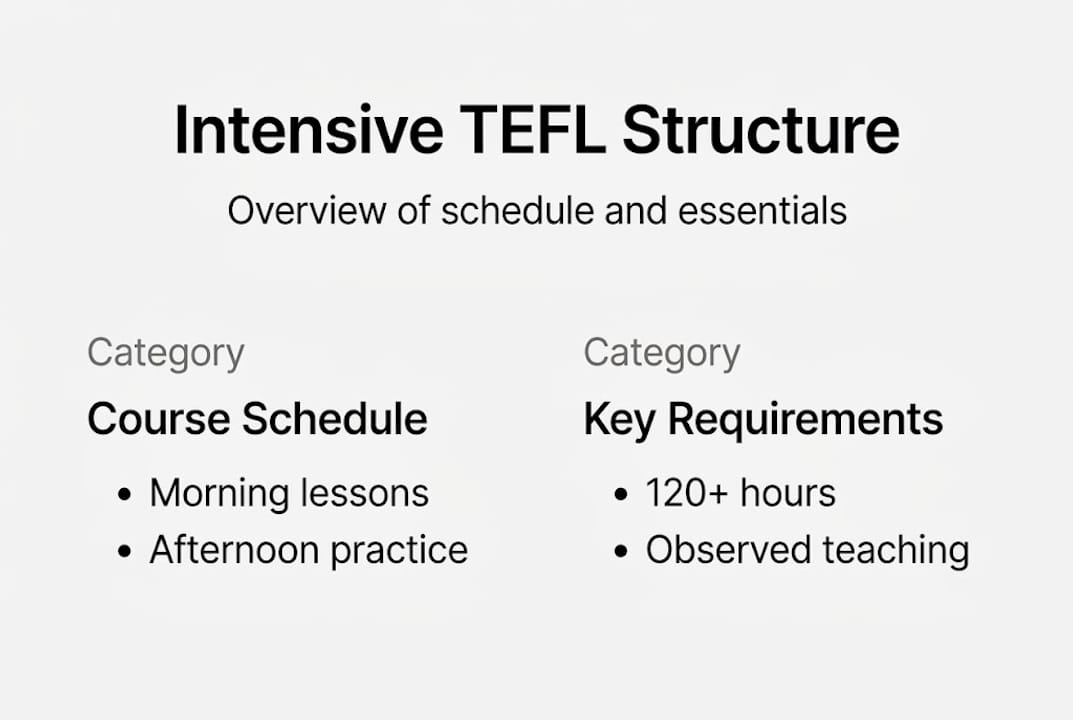
Here is a breakdown of what a typical week looks like:
| Component | Hours per week | Format |
|---|---|---|
| Methodology sessions | 10 to 12 | Tutor-led input |
| Grammar and language analysis | 8 to 10 | Workshop style |
| Lesson planning | 6 to 8 | Guided and independent |
| Observed teaching practice | 4 to 6 | Live classroom |
| Feedback and reflection | 3 to 5 | Small group sessions |
The core modules you will cover include:
- Language skills: Reading, writing, speaking, and listening instruction techniques
- Classroom management: Strategies for mixed-ability groups and learner engagement
- Grammar teaching: Analysing English structures and presenting them clearly
- Methodology: Evidence-based approaches to language teaching
- Lesson planning: Designing effective, learner-centred lessons from scratch
Observed teaching practice is essential to most accredited intensive TEFL courses, and for good reason. Standing in front of real learners, receiving structured feedback, and then immediately applying that feedback is what separates intensive graduates from those who only studied theory.
Pro Tip: When comparing fast-track intensive TEFL courses, always confirm that the programme includes a minimum of six hours of observed teaching practice with genuine language learners, not just peer role-play. This is a key quality indicator.
What you’ll learn: curriculum, teaching methods, and assessment
The curriculum of an intensive TEFL course is built around practical application. Core methodologies include PPP (Presentation-Practice-Production), lesson planning, grammar teaching, and practical teaching practice. PPP is the backbone of most beginner-level TEFL training. You learn to present a language point clearly, guide students through practice activities, and then facilitate free production of that language in context.
Beyond PPP, you will study communicative language teaching (CLT), task-based learning, and how to adapt your approach for different learner profiles. Understanding what’s covered in intensive TEFL helps you set realistic expectations and arrive prepared.
A typical assessment structure looks like this:
- Observed teaching practice: Graded lessons delivered to real students, with written tutor feedback
- Written assignments: Language analysis tasks and reflective teaching journals
- Grammar and methodology exam: Tests your theoretical understanding of English and pedagogy
- Portfolio or final review: A compiled record of your progress and teaching development
Most accredited programmes require a minimum score of around 80% to pass. Practical teaching is weighted heavily, which is why the immersive format works so well. You practise, receive feedback, and improve in real time.
“The most valuable thing I gained was not the certificate. It was the ability to walk into any classroom, anywhere in the world, and actually teach.” — EBC TEFL graduate
No prior teaching experience is required to enrol. However, a strong command of English at C1 level or above is essential. You need to be able to analyse grammar, explain language concepts clearly, and communicate confidently with both trainers and students throughout the course.
Pro Tip: Before your course begins, review basic English grammar terminology. Knowing terms like “present perfect” or “modal verb” will help you focus on teaching technique rather than catching up on language knowledge during those intense first days.
Popular destinations and course costs in Europe
Europe remains the most popular region for taking an intensive TEFL course, and for good reason. The combination of strong language school networks, visa flexibility, and cultural richness makes cities like Barcelona, Madrid, Prague, and Dublin ideal locations. Popular European destinations include Barcelona, Madrid, Prague, and Dublin, with prices ranging from €1,290 to €2,281 for 120 to 160 hour programmes in 2026.
Here is a comparison of key European TEFL destinations:
| City | Approx. course cost (2026) | Key advantage |
|---|---|---|
| Barcelona, Spain | €1,490 to €2,281 | Spanish immersion, strong job market |
| Madrid, Spain | €1,450 to €2,100 | Large English teaching sector |
| Prague, Czech Republic | €1,290 to €1,800 | Lower living costs, growing demand |
| Dublin, Ireland | €1,600 to €2,200 | English-speaking environment, EU base |
Barcelona stands out for those who want to combine TEFL training with language study. EBC’s programme allows you to study and teach in Spain through a one-year programme that pairs your TEFL certification with Spanish language modules, visa support, and part-time teaching opportunities.
Key advantages of completing your intensive TEFL in Europe include:
- Immediate job access: Most European cities have active language school hiring networks
- Cultural immersion: Living in your teaching destination accelerates language learning and cultural understanding
- Visa pathways: Programmes in Spain, France, and Italy can be combined with student visa options for extended stays
- Partner school networks: Many accredited providers have direct relationships with hiring schools
For anyone considering a longer commitment, EBC’s one-year study and work abroad programmes in Spain, France, and Italy offer a structured pathway that goes well beyond the initial four weeks.
Intensive TEFL vs online and part-time: key differences
Choosing the right TEFL route is not just about convenience. It is about matching your format to your goals. Here is how the three main options compare:
| Feature | Intensive (in-person) | Online (self-paced) | Part-time |
|---|---|---|---|
| Duration | 4 weeks | 3 to 6 months | 12 to 16 weeks |
| Teaching practice | 6+ hours, observed | None or peer-based | Limited |
| Employer preference | High (Europe) | Moderate | Moderate |
| Flexibility | Low | Very high | Medium |
| Cost | €1,450 to €2,281 | €200 to €500 | €500 to €1,200 |
Online 120-hour self-paced alternatives exist but lack hands-on teaching practice, making intensive in-person training better for beginners seeking European jobs and professional credibility. This is not a minor distinction. European language schools, particularly those affiliated with national education systems, consistently favour candidates with observed teaching practice on their record.
The intensive route suits you if:
- You want to start teaching within two months
- You are targeting competitive European markets like Spain or France
- You learn best through immersion and direct feedback
- You want a qualification that opens doors globally
Pro Tip: Before deciding, read through a detailed online vs onsite TEFL comparison to understand exactly what each format delivers. Then use the choose the best TEFL certificate guide to match your goals to the right accreditation.
Part-time courses offer more breathing room and can be combined with existing work commitments, but they take significantly longer and rarely include the same volume of observed practice. For those targeting Spain, France, or Italy specifically, the intensive format remains the strongest foundation.
Our view: why intensive TEFL works best for European teaching careers
We have worked with thousands of aspiring teachers across our global programmes, and the pattern is consistent. Those who complete an intensive, in-person TEFL course arrive in their first classroom with something that online graduates simply cannot replicate: genuine teaching confidence built through real experience.
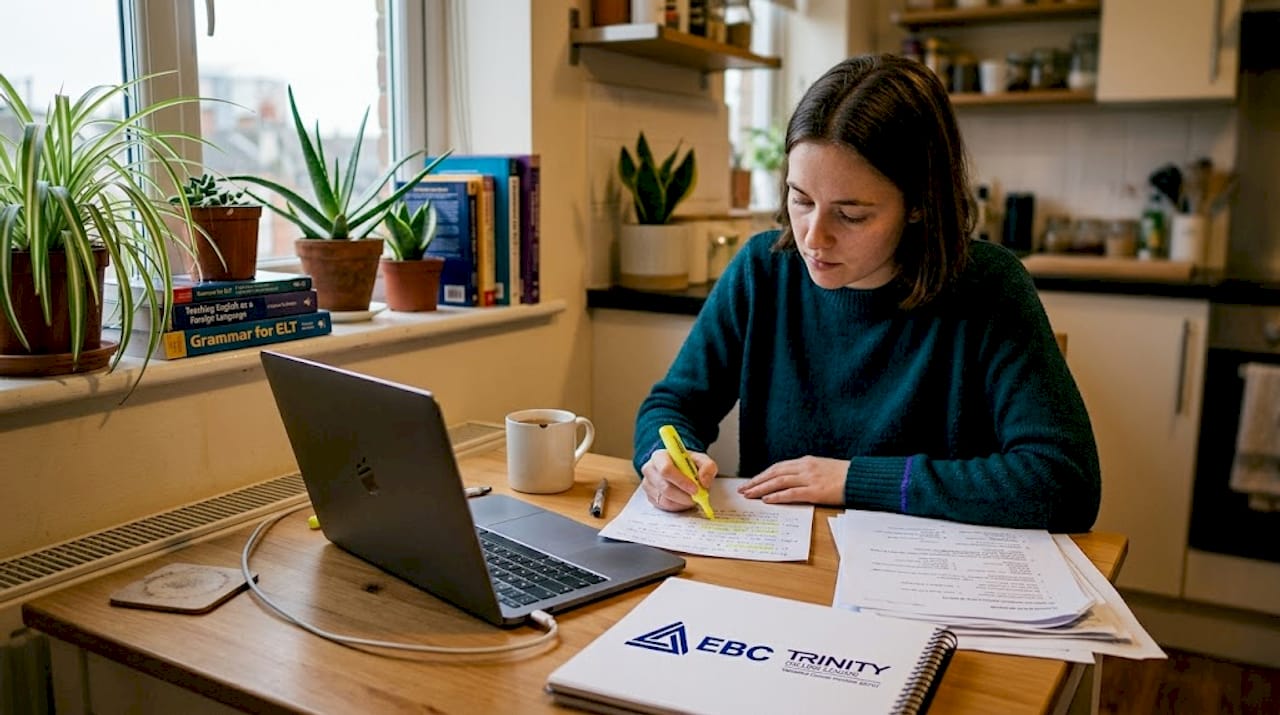
The pace is tough. Eight to ten hours a day for four weeks is not comfortable. But that discomfort is where growth happens. You receive feedback on a lesson, revise your approach, and deliver again the next day. That cycle of practice and reflection is what European employers recognise and value.
Intensive courses excel for immersive study and work in Europe, particularly in Barcelona, where combining TEFL with Spanish language modules creates a foundation for extended stays and broader career development. The advantages of intensive TEFL extend well beyond the certificate itself. You build a professional network, develop cultural fluency, and gain the kind of classroom instincts that only come from standing in front of real learners.
Online-only programmes have their place, but they cannot deliver the hands-on tools that European schools expect. If your goal is to teach in Europe and build a career with genuine momentum, the intensive route is not just a good option. It is the right one.
Ready to launch your English teaching career?
If this guide has given you a clearer picture of what an intensive TEFL course involves, the next step is finding the right programme for your goals and timeline.
At EBC TEFL, we support aspiring teachers across the globe through Trinity College London accredited programmes, one-year study and work abroad experiences in Spain, France, and Italy, and free lifetime job placement assistance. Whether you are exploring your options or ready to apply, our team is here to help. Start with our introduction to TEFL to build your foundation, explore the full range of certification to teach English abroad pathways available, or book a free TEFL consultation to speak directly with one of our advisers.
Frequently asked questions
Is a 4-week intensive TEFL course recognised by European employers?
Yes. A 4-week, 120-hour intensive TEFL such as CELTA or Trinity CertTESOL meets the minimum benchmark required by European employers and is widely respected across Spain, France, Italy, and beyond.
How much teaching practice is included in an intensive TEFL?
Most intensive courses include at least 6 hours of observed teaching practice with real language learners, providing structured feedback and graded assessment throughout.
Can I work while taking an intensive TEFL course?
It is technically possible for some people, but the demanding daily schedule of eight to ten hours makes working alongside your studies very challenging and is generally not recommended.
Are there flexible or online alternatives to intensive TEFL?
Yes, self-paced online TEFL courses are widely available, but they lack hands-on teaching practice and typically carry less weight with European employers who prioritise observed classroom experience.
Recommended
- Intensive TEFL courses: fast-track your global teaching career – EBC TEFL courses
- Specialised TEFL Courses: The Complete Guide – EBC TEFL courses
- What Is a TEFL Internship – Real-World Benefits for Aspiring Teachers
- What Is International TEFL? Complete Guide and Benefits – EBC TEFL courses