
Most teachers entering the world of EFL discover quickly that myths and outdated assumptions abound. More than 1.5 billion people worldwide are learning English today, creating a massive demand for qualified educators who truly understand both language and culture. Whether you are aiming to teach abroad or online, knowing the real facts about the profession can set you apart and help you make informed decisions about international opportunities.
Table of Contents
- EFL Teaching Explained and Common Myths
- Internationally Recognised TEFL Certification Pathways
- Hands-On Training and Real-World Classroom Skills
- Global Job Opportunities and EBC TEFL Support
- One-Year Study and Work Abroad Programmes
Key Takeaways
| Point | Details |
|---|---|
| EFL Teaching Role | EFL teachers act as cultural ambassadors and communication facilitators, not just grammar instructors. Effective teaching relies on passion and adaptability rather than merely on native speaker status. |
| Certification Importance | Obtaining internationally recognised TEFL certifications enhances professional credibility and opens doors to global teaching opportunities. Continuous professional development is essential for success in diverse educational contexts. |
| Hands-On Training | Practical training is crucial for developing effective teaching skills, including technology integration and intercultural communication, equipping educators to handle real-world classroom dynamics. |
| Global Opportunities | The demand for qualified EFL teachers is growing across various international markets, with a focus on adaptable teaching methodologies and cultural awareness to thrive in diverse settings. |
EFL Teaching Explained and Common Myths
English as a Foreign Language (EFL) teaching represents a dynamic professional pathway that enables educators to bridge cultural and linguistic gaps worldwide. The field extends far beyond traditional classroom instruction, offering professionals opportunities to transform lives through language education. Exploring teachers’ self-perceptions through metaphorical analysis reveals the complex roles these professionals navigate in global educational contexts.
Contrary to popular belief, EFL teaching is not simply about grammatical instruction. Effective EFL educators are cultural ambassadors, communication facilitators, and linguistic mentors who help students develop practical language skills. Many myths persist about who can become an EFL teacher, including misconceptions about native speaker requirements and teaching capabilities. Language proficiency is essential, but passionate communication skills often matter more than purely linguistic background.
Some prevalent myths surrounding EFL teaching include assumptions that only native English speakers can be effective instructors, or that teaching requires extensive prior experience. These misconceptions challenge established educational beliefs and limit potential opportunities for talented educators. In reality, many non-native speakers become exceptional English language teachers by leveraging their own language learning experiences and deep understanding of linguistic challenges.
Pro Tip – Language Teaching Strategy: Develop a robust understanding of cross-cultural communication techniques and remain adaptable in your teaching approach, as flexibility is key to successful international language instruction.
Practical Considerations:
- Certification matters more than native speaker status
- Cultural awareness enhances teaching effectiveness
- Continuous professional development is crucial
- Language proficiency requires ongoing refinement
Internationally Recognised TEFL Certification Pathways
International TEFL certification represents a critical gateway for educators seeking global teaching opportunities across diverse linguistic landscapes. These certification programmes provide structured pathways that validate an individual’s professional competence in English language instruction. Exploring the significance of English proficiency certifications reveals their pivotal role in establishing professional credibility and enabling international mobility for language educators.
Modern TEFL certification pathways encompass comprehensive training modules that extend well beyond traditional language teaching approaches. Technological pedagogical content knowledge has become increasingly important, with contemporary programmes integrating digital skills and innovative instructional methodologies. Integrating technological, pedagogical, and content knowledge frameworks demonstrates how effective certification programmes prepare teachers to navigate complex multicultural learning environments.
Recognised certification pathways typically include internationally accredited programmes such as Trinity College London’s CertTESOL and Cambridge’s CELTA, which provide rigorous training in language teaching methodologies, classroom management, and intercultural communication. These certifications are valued globally, offering educators structured credentials that validate their professional expertise and open doors to teaching positions across different countries and educational institutions.
Here is a summary comparing recognised international TEFL certifications:
| Certification Programme | Key Focus Areas | Global Recognition | Typical Duration |
|---|---|---|---|
| Cambridge CELTA | Methodology, practical teaching, feedback | Very high | 4-5 weeks full-time |
| Trinity CertTESOL | Teaching skills, classroom management | Very high | 4-5 weeks full-time |
| Online Generic TEFL (120+ hrs) | General pedagogy, flexible access | Moderate to high | 1-3 months part-time |
Practical Considerations:
- Select accredited certification programmes
- Understand individual country requirements
- Consider specialisation modules
- Maintain ongoing professional development
Pro Tip – Certification Strategy: Research multiple certification options and choose programmes that offer comprehensive practical training and internationally recognised credentials to maximise your global teaching potential.
Hands-On Training and Real-World Classroom Skills
Hands-on training represents the cornerstone of effective English language teaching, bridging the gap between theoretical knowledge and practical classroom application. Empirical analysis of digital literacy among EFL teachers highlights the critical importance of practical skill development in preparing educators for dynamic teaching environments. Modern TEFL programmes increasingly emphasise experiential learning that equips teachers with the nuanced skills required to navigate complex linguistic and cultural contexts.

Practical classroom skills extend far beyond traditional language instruction, encompassing technological proficiency, intercultural communication, and adaptive teaching methodologies. Contemporary training programmes integrate real-world scenarios, microteaching experiences, and extensive classroom observation to develop teachers’ professional competence. Research examining teachers’ self-efficacy and teaching practices demonstrates that practical training significantly enhances an educator’s ability to respond effectively to diverse student needs and challenging classroom dynamics.
Successful hands-on training typically involves a comprehensive approach that includes live teaching practice, peer feedback, professional mentorship, and technology integration. Aspiring English language teachers learn to develop lesson plans, manage classroom interactions, assess student progress, and create engaging learning environments. These practical skills are crucial for building confidence and competence in real-world educational settings, enabling educators to transform theoretical knowledge into meaningful learning experiences.
This table highlights the distinction between theoretical and hands-on teacher training approaches:
| Training Approach | Main Components | Benefits for Teachers | Example Activities |
|---|---|---|---|
| Theoretical | Lectures, textbooks, theory | Strong foundation, terminology | Grammar analysis, presentations |
| Hands-on/Practical | Teaching practice, observation | Real classroom experience, adaptability | Microteaching, peer review |
Practical Considerations:
- Seek programmes with extensive teaching practicum
- Embrace technology-enhanced learning approaches
- Develop flexible classroom management strategies
- Cultivate cultural sensitivity and communication skills
Pro Tip – Skill Development Strategy: Actively seek opportunities for microteaching and peer observation during your training to gain practical insights and build professional confidence in classroom instruction.
Global Job Opportunities and EBC TEFL Support
The global English language teaching market offers unprecedented opportunities for qualified educators, with diverse career pathways spanning multiple continents. Exploring EFL teachers’ practices in Asian educational contexts reveals the dynamic and expansive nature of international teaching opportunities. Modern language professionals can now choose from an array of roles including classroom teaching, online instruction, corporate language training, and specialised academic positions across different educational settings.
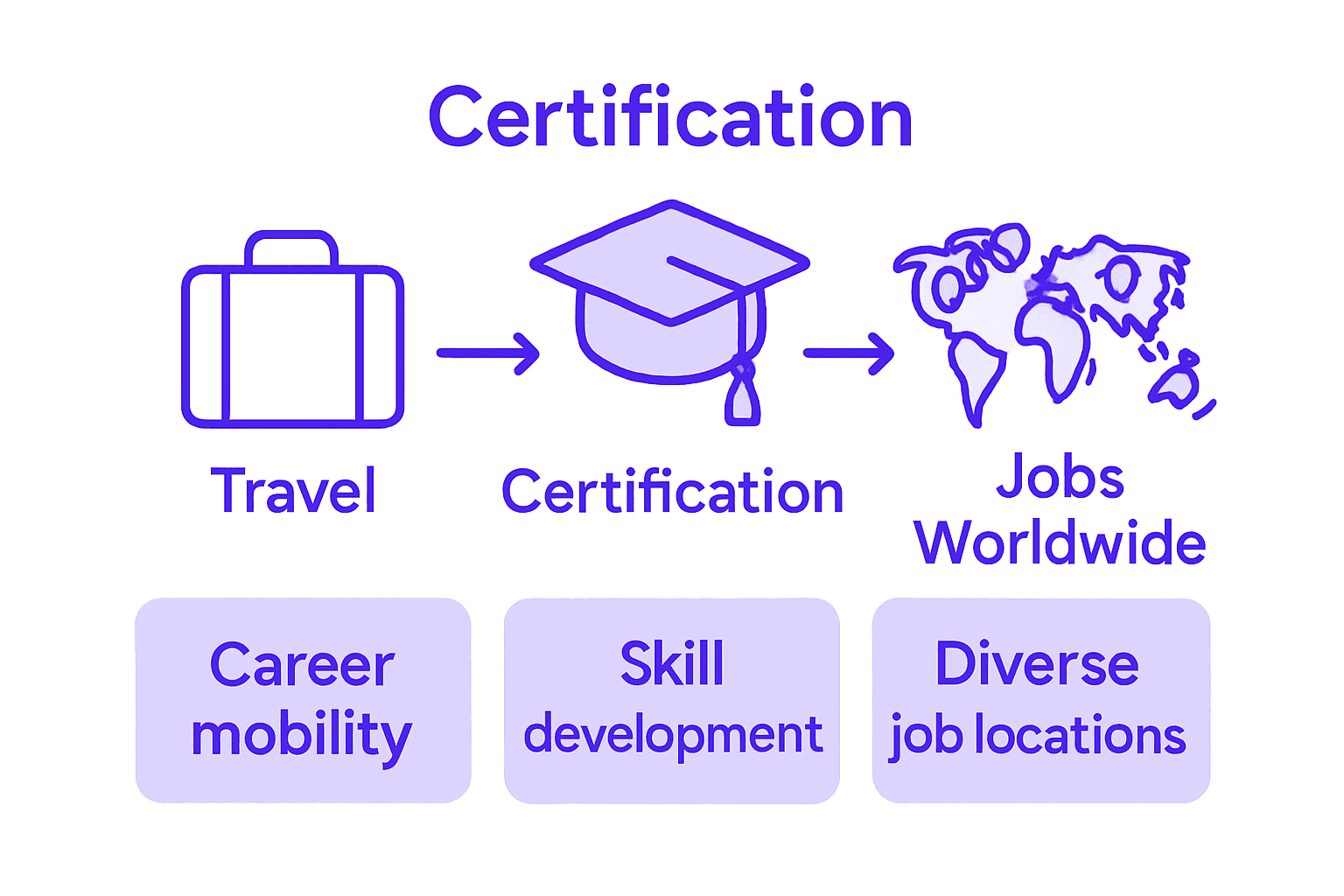
International job markets have become increasingly sophisticated, demanding educators with robust qualifications and adaptable teaching skills. Contemporary EFL teachers must navigate complex cultural landscapes, demonstrating technological proficiency and cross-cultural communication abilities. Investigating teacher education programmes’ impact underscores the importance of comprehensive training that prepares educators for global professional challenges, emphasising the need for continuous skill development and contextual adaptability.
EBC TEFL’s support framework provides comprehensive assistance throughout an educator’s professional journey, offering structured guidance for job placement, career development, and international opportunities. The organisation’s lifetime job placement support creates a unique ecosystem that connects qualified teachers with reputable educational institutions worldwide. This holistic approach ensures that graduates receive ongoing support, from initial certification through to securing and maintaining international teaching positions.
Practical Considerations:
- Research diverse international job markets
- Develop adaptable teaching methodologies
- Understand cultural context and local educational systems
- Maintain flexible professional credentials
Pro Tip – Career Positioning: Continuously update your professional skills and remain open to diverse teaching opportunities across different cultural and educational contexts.
One-Year Study and Work Abroad Programmes
One-Year Study and Work Abroad Programmes represent a transformative educational experience that combines professional development, international exposure, and language immersion. Exploring advanced technological integration in EFL teaching reveals how contemporary programmes leverage cutting-edge approaches to personalise learning experiences and enhance global educational mobility. These comprehensive programmes offer aspiring educators a unique opportunity to simultaneously develop professional skills, gain international teaching credentials, and experience cultural integration.
Innovative learning environments now incorporate advanced technological tools to support language acquisition and teaching practices. Developing conversational language learning technologies demonstrates how modern programmes integrate artificial intelligence and language learning platforms to create more interactive and adaptive educational experiences. Participants can expect structured programmes that blend theoretical training, practical teaching experience, and language study across destinations like Spain, France, and Italy.
The comprehensive nature of these programmes typically includes multiple interconnected components: accredited teacher training through Trinity College London, language study opportunities, post-graduate study options, visa support, and structured pathways for part-time work or teaching opportunities. This holistic approach ensures participants receive not just a qualification, but a complete professional and personal development experience that prepares them for global career opportunities in English language education.
Practical Considerations:
- Verify programme accreditation
- Understand visa and work regulations
- Plan for cultural adaptation
- Prepare for intensive learning experience
Pro Tip – Programme Selection: Research programme structures thoroughly and select options that offer comprehensive support, including language training, teaching certification, and real-world professional exposure.
Unlock Your Global Career Potential with Accredited Trinity College London TEFL Training
Teaching English as a Foreign Language offers the chance to build a rewarding international career while bridging cultural divides. If you have ever felt held back by common myths about needing to be a native speaker or worried about lacking practical classroom experience this article confirms the transformative power of accredited, hands-on teacher training. Professional qualifications like Trinity College London’s CertTESOL equip you with recognised teaching skills and global mobility, addressing the crucial need for cross-cultural communication and adaptable methodologies discussed here.
At EBC TEFL you gain access to fully accredited Trinity College London courses and immersive one-year study and work abroad programmes in Spain, France, and Italy. These unique programmes combine practical teacher training, language study, visa support, and professional work experience that align perfectly with the article’s emphasis on real-world classroom skills and international employment. You also benefit from lifelong job placement support, helping you overcome challenges of entering diverse global markets and securing meaningful teaching roles.
Explore our Trinity CertTESOL and one-year programmes today and start your journey to becoming a skilled, confident English language educator. With our comprehensive guidance and global network you can transform passion into a fulfilling international career. Book a free consultation to get personalised advice and take the first step now.
Frequently Asked Questions
What is EFL teaching?
EFL teaching, or English as a Foreign Language teaching, involves instructing non-native speakers in the English language, focusing not just on grammar but also on cultural communication and practical language skills.
What qualifications do I need to become an EFL teacher?
To become an EFL teacher, it is essential to obtain a recognised TEFL certification. While native speaker status is often viewed as an advantage, a strong grasp of the language and effective communication skills are crucial.
How does hands-on training benefit EFL teachers?
Hands-on training provides EFL teachers with practical skills needed to navigate real classroom scenarios, such as developing lesson plans and managing classroom interactions, thereby building their confidence and adaptability.
What kind of global job opportunities are available for EFL teachers?
EFL teachers can find a range of job opportunities worldwide, including classroom teaching, online instruction, and corporate language training. The demand for qualified educators continues to grow, offering various career paths.
