
Over 1.5 billion people worldwide are learning English, driving a growing demand for qualified teachers with a top-quality TEFL certification like the Trinity CertTESOL. For those dreaming of international travel or a rewarding teaching career abroad, understanding how TEFL courses work is essential. This guide unpacks the basics of training, reveals what true accreditation means, and highlights how choosing a recognised British qualification opens doors to classrooms and job opportunities around the world.
Table of Contents
- TEFL Courses Explained: Core Concepts And Accreditation
- Types Of TEFL Programmes And Key Differences
- Essential Course Components And Training Methods
- Requirements, Prerequisites And Who Can Enrol
- Global Employment Support And Study Abroad Pathways
Key Takeaways
| Point | Details |
| TEFL Certification Importance | TEFL certification is essential for aspiring educators wanting to teach English globally, providing vital pedagogical skills and classroom management techniques. |
| Accreditation Significance | The credibility of a TEFL programme hinges on its accreditation, ensuring rigorous standards in training and methodology. |
| Variability of Programmes | TEFL programmes vary from entry-level certificates to advanced qualifications, catering to different professional aspirations and teaching contexts. |
| Global Employment Opportunities | TEFL certification opens pathways for international teaching roles, supported by job placement assistance and career development resources. |
TEFL Courses Explained: Core Concepts And Accreditation
Teaching English as a Foreign Language (TEFL) certification represents a critical professional pathway for aspiring international educators. These comprehensive programmes provide essential training that prepares individuals to teach English effectively across diverse global classrooms. At their core, TEFL courses equip participants with pedagogical skills, language teaching methodologies, and practical classroom management techniques.
The foundation of any credible TEFL programme lies in its accreditation framework. Professional certifications like the Trinity CertTESOL require rigorous standards that ensure high-quality educational preparation. Accreditation typically involves structured coursework covering crucial areas such as:
- Language teaching methodology
- Classroom management strategies
- Grammar and linguistic understanding
- Lesson planning techniques
- Cross-cultural communication skills
- Practical teaching practicum
Understanding the nuanced differences between various certification levels helps prospective teachers select programmes aligned with their professional goals. Entry-level certificates provide fundamental skills, while advanced credentials like the Trinity CertTESOL guide offer comprehensive training for serious language educators seeking international teaching opportunities. These qualifications not only demonstrate professional competence but also significantly enhance employability in the global English language teaching market.
Types Of TEFL Programmes And Key Differences
Navigating the landscape of TEFL programmes reveals a diverse array of certification options designed to meet varying professional needs and career aspirations. Professional certification levels range from foundational entry-level qualifications to advanced, specialised credentials that cater to specific teaching contexts and career trajectories.
The primary types of TEFL programmes include standard certificate courses, diploma-level qualifications, and specialised teaching certifications. Understanding the nuanced differences between TEFL certifications helps educators select the most appropriate pathway for their professional development. Key programme categories typically encompass:
- Online TEFL Certificates: Flexible digital learning options
- In-person Intensive Courses: Immersive, practical training programmes
- Hybrid TEFL Certifications: Combination of online and classroom-based learning
- Specialised Teaching Certificates: Focused on business English, young learners, or academic English
Advanced programmes like the Trinity CertTESOL and CELTA represent gold-standard qualifications in the field. These comprehensive certifications provide in-depth pedagogical training, practical teaching experience, and internationally recognised credentials that significantly enhance employability. Prospective teachers should carefully consider their career goals, time constraints, and preferred learning methods when selecting a TEFL programme that aligns with their professional aspirations.

Essential Course Components And Training Methods
TEFL courses are meticulously structured to provide comprehensive language teaching preparation through a blend of theoretical knowledge and practical application. Pedagogical training represents the cornerstone of these programmes, equipping prospective teachers with the essential skills needed to effectively communicate language concepts and manage diverse classroom environments.
The core components of a robust TEFL certification typically include in-depth exploration of course syllabi across several critical learning domains:
- Language Understanding
- English grammar analysis
- Phonology and pronunciation techniques
- Linguistic structure comprehension
- Teaching Methodology
- Lesson planning strategies
- Classroom management techniques
- Assessment and evaluation methods
- Practical Teaching Experience
- Supervised teaching practicum
- Microteaching sessions
- Peer and instructor feedback mechanisms
Training methodologies have evolved to incorporate diverse learning approaches, recognising that effective language instruction requires adaptability and nuanced understanding. Modern TEFL programmes emphasise experiential learning, combining theoretical instruction with practical teaching opportunities that simulate real-world classroom scenarios. This approach ensures that participants develop not just academic knowledge, but also the confidence and practical skills necessary to excel in international teaching environments across various cultural and educational contexts.
Requirements, Prerequisites And Who Can Enrol
Teaching English abroad is an accessible career pathway with relatively straightforward entry requirements for most TEFL certification programmes. Language teaching credentials are designed to be inclusive, welcoming individuals from diverse educational and professional backgrounds who demonstrate a genuine passion for international education and cultural exchange.
Typical prerequisites for TEFL courses generally encompass a foundational set of basic requirements:
- Native or near-native English language proficiency
- Minimum age requirement (typically 18 years or older)
- Secondary school or high school diploma
- Basic communication and interpersonal skills
- Enthusiasm for international teaching opportunities and cross-cultural engagement
While academic backgrounds vary, successful TEFL candidates share common characteristics: adaptability, cultural sensitivity, and a strong commitment to professional development. Some advanced programmes might request additional qualifications such as undergraduate degrees or prior teaching experience, though many entry-level certifications welcome complete beginners. International programmes particularly value candidates who demonstrate linguistic flexibility, emotional intelligence, and a genuine desire to support language learners in navigating complex communication challenges.
The inclusive nature of TEFL certification means that individuals from various professional sectors can transition into language education. Career changers, recent graduates, gap year travellers, and professionals seeking international experiences all find viable pathways through comprehensive TEFL training. These programmes are strategically designed to transform motivated individuals into confident, skilled English language educators capable of thriving in diverse global classroom environments.
Global Employment Support And Study Abroad Pathways
TEFL certification represents more than just an educational qualification; it is a gateway to transformative international career opportunities and global professional development. Professional mobility lies at the heart of these programmes, offering comprehensive support that extends far beyond traditional classroom training.
International teaching pathways typically encompass multiple strategic support mechanisms:
- Job Placement Assistance
- Global network of educational partners
- Personalised job matching services
- Recruitment support in multiple countries
- Career Development Resources
- Interview preparation workshops
- CV and application document support
- Cultural adaptation guidance
- Study Abroad Opportunities
- Language immersion programmes
- Postgraduate study options
- International teaching internships
Career changers and recent graduates can strategically leverage professional development pathways to create meaningful international experiences. These programmes provide not just teaching credentials, but comprehensive support networks that help individuals navigate complex global employment landscapes. The combination of accredited training, practical experience, and targeted job placement assistance ensures participants are well-equipped to transform their professional aspirations into tangible international teaching careers.
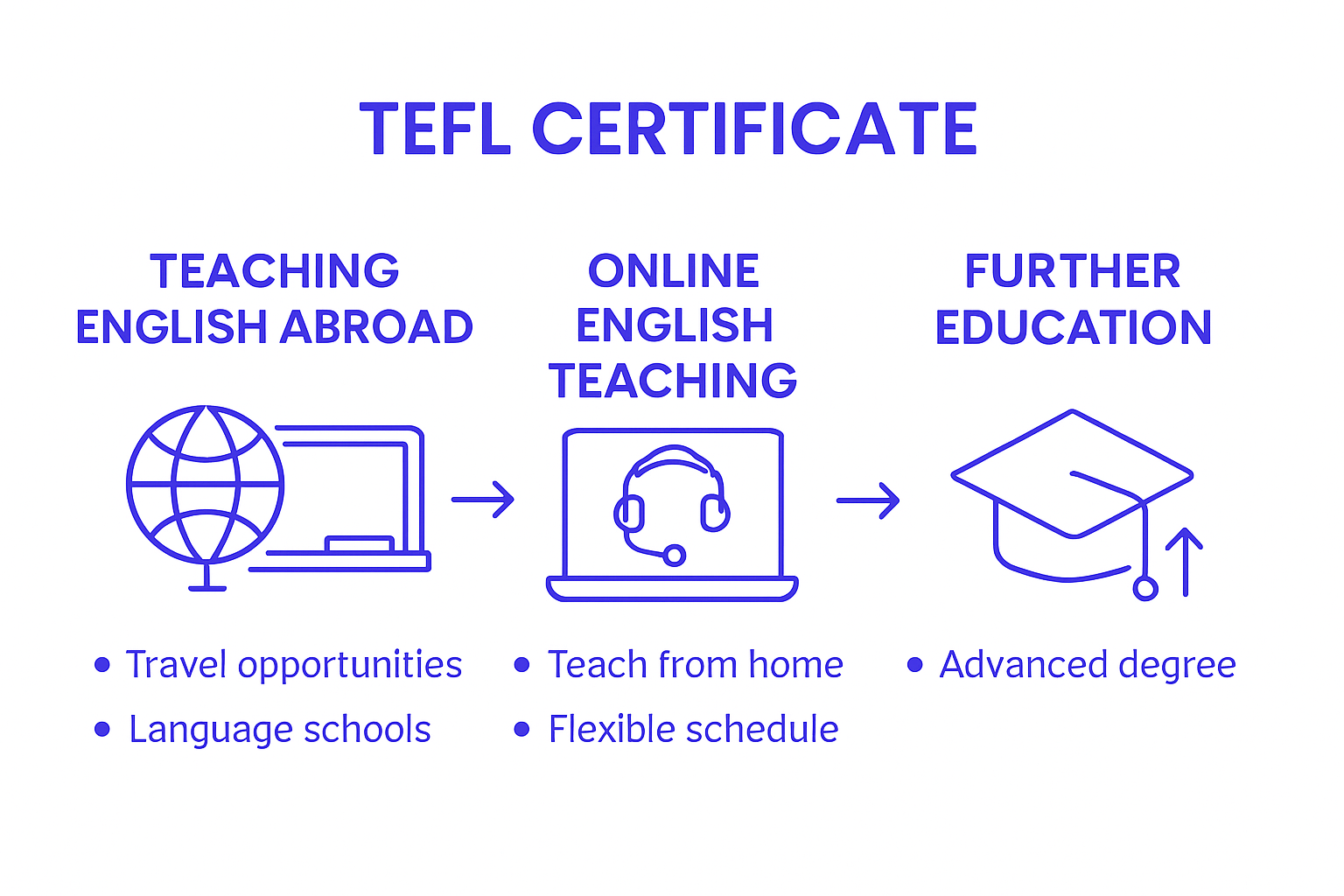
Beyond traditional employment support, modern TEFL programmes increasingly offer holistic pathways that integrate language study, professional certification, and cultural immersion. These innovative approaches allow participants to simultaneously develop language skills, gain internationally recognised teaching qualifications, and explore unique professional opportunities across diverse global contexts.
Elevate Your English Teaching Career with Accredited TEFL Pathways
TEFL courses demand high-quality accreditation and practical training to prepare you for the global classroom challenges discussed in this article. At EBC TEFL, we offer Trinity College London accredited programmes such as the Trinity CertTESOL that provide rigorous, hands-on teaching methodology and real-world practicum experiences. These qualifications are internationally recognised and equip you with the classroom skills, linguistic understanding, and cultural insights essential to excel wherever you choose to teach.
Beyond certification, our platform supports your journey with lifetime job placement assistance and extensive career development resources designed to help you secure teaching positions worldwide. If your goal includes immersive professional growth, our unique one-year study and work abroad programmes in Spain, France, and Italy combine accredited teacher training with language study, postgraduate opportunities, visa support, and part-time work options. This comprehensive approach ensures you build a standout teaching profile while experiencing rich cultural immersion.
Ready to turn your TEFL ambitions into a global teaching reality Today explore our Trinity CertTESOL courses and specialised pathways and discover how we support you every step of the way with free consultations and personalised application guidance. Don’t wait to join a welcoming, professional community dedicated to your success Book a Call now and take the first confident step towards teaching English abroad.
Frequently Asked Questions
What are the key components of a TEFL course?
TEFL courses typically include language understanding, teaching methodology, and practical teaching experience. This structure ensures that participants gain both theoretical knowledge and practical skills necessary for effective language instruction.
What types of TEFL programmes are available?
TEFL programmes vary and can include online certificates, in-person intensive courses, hybrid certifications, and specialised teaching certificates. Each type caters to different professional needs and learning preferences.
What qualifications do I need to enrol in a TEFL course?
Most TEFL courses require native or near-native English proficiency, a minimum age of 18, and a secondary school diploma. Basic communication skills and enthusiasm for teaching are also important.
How does TEFL certification support job placement abroad?
TEFL certification provides access to job placement assistance, including personalised job matching services and a global network of educational partners. This support helps graduates navigate the international teaching job market effectively.
Recommended
- International TEFL Career Steps: Your Path to Global Teaching – EBC TEFL courses
- TEFL Accreditation: Everything You Need to Know – EBC TEFL courses
- Professional Development TEFL: Pathways to Global Teaching – EBC TEFL courses
- 7 Essential Features of Accredited TEFL Courses Explained – EBC TEFL courses
- 7 Key Benefits of KHDA Approved Courses for Career Growth
