
Nearly half of graduates consider working abroad to boost their career prospects. The chance to earn accredited TEFL certification and teach English in vibrant countries like Spain, France, or Italy is attracting university leavers and career changers alike. Whether you seek adventure, cultural immersion, or reliable job placement support, you will discover how virtual classroom TEFL courses truly transform professional and personal opportunities.
Table of Contents
- What A TEFL Course Online Really Means
- Key Features Of Internationally Accredited TEFL
- Types Of TEFL Programmes And Pathways
- Study And Work Abroad: Combining Training With Real Experience
- Lifetime Job Placement And Graduate Support
Key Takeaways
| Point | Details |
| TEFL Programme Benefits | Completing a TEFL course enhances teaching skills through cultural immersion and practical experience. |
| Accreditation Importance | Seeking internationally accredited programmes ensures recognition and quality of training. |
| Diverse Programme Formats | Various TEFL pathways cater to different career goals, from short certifications to advanced qualifications. |
| Ongoing Graduate Support | Lifetime job placement services provide continuous career development and networking opportunities for TEFL graduates. |
What a Virtual Classroom TEFL Course Really Means
Taking a virtual classroom TEFL course is far more than just obtaining a teaching certification. It represents a transformative professional journey that combines comprehensive training, flexible learning, and global career opportunities. International TEFL opportunities encompass a dynamic pathway for recent graduates and career changers seeking meaningful professional development beyond traditional career trajectories.
A high-quality virtual classroom TEFL course goes well beyond basic classroom instruction techniques. Participants engage in rigorous, practical training that develops critical communication skills, adaptability, and pedagogical expertise. These programs typically include interactive modules on lesson planning, classroom management strategies, language acquisition techniques, and specialised approaches for diverse learning environments. Students learn to design engaging lesson plans, understand learner psychology, and apply effective teaching methods in a variety of educational contexts.
The real value of a virtual classroom TEFL course lies in its accessibility and flexibility combined with practical application. Through simulations, live practice teaching sessions, and structured assignments, participants gain real classroom experience and develop professional confidence, all while studying from their own location. This approach allows teachers to build a robust skill set that includes both technical teaching expertise and cross-cultural awareness, which employers worldwide recognise as essential for successful English language instruction in international and remote settings.
Pro tip: Research destination countries carefully and select a TEFL programme that offers comprehensive support, including visa guidance, job placement assistance, and cultural orientation to maximise your international teaching experience.
The following table summarises the key employer-valued skills gained when you start teaching abroad:
| Core Skill | How Developed Abroad | Employer Value |
| Cross-cultural competence | Daily cultural immersion | Adapts to global classrooms |
| Practical teaching ability | Real classroom practice | Delivers effective lessons |
| Language methodology | Specialised training modules | Communicates across barriers |
| Adaptability | Living abroad experience | Handles diverse situations |
Key Features of Internationally Accredited TEFL
International TEFL accreditation represents a crucial benchmark for professional teaching qualifications, providing educators with globally recognised credentials that open doors to teaching opportunities worldwide. Comprehensive TEFL accreditation features ensure that teachers receive standardised, high-quality training that meets rigorous international educational standards.
The key features of internationally accredited TEFL programmes typically encompass several critical components. These include comprehensive theoretical training in language acquisition methodologies, extensive practical teaching practicum, in-depth understanding of learner psychology, and specialised modules addressing diverse classroom environments. Programmes like those accredited by Trinity College London provide structured curricula that develop sophisticated pedagogical skills, ensuring teachers can effectively communicate across cultural and linguistic boundaries.
Beyond technical training, internationally accredited TEFL certifications distinguish themselves through their holistic approach to language education. They integrate cultural competence, advanced communication strategies, and adaptive teaching techniques that prepare educators for complex global classrooms. These programmes go beyond simple language instruction, focusing on developing teachers who can navigate nuanced cross-cultural interactions, design engaging learning experiences, and support students from diverse linguistic backgrounds.
Pro tip: When selecting a TEFL course, prioritise programmes with internationally recognised accreditation and robust practical teaching components to maximise your global employability and professional development.
Types of TEFL Programmes and Pathways
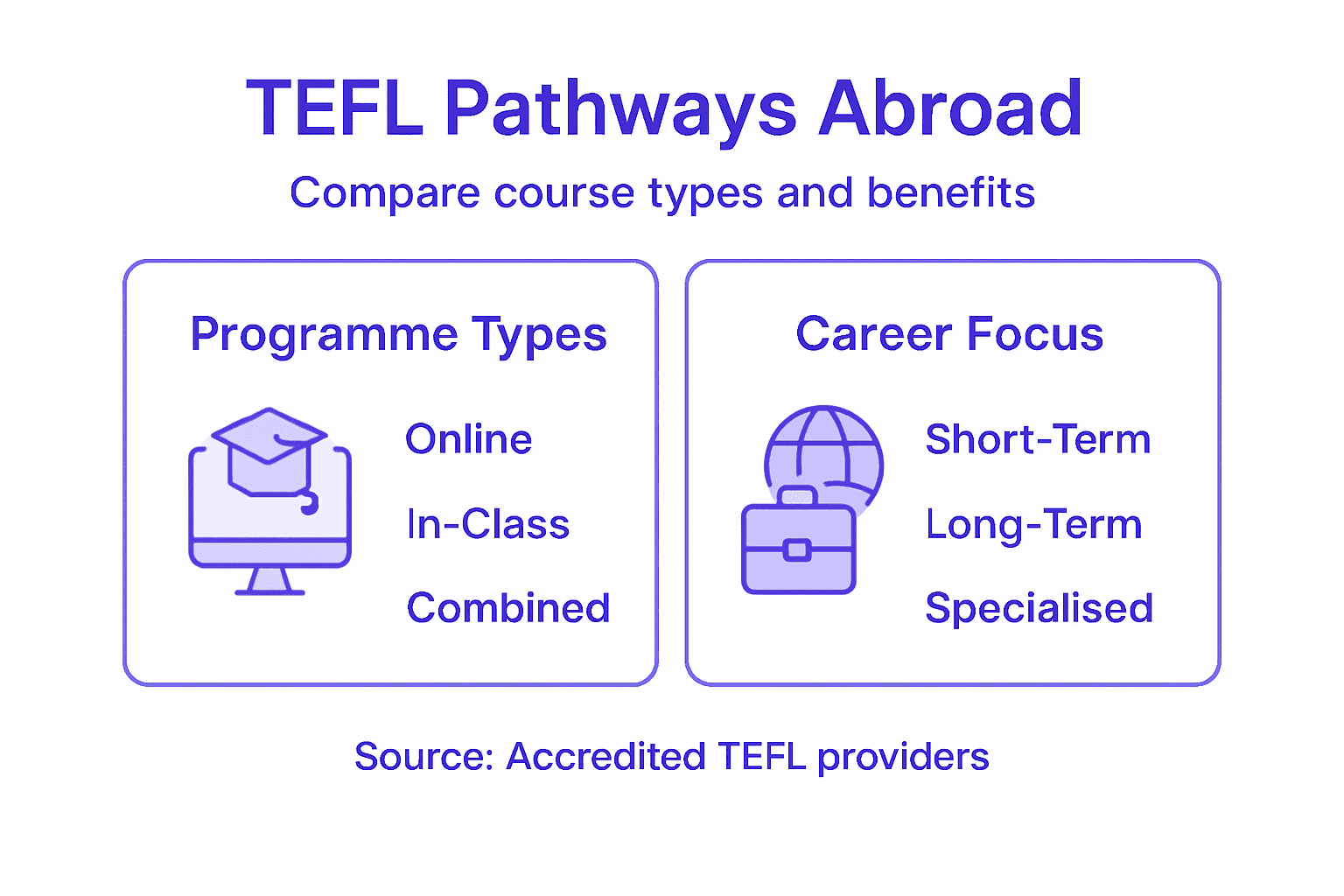
TEFL programmes offer diverse pathways for aspiring international educators, ranging from intensive short-term certifications to comprehensive year-long qualifications. TEFL course levels and global impact demonstrate the flexibility and depth of professional development opportunities available to language teaching professionals.
Typically, TEFL programmes are categorised into several key types. Online courses provide foundational theoretical training, allowing participants to study flexibly from home. In-person intensive programmes in real or virtual classroom settings offer concentrated, hands-on learning experiences with immediate practical teaching opportunities. Virtual classroom advanced TEFL programmes like the Trinity CertTESOL offer specialised modules in areas such as business English, young learner education, and academic language instruction.
Each TEFL pathway offers unique advantages for different career objectives. Short-term certifications are ideal for recent graduates seeking quick international teaching opportunities, while comprehensive programmes provide deeper pedagogical training for those planning long-term educational careers. Specialised certifications can open niche markets, such as corporate language training, university preparation courses, or teaching English for specific professional contexts.
Pro tip: Select a TEFL programme that aligns with your specific career goals, considering factors like international recognition, practical teaching components, and specialisation opportunities.
Study and Work Abroad: Combining Training With Real Experience
Study and work abroad programmes represent an unparalleled opportunity for aspiring English language teachers to gain comprehensive professional development through immersive international experiences. Study abroad TEFL opportunities provide a unique pathway for individuals to simultaneously acquire professional qualifications and develop deep cultural understanding while living and working in a foreign country.

These integrated programmes typically combine rigorous teacher training with practical teaching experiences, allowing participants to immediately apply their learning in real classroom environments. For instance, many programmes include structured internships or practicum placements where students can observe experienced educators, develop classroom management skills, and gradually assume teaching responsibilities. The hands-on approach ensures that participants not only learn theoretical language teaching methodologies but also gain confidence through direct interaction with students from diverse linguistic and cultural backgrounds.
Beyond professional training, study and work abroad programmes offer transformative personal growth experiences. Participants develop critical intercultural communication skills, adaptability, and global perspectives that extend far beyond traditional classroom learning. By living and working in a foreign country, teachers gain insights into local educational systems, language learning challenges, and cultural nuances that cannot be replicated through theoretical study alone. These experiences make graduates significantly more attractive to international employers seeking educators with genuine cross-cultural competence and practical teaching experience.
Pro tip: Research programme details carefully, ensuring the combination of academic training, practical teaching experience, and cultural immersion aligns precisely with your professional development goals.
Lifetime Job Placement and Graduate Support
Lifetime job placement represents a critical advantage for TEFL graduates, transforming professional certification into a continuous career development pathway. International teaching career support ensures that teachers receive ongoing guidance well beyond their initial training, creating a sustainable approach to international education careers.
Comprehensive graduate support programmes typically encompass multiple dimensions of professional development. This includes personalised job matching services, where programme coordinators connect graduates with appropriate teaching positions that align with their specific skills and career aspirations. Professional development resources often extend to resume preparation, interview coaching, and networking opportunities with international schools, language centres, and educational institutions across multiple countries. Graduates receive strategic guidance on navigating different international job markets, understanding visa requirements, and adapting to diverse cultural teaching environments.
The most effective job placement support goes beyond simple employment connections. These programmes provide ongoing mentorship, continued professional training updates, and access to a global alumni network that can offer insights, recommendations, and potential job opportunities throughout a teacher’s career. Many programmes maintain relationships with educational institutions worldwide, creating a robust ecosystem that supports teachers in finding meaningful employment, advancing their skills, and exploring diverse teaching opportunities across different countries and educational contexts.
Pro tip: Maintain active communication with your programme’s career support team and continuously update your professional portfolio to maximise your international teaching opportunities.
Unlock Your Global Teaching Career with Accredited TEFL Training and Immersive Study Abroad Programmes
If you are inspired by the idea of taking a virtual classroom TEFL course to gain authentic cultural immersion and practical teaching experience, EBC TEFL is your ideal partner. We understand the challenges of securing internationally recognised qualifications and real-world classroom practice combined with lifetime career support. Our Trinity College London accredited programmes deliver the highest standard of teacher training that equips you with the skills to thrive in diverse global classrooms while immersing yourself in vibrant cultures across Spain, France, and Italy.
Choose from our comprehensive Trinity CertTESOL and specialised courses including Business English and Online Teaching to build your expertise. Our unique 1-year study and work abroad programmes blend rigorous accredited training with language study, visa support, and part-time work opportunities. This combination ensures you develop essential cross-cultural competence and practical teaching abilities employers worldwide value. Plus, our free lifetime job placement support connects you with exciting global teaching roles well beyond graduation. Start your journey today with personalised guidance and maximise your international career potential by booking a free consultation at EBC TEFL.
Frequently Asked Questions
What is a virtual classroom TEFL course?
A virtual classroom TEFL course online is a professional training programme that certifies individuals to teach English as a foreign language while offering the opportunity to immerse oneself in a different culture.
What skills do I gain from taking an in-person TEFL course online in a virtual classroom?
Participants develop essential skills such as cross-cultural competence, practical teaching ability, language methodology, and adaptability, which are highly valued by employers globally.
How do I choose the right TEFL programme for me?
When selecting a TEFL programme, consider factors like international accreditation, practical teaching components, and whether it aligns with your career goals and personal interests.
Are there career support options after completing a TEFL course?
Yes, many TEFL programmes offer lifetime job placement services, ongoing mentorship, and access to a global alumni network to support graduates in finding teaching positions worldwide.
Recommended
- International TEFL Career Steps: Your Path to Global Teaching – EBC TEFL courses
- 11 good reasons to take a TEFL course – EBC Trinity CertTESOL
- How to Succeed in Online TEFL and Launch a Global Teaching Career – EBC TEFL courses
- 7 Key Benefits of Teaching English Abroad After Graduation
- Ako vám špecializované vzdelávanie pomôže k povýšeniu
