
Over 60 percent of state schools in Spain now offer some form of bilingual education, creating steady opportunities for british teachers who want to share their expertise abroad. Teaching English in Spain is not just a job, it is a doorway to cultural immersion and personal growth. With rising demand, competitive salaries, and a diverse range of teaching environments, this guide helps aspiring educators understand how to find the right fit, meet requirements, and thrive in the spanish classroom.
Table of Contents
- Teaching English In Spain Explained
- TEFL Certification And Qualification Pathways
- Demand For English Teachers Across Spain
- Legal Requirements And Visa Considerations
- Cultural Benefits And Daily Life Insights
- Costs, Challenges And How To Prepare
Key Takeaways
| Point | Details |
|---|---|
| Teaching Opportunities | Spain offers a wide range of teaching positions from primary schools to private language academies, driven by a robust demand for English instruction. |
| Qualifications Required | Ideal candidates possess recognised certifications such as Trinity CertTESOL or CELTA, alongside a native or near-native proficiency in English. |
| Growing Demand | The demand for English teachers is increasing significantly, particularly in metropolitan areas like Madrid, due to bilingual education programmes and globalisation. |
| Cultural Immersion | Teaching in Spain provides not only professional experience but also rich cultural experiences that foster personal growth and resilience. |
Teaching English in Spain Explained
Teaching English in Spain represents an extraordinary professional opportunity for educators seeking international experience and cultural immersion. With a robust demand for English language instruction across various educational settings, Spain offers numerous pathways for qualified teachers to build rewarding careers. From primary schools to private language academies, the landscape of English education in Spain continues to evolve, creating dynamic opportunities for passionate teaching professionals.
The Spanish education system has been progressively integrating bilingual programmes, particularly in regions like Madrid, where secondary education increasingly emphasises English language proficiency. Research from educational studies highlights the growing importance of communicative language teaching approaches in Spanish classrooms, with students demonstrating significant interest in interactive and engaging English learning experiences. Teaching English in Spain: The Basics provides comprehensive insights into navigating this professional landscape.
To successfully teach English in Spain, educators typically require specific qualifications and certifications. Most institutions prefer candidates with internationally recognised credentials such as a Trinity CertTESOL or equivalent TEFL certification. Key requirements often include:
- Native or near-native English language proficiency
- Undergraduate degree (in any discipline)
- Teaching certification from an accredited programme
- Basic Spanish language skills (recommended but not always mandatory)
- Clean criminal background check
Understanding the legal and professional framework is crucial. How to get English teaching jobs in Spain offers detailed guidance on securing employment and meeting regulatory requirements. Whether you’re targeting public schools, private language academies, or international schools, Spain presents a vibrant and welcoming environment for English language educators willing to embrace new cultural experiences and professional challenges.
TEFL Certification and Qualification Pathways
Navigating the world of TEFL certification requires understanding the various qualifications available for aspiring English language teachers. TEFL (Teaching English as a Foreign Language) certifications are internationally recognised credentials that provide educators with essential pedagogical skills and methodologies specifically designed for teaching English to non-native speakers. These programmes equip teachers with the practical knowledge and classroom techniques necessary to deliver engaging and effective language instruction.
The landscape of TEFL qualifications encompasses several key certification types, each with unique characteristics and professional advantages. What Is TEFL Certification? Complete Guide Explained offers comprehensive insights into these different pathways. Typically, educators can choose from:
- Trinity CertTESOL: An internationally accredited certification recognised worldwide
- Cambridge CELTA: Another highly respected professional qualification
- Online TEFL Certificates: Flexible options for those with time constraints
- Specialised TEFL Programmes: Focused on specific teaching contexts like business English or young learners
Choosing the right certification depends on individual career goals, teaching contexts, and professional aspirations. While some programmes require in-person training, others offer comprehensive online modules that provide flexibility for working professionals. TEFL Accreditation: Everything You Need to Know provides crucial guidance on selecting accredited programmes that will genuinely enhance your teaching credentials. Understanding the nuanced differences between various TEFL qualifications is key to making an informed decision that will support your international teaching career.

Demand for English Teachers Across Spain
The demand for English language teachers in Spain continues to grow exponentially, driven by national educational policies and the increasing globalisation of professional sectors. Recent educational research highlights a significant push towards bilingual education, particularly in regions like Madrid, where secondary schools are actively integrating English language instruction into their core curriculum. Teach English in Madrid – what is it like? provides invaluable insights into the teaching landscape in one of Spain’s most dynamic educational markets.
Spanish educational institutions are experiencing a substantial need for qualified English instructors across multiple sectors. The demand spans various teaching environments, including:
- Public Schools: Government-funded bilingual programmes
- Private Language Academies: Supplementary English education
- International Schools: Comprehensive English-medium instruction
- Corporate Training Programmes: Business English specialisations
- Online Language Platforms: Digital teaching opportunities
The economic implications of English language proficiency are driving this robust demand. Employers across industries recognise English as a critical skill, creating a continuous market for qualified teachers. Professional opportunities are particularly strong in major metropolitan areas like Madrid, Barcelona, and Valencia, where international business and educational innovation converge. How to get English teaching jobs in Spain offers comprehensive guidance for navigating this competitive yet rewarding job market. Understanding regional variations and specific institutional requirements is key to successfully establishing a thriving teaching career in Spain’s diverse educational landscape.
Legal Requirements and Visa Considerations
Navigating the legal landscape for teaching English in Spain requires careful understanding of immigration regulations and professional qualifications. Non-European Union (EU) citizens face more complex visa requirements compared to their European counterparts, necessitating thorough preparation and specific documentation. Can an American work legally in Spain as an English teacher? offers crucial guidance for international teachers seeking to understand these intricate legal pathways.
Typically, English teachers in Spain must satisfy several key legal requirements:
- Valid passport with at least six months remaining
- Work Visa: Usually a Non-Lucrative Visa or Work Permit
- Criminal background check from home country
- Certified copies of educational qualifications
- Proof of health insurance coverage
- Minimum undergraduate degree qualification
- Native or near-native English language proficiency
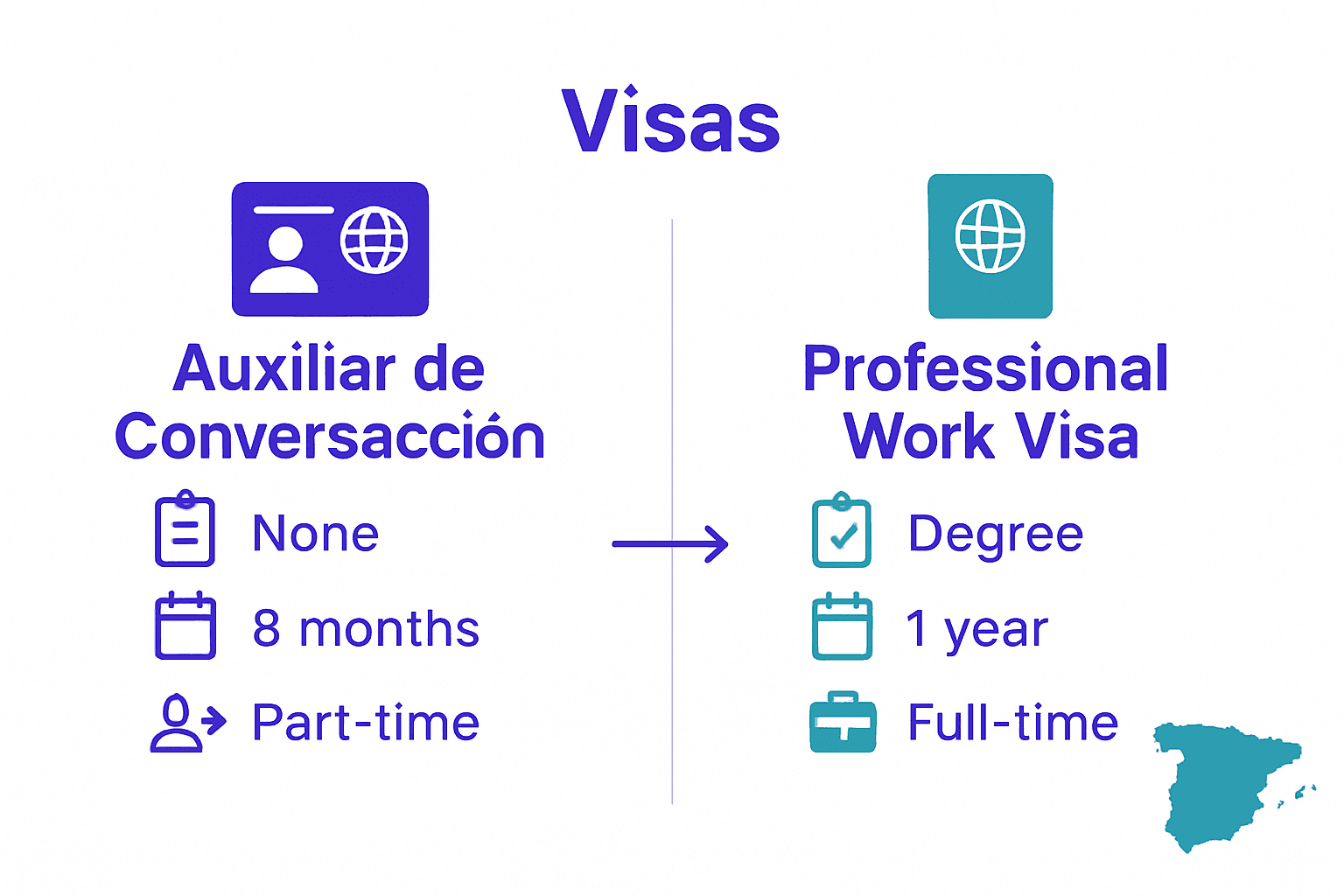
The most common visa routes for English teachers include the auxiliar de conversación programme for language assistants, which offers a structured pathway for teaching in public schools, and professional work visas for those securing direct employment with language schools or private institutions. Understanding the nuanced differences between these visa types is crucial, as each carries specific requirements regarding duration, work permissions, and potential pathways to longer-term residency. Potential teachers should be prepared to navigate bureaucratic processes, maintain accurate documentation, and potentially collaborate with their employing institution to successfully secure legal working status in Spain.
Cultural Benefits and Daily Life Insights
Teaching English in Spain offers far more than a professional opportunity—it represents a transformative cultural immersion experience that fundamentally reshapes one’s perspective on life, work, and interpersonal relationships. The Spanish lifestyle, characterised by its vibrant social interactions, relaxed pace, and rich cultural traditions, provides an extraordinary backdrop for personal and professional growth. English Teaching Salary in Spain 2025: How to Earn €3,000+ a Month not only provides financial insights but also highlights the broader cultural context of living and working in Spain.
Key cultural experiences for English teachers in Spain typically include:
- Culinary Adventures: Exploring regional cuisines and dining traditions
- Linguistic Immersion: Developing Spanish language skills
- Social Connections: Experiencing the renowned Spanish community spirit
- Festive Celebrations: Participating in local and national festivals
- Historical Exploration: Discovering rich architectural and historical heritage
- Work-Life Balance: Embracing the Mediterranean approach to professional life
The nuanced cultural landscape offers profound personal development opportunities beyond traditional teaching roles. English educators frequently report significant personal transformation, gaining not just professional experience but also developing deep cross-cultural understanding and personal resilience. Understanding and embracing local customs, communication styles, and social rhythms becomes as important as classroom performance, creating a holistic experience that extends far beyond typical international teaching assignments.
Costs, Challenges and How to Prepare
Preparing to teach English in Spain requires a comprehensive understanding of financial considerations, potential challenges, and strategic planning. Initial investment in qualifications, relocation, and establishing oneself in a new country can be substantial, demanding careful financial and logistical preparation. How to get English teaching jobs in Spain provides essential insights into navigating these initial hurdles and managing expectations.
Prospective teachers should anticipate and budget for several key expenses:
- Certification Costs: TEFL/TESOL programme fees (€800-€1,500)
- Visa Processing: Documentation and legal requirements (€100-€300)
- Initial Relocation: Flights, temporary accommodation, setup costs (€1,500-€2,500)
- Monthly Living Expenses: Rent, utilities, food, local transportation (€800-€1,200)
- Emergency Fund: Recommended buffer for unexpected expenses (€1,000-€2,000)
- Health Insurance: Comprehensive international coverage (€30-€100 monthly)
Beyond financial preparation, teachers must develop resilience and adaptability to overcome potential challenges such as cultural differences, language barriers, and professional adaptation. Successful educators approach these challenges with an open mindset, investing time in language learning, understanding local educational contexts, and building robust professional and social networks. Technological innovations in language education, such as interactive mobile applications and virtual teaching tools, are increasingly supporting teachers in developing more engaging and adaptive teaching strategies.
Start Your Journey to Teaching English in Spain with Confidence
Are you ready to overcome the challenges of securing the right TEFL certification and navigating visa requirements to teach English in Spain The journey to becoming a confident English teacher abroad starts with the right preparation. If you found yourself concerned about selecting accredited courses like the Trinity CertTESOL or understanding the legalities of work visas and cultural adaptation the solution is just a click away. Our platform offers a range of internationally recognised TEFL qualifications designed to meet the demands of Spain’s evolving education system while equipping you with practical teaching skills and personalised job placement support.
Take control of your future today and benefit from expert advice tailored to your goals. Discover how to meet qualification standards and find teaching jobs with ease by booking a free consultation. Don’t let uncertainty or confusion hold you back from living and working in Spain immerse yourself fully and start your rewarding teaching career by visiting our website. Learn more about how to get English teaching jobs in Spain and explore what TEFL certification is best for you to take your first step now.
Frequently Asked Questions
What qualifications do I need to teach English in Spain?
Most institutions prefer candidates with internationally recognised credentials such as a Trinity CertTESOL or equivalent TEFL certification, along with an undergraduate degree and native or near-native English proficiency.
How does the demand for English teachers in Spain look currently?
The demand for English language teachers in Spain is growing rapidly due to national educational policies promoting bilingual education and the increasing globalisation of various professional sectors.
What are the legal requirements for teaching English in Spain?
Key legal requirements include a valid passport, work visa, criminal background check, certified copies of educational qualifications, and proof of health insurance coverage.
What cultural benefits can I expect while teaching English in Spain?
Teaching English in Spain offers cultural immersion experiences such as exploring local cuisines, engaging in social connections, and participating in festive celebrations, which all contribute to personal and professional growth.
Recommended
- Three professional tips and advice for teaching English in Spain – EBC Trinity CertTESOL and TEFL courses
- Teaching English in Spain: The Basics – EBC Trinity CertTESOL and TEFL courses
- Teach English in Madrid – what is it like?
- Step-by-Step Guide to Teaching in Spain Successfully – EBC Trinity CertTESOL and TEFL courses
