

Valencia sits on Spain’s eastern coast, the country’s third-largest city, with beaches inside the city limits and a cost of living that undercuts Madrid and Barcelona. It also has a steady, year-round appetite for English teachers. If you are weighing Valencia as the place to start teaching abroad, you want straight answers: can you actually get work, what will you earn, and what do you need before you go? This guide walks the honest routes in, the pay you can realistically expect, and the requirements that matter. Getting certified is where most people begin, and with the right training and support behind it, that certificate is a starting line rather than a finish.
Why Valencia is a smart place to start teaching English
Valencia rewards the kind of person who wants to work and travel at the same time. The old town is walkable, the Turia Gardens run right through the middle of the city, and the Mediterranean is a short bike ride from most neighbourhoods. Rent, groceries, and going out cost noticeably less than in Spain’s two biggest cities, which matters a great deal when you are living on a teacher’s income.
The demand is real, and it is worth being clear about why. Spanish families and businesses invest heavily in English, and that investment does not slow down. English is by far the most studied foreign language across the European Union: according to Eurostat’s foreign language learning statistics, the overwhelming majority of pupils in Spain and across the EU learn English at school, often from primary age. That creates a constant pipeline of children, teenagers, and adults who need practice with a confident English speaker, and academies exist to meet it. You can see this on the ground in the range of teaching English opportunities in Valencia, from language schools to private families looking for a tutor.
Is English widely spoken in Valencia?
Honestly, moderately. Daily life in Valencia happens in Spanish (Castilian) and Valencian, the region’s co-official language. English proficiency is decent among younger people, university students, and anyone working in tourism, but it thins out quickly beyond that. That gap is not a warning sign for you, it is the entire reason the work exists. If everyone already spoke fluent English, no one would be paying for lessons.
The practical takeaway: you can absolutely start teaching English in Valencia without speaking fluent Spanish. Lessons are usually run in English on purpose, and academies often prefer it that way. Learning some Spanish will make renting a flat, opening a bank account, and ordering lunch far smoother, so treat it as a life skill to pick up rather than a barrier to getting hired.
Is there demand for English teachers in Spain (and Valencia)?
Yes, and the demand is structural rather than a passing trend. English is a required subject in Spanish schools, so there is a baseline need built into the system. On top of that sits a strong private academy culture: parents enrol children in after-school English classes, teenagers prepare for Cambridge and other recognised exams, professionals take business English to move up at work, and learners as young as three start early. The scale of the market is well documented. The British Council, which coordinates English language assistants placed in Spanish schools, lays out how organised and long-running the sector is.
One thing that trips up newcomers is timing. Hiring in Valencia follows the academic calendar, not your travel plans. The biggest wave of openings lands in September, as academies staff up for the new school year, with a smaller second wave in January. Late spring, roughly May and June, tends to be quieter, since schools are winding down rather than recruiting. If you can, aim to arrive and apply before the September rush. If you land in a slow stretch, it is not a dead end, it just means leaning harder on private tutoring or online work while you wait for the academies to reopen hiring.
The main routes to teach English in Valencia
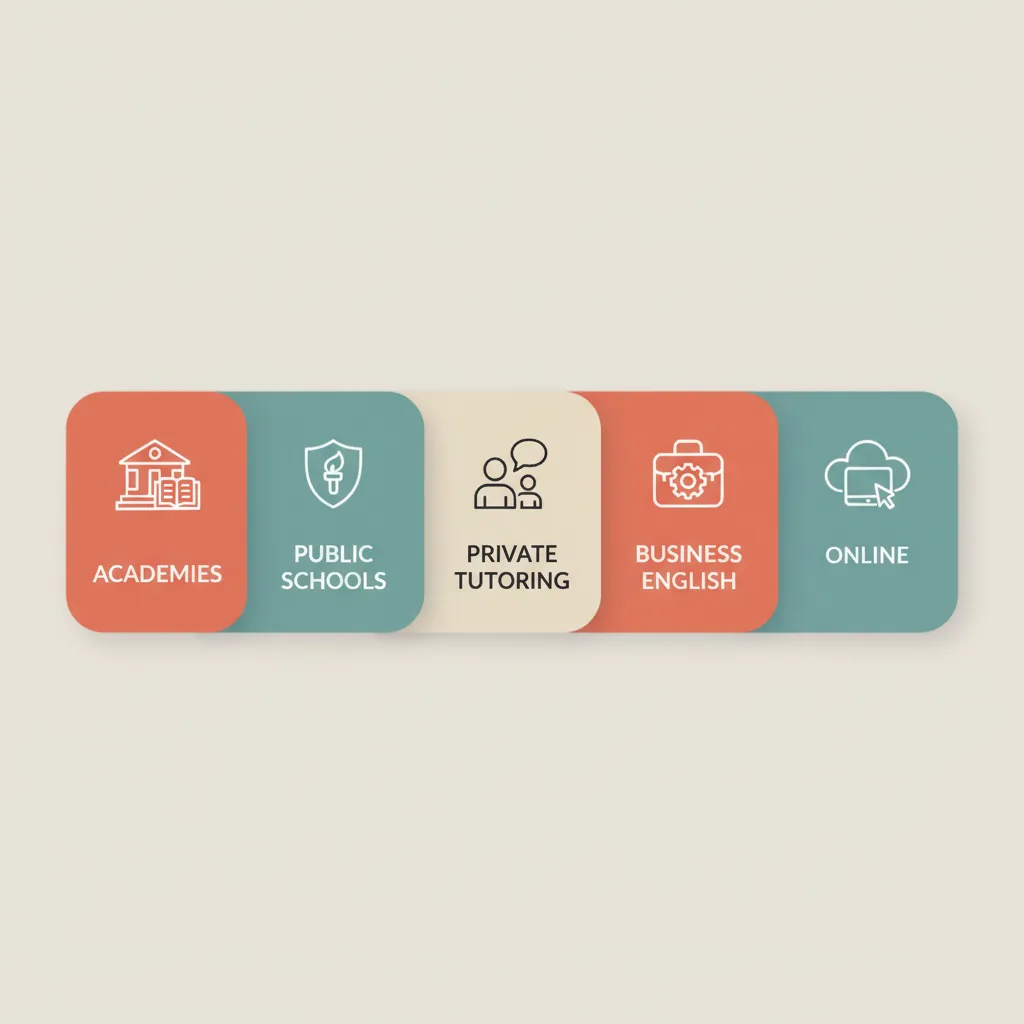
There is no single door into teaching here. Most teachers end up combining two or three of the paths below, and each comes with its own trade-offs.
Private language academies and language schools
This is the most common entry route, and usually the first job people land. Academies (academias) hire teachers on contracts or hourly arrangements to deliver group and one-to-one classes, often to children and teenagers in the late afternoon and evening once the school day ends. That means split schedules are normal: a few morning hours, a long midday break, then a busy stretch from around 4pm to 9pm.
What academies screen for is straightforward: a recognised TEFL or TESOL certificate, native or near-native English, and reliability. A certificate is the thing that gets your application read, because it tells the school you understand lesson planning and classroom management before you walk in. Pay and hours vary by school, so it is common to work for more than one academy or to top up academy hours with private students.
The Spanish government language assistant program
If you want a more structured, officially supported route, Spain runs a national language assistant scheme, the Auxiliares de Conversación program. As a language assistant you work in a state school alongside a Spanish teacher, supporting English lessons rather than running a class solo, in exchange for a monthly stipend and a pathway to the right paperwork to live in Spain legally. It is a well-trodden way in for people who want the reassurance of a government structure around their first year abroad. The official eligibility rules and application windows are published by Spain’s Ministry of Education.
Be realistic about it, though. The program is application-based and competitive, placements are assigned by region rather than chosen, and there is no guarantee you will be sent to Valencia specifically or accepted at all. This is exactly where practical support helps: guidance on preparing a strong application and understanding the timelines can make the difference between a scattered attempt and a serious one. That kind of help getting into teaching programs is part of an end-to-end approach, not a promise of a placement anyone can hand you.
Private tutoring and clases particulares
Alongside formal jobs, there is a huge informal market for clases particulares, private lessons taught one-to-one or in small groups, in students’ homes or online. Rates are often paid in cash, schedules are flexible, and you set your own hours, which makes tutoring an excellent way to top up income around an academy job.
The honest catch is that you have to build a client base, and that takes time. Your first students usually come through noticeboards, local parent groups, and word of mouth, and one happy family will often recommend you to another. Once you have a reliable handful of regulars, private tutoring can become a dependable slice of your monthly income rather than an occasional extra.
Online teaching as a complement
Do not overlook remote lessons. Teaching English online lets you fill the quiet local periods, that late-spring lull especially, and keep earning while academies are between hiring rounds. It also feeds directly into the reason a lot of people get into this in the first place: building income that travels with you. A steady online roster means you are not fully dependent on one city’s calendar, and it is portable if you decide to move on from Valencia later.
How much do English teachers make in Valencia?
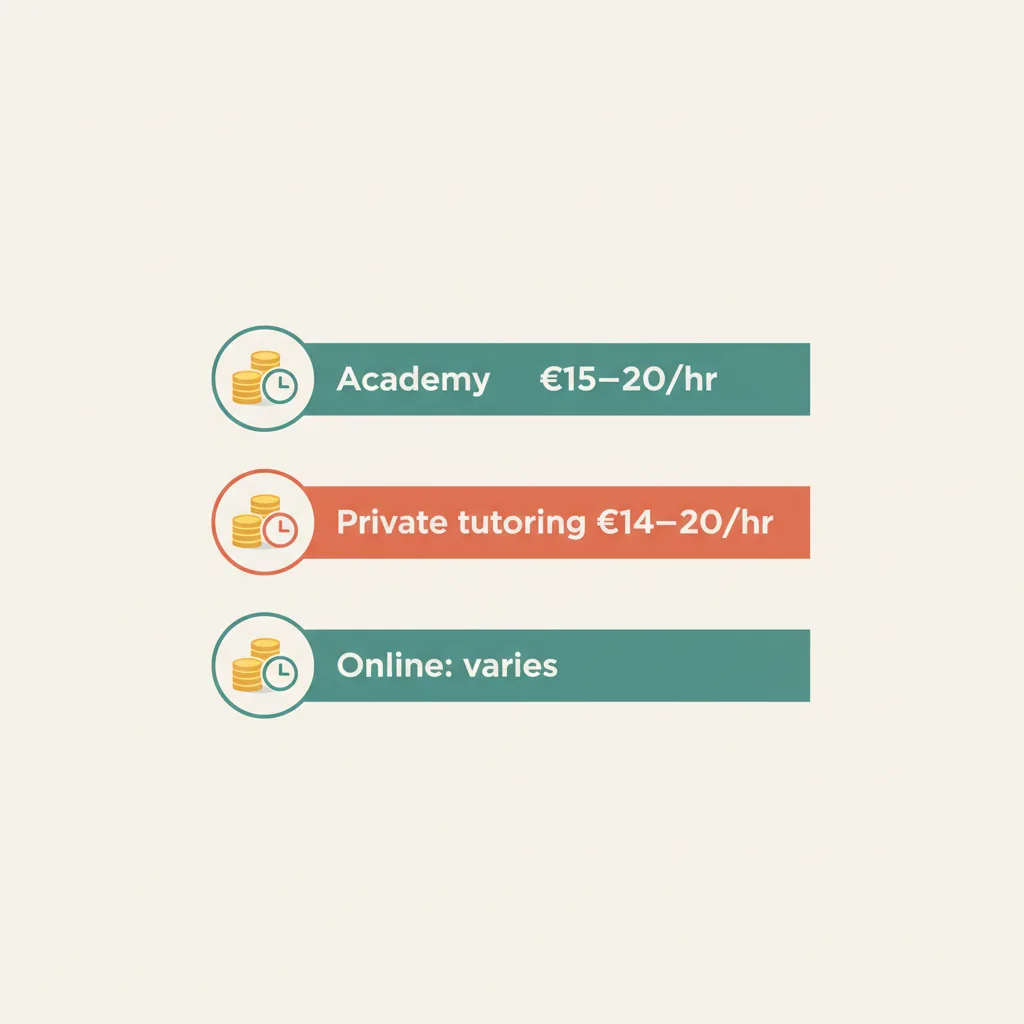
Here is the part everyone wants pinned down. Working in private academies and language schools, teachers commonly earn in the region of €15 to €20 per hour, which works out to roughly €1,500 to €2,000 per month for full-time hours. Private in-home tutoring is more variable: rates are often lower per hour for a single young child and rise when you teach two or three students together, so small groups can be a more efficient use of your time.
Those are typical ranges, not a guaranteed salary. What you actually take home depends on how many hours you work, which routes you combine, your experience, and how much private tutoring you stack on top. A teacher juggling academy hours plus a few regular private students will usually earn more than someone relying on a single part-time contract.
The number that looks modest on paper stretches further than you might expect, because Valencia is genuinely cheaper than Madrid or Barcelona. Lower rent and everyday costs mean a Valencia salary buys more day-to-day life than the same figure would in a pricier city.
Related readingYour Spanish Teaching Adventure: Choosing the Perfect City for Your TEFL JourneyRead the guide →Nobody teaches English in Spain to get rich, but plenty of people do it comfortably.
What you need to get started
Strip away the details and the requirements come down to a short list:
- Native or near-native English. This is what academies and families are paying for.
- A recognised TEFL or TESOL certification. This is the practical gatekeeper for the better academy jobs.
- The right to work and correct paperwork. Visa and residency requirements depend on your nationality, so check what applies to you before committing. EU citizens have a simpler path; others may need to work through a program or a specific visa route.
- Adaptability and enthusiasm. You will teach mixed ages and levels, and a positive, flexible attitude carries you a long way.
Certification deserves a word on why it matters, not just that it does. Academies screen for it because it signals you can plan a lesson, manage a room full of restless teenagers, and teach grammar you have used your whole life without ever having to explain. A good course gives you that methodology before your first day, which is the difference between surviving your first month and enjoying it. If you want to ground yourself in how the whole picture fits together, it is worth reading up on the basics of teaching English in Spain before you choose a route.
On the qualification itself, credibility comes from accreditation. A Trinity CertTESOL, for example, is an internationally recognised certificate regulated in the UK and accepted by employers worldwide, as Trinity College London sets out. A certificate backed by a recognised awarding body carries weight with academies in a way that an unaccredited weekend course simply does not.
From certificate to classroom: how the path actually works
Most guides stop at “get certified” and leave you to figure out the rest. Here is the realistic journey, start to finish:
- Get certified. Complete an accredited TEFL or TESOL course that includes real teaching methodology.
- Get hands-on practice. The strongest courses put you in front of actual learners during training, so you have taught real lessons before you ever apply.
- Apply. Target academies for the September or January hiring waves, or apply to the government language assistant program during its official window.
- Interview. Academies often want to see you teach or talk through how you would run a lesson. Your training is what you draw on here.
- Start teaching. Build your timetable, add private students, and layer in online work to smooth out the quiet months.
The stretch where people feel most alone is between the certificate and that first job, and that is exactly where ongoing support changes the experience. Training plus genuine classroom practice plus job-placement help means you are not handed a certificate and waved off. This is the whole idea behind treating certification as a beginning with support attached rather than a document you frame and forget. If you want the broader country-level picture beyond Valencia, it helps to understand what it takes to teach English in Spain as a whole, since many teachers move between cities over time.
Making Valencia work day to day
A few practical specifics that the job-focused guides tend to skip.
Where teachers live. Newcomers often gravitate to neighbourhoods like Ruzafa (buzzy, central, full of cafes), El Carmen in the old town, and the more residential, budget-friendlier areas slightly out from the centre. Living somewhere well connected matters more than usual here, because split shifts mean you may travel to work twice in one day.
The paperwork basics. To work and get paid properly you will generally need an NIE (a foreigner identification number) and a local bank account. Keep your expectations calm about Spanish bureaucracy: it moves at its own pace, appointments can take time to secure, and having a little Spanish or a helpful local makes it smoother. Treat the first few weeks as admin weeks and you will not be caught out.
The split-shift rhythm. That long midday gap between morning and evening classes is not wasted time. Teachers use it for the beach, the gym, lesson prep, a siesta, or a couple of online lessons. Once you stop fighting the schedule and start planning around it, the Valencia workday feels less like a grind and more like a lifestyle.
Using the slow season. When academy hours thin out in late spring, that is your window to travel, take on more online students, or explore the rest of Spain. This is the travel-and-earn balance that draws so many people to teaching English in the first place, and Valencia’s calendar actually builds room for it in.
Frequently asked questions
How much do English teachers make in Valencia, Spain?
Is there a demand for English teachers in Spain?
Do I need to speak Spanish to teach English in Valencia?
Is English widely spoken in Valencia?
What is the best time of year to apply?
Do I need a TEFL certificate to teach in Valencia?
Your next step
Valencia offers something rare: real demand for English teachers, several genuine routes in, and a cost of living that lets a teacher’s salary breathe. The honest summary is that no single path is guaranteed, but between academies, the government language assistant program, private tutoring, and online work, there is a workable way in for people who prepare properly.
The practical first move is getting certified, with proper training and placement support behind you rather than a certificate collected in isolation. If that is where you are, explore the TEFL and TESOL certification courses that get you classroom-ready, and take a look at the wider live, work, and travel the world teaching English picture to see how Valencia fits into a bigger plan. No pressure and no promises about a specific job, just a clear, supported starting point for the path you are already thinking about.