
Many people believe a university degree is essential to teach English abroad, but that’s not always true. What genuinely matters are Trinity College London accreditation and practical classroom experience. Countries like Spain, France, and Italy prioritise qualified, confident teachers who can engage students effectively. This guide clarifies what you actually need to launch your teaching career overseas, from recognised certifications to visa requirements and comprehensive support programmes.
If you are preparing to teach English overseas but speak only English, find out whether you can teach English abroad without a second language and what employers may expect from you.
This article refers to visa processing. Please note that visa and work permit approvals are determined solely by the relevant government. EBC has no influence or control over these decisions and cannot guarantee the success of any visa or work permit application.
English teaching careers can take different directions depending on your qualifications, experience and preferred destination. Read Georgia’s story of teaching English in France after Trinity CertTESOL. She explains that completed a very well-known online TEFL course in 2020, but soon discovered its limitations. With no teaching practice, face-to-face interaction or feedback from trainers and fellow students, she felt she was missing the practical experience and guidance needed to develop her teaching skills.
Table of Contents
- Why Trinity College London Accreditation Matters
- The Role of Practical Teaching Experience
- EBC TEFL’s One-Year Study and Work Abroad Programmes
- Certification Pathways and Specialised Courses to Enhance Your Career
- Common Misconceptions About Teaching English Abroad
- From Certification to Career: How EBC Supports Global Employment
- How EBC TEFL Can Help You Launch Your Teaching Abroad Career
- Frequently Asked Questions
Key takeaways
| Point | Details |
|---|---|
| Accredited TEFL certification opens global doors | Trinity CertTESOL is recognised in 80+ countries and significantly improves employability compared to non-accredited alternatives. |
| Practical teaching experience is non-negotiable | Hands-on classroom practice during training increases teacher confidence and competence by over 40% compared to theory-only courses. |
| Visa requirements vary significantly by country | Countries have distinct work permit regulations that require careful navigation and professional support. |
| Specialised courses enhance career prospects | Business English, CLIL, and online teaching certifications expand job opportunities in competitive markets. |
| Integrated programmes combine training, work, and support | EBC TEFL’s one-year study and work abroad programmes include accredited training, language study, visa assistance, and lifetime job placement. |
Why Trinity College London accreditation matters
Not all TEFL certificates carry equal weight in the global job market. Employers worldwide recognise Trinity College London’s CertTESOL as the gold standard because it delivers comprehensive linguistic theory alongside rigorous accredited ESL teaching qualification training. This accreditation is recognised in over 80 countries, giving graduates access to positions that non-accredited certificate holders simply cannot secure.
The Trinity CertTESOL curriculum covers essential areas including:
- Linguistic analysis and language awareness
- Teaching methodology and lesson planning
- Classroom management techniques
- Assessment and feedback strategies
- Observed teaching practice with real learners
Many online TEFL courses promise quick certification, but they lack the rigorous standards and practical components that employers demand. Schools in Europe, Asia, and Latin America often specify Trinity or Cambridge qualifications in job postings. Without proper accreditation, you may find yourself competing for lower-paid positions with less favourable contracts. Understanding TEFL and Trinity accreditation helps you make informed choices that protect your career prospects.
Accredited programmes also provide quality assurance. Trinity College London maintains strict oversight of course providers, ensuring consistent training standards globally. This means whether you complete your certification in London, Barcelona, or online, you receive the same high-quality education. Graduates consistently report that Trinity accreditation opened doors during job searches and provided confidence during interviews.
The role of practical teaching experience
Theory alone doesn’t prepare you for the reality of managing 25 energetic teenagers or explaining complex grammar to beginners. Research demonstrates that practical teaching experience increases confidence and skills by over 40% compared to theory-only training. This hands-on component separates competent teachers from those who struggle in actual classrooms.
Quality TEFL courses include observed teaching practice where you:
- Plan and deliver lessons to real students
- Receive immediate feedback from experienced trainers
- Develop classroom management skills under supervision
- Learn to adapt lessons based on student responses
- Build confidence through repeated practice
The importance of practical teaching experience cannot be overstated. During teaching practice, trainees encounter authentic challenges like mixed-ability classes, unexpected questions, and timing issues. These experiences develop problem-solving abilities that no textbook can provide. You learn to think on your feet and adjust your approach based on student needs.
Practical teaching transformed my understanding of the profession. I thought I knew how to teach until I stood in front of actual students. The feedback and practice made me a confident, capable teacher ready for any classroom.
Many aspiring teachers mistakenly believe they can skip hands-on practice and learn on the job. This approach often leads to overwhelming stress, poor student outcomes, and shortened teaching careers. The research on practical teaching impact confirms that structured practice during training accelerates professional development and reduces early-career burnout. Investing in proper practical training pays dividends throughout your teaching career.

EBC TEFL’s one-year study and work abroad programmes
Integrated programmes combine accredited teacher training, language study, cultural immersion, and practical teaching placements into comprehensive experiences. EBC TEFL’s study and work abroad programmes in Spain, France, and Italy provide structured pathways from certification to employment whilst supporting visa applications and cultural adaptation.
These programmes include:
- Trinity-accredited TEFL certification recognised globally
- Language courses to develop functional proficiency
- Post-graduate study opportunities for additional qualifications
- Part-time teaching or work placements during study
- Visa application guidance
Cultural immersion accelerates language learning and provides authentic insights into local education systems. Living in Spain, France, or Italy whilst training helps you understand student backgrounds, cultural references, and communication styles. This experience makes you far more effective in the classroom than teachers who arrive without cultural context.
Part-time work opportunities allow you to earn income whilst building your CV and professional network. Many participants secure full-time positions through connections made during their study year. The combination of structured training, practical experience, and local knowledge creates competitive advantages in the job market.
Pro Tip: Choose programmes that include accommodation support and local orientation alongside training. Navigating housing, banking, and registration in a foreign country whilst studying creates unnecessary stress that quality programmes eliminate through comprehensive support services.
Certification pathways and specialised courses to enhance your career
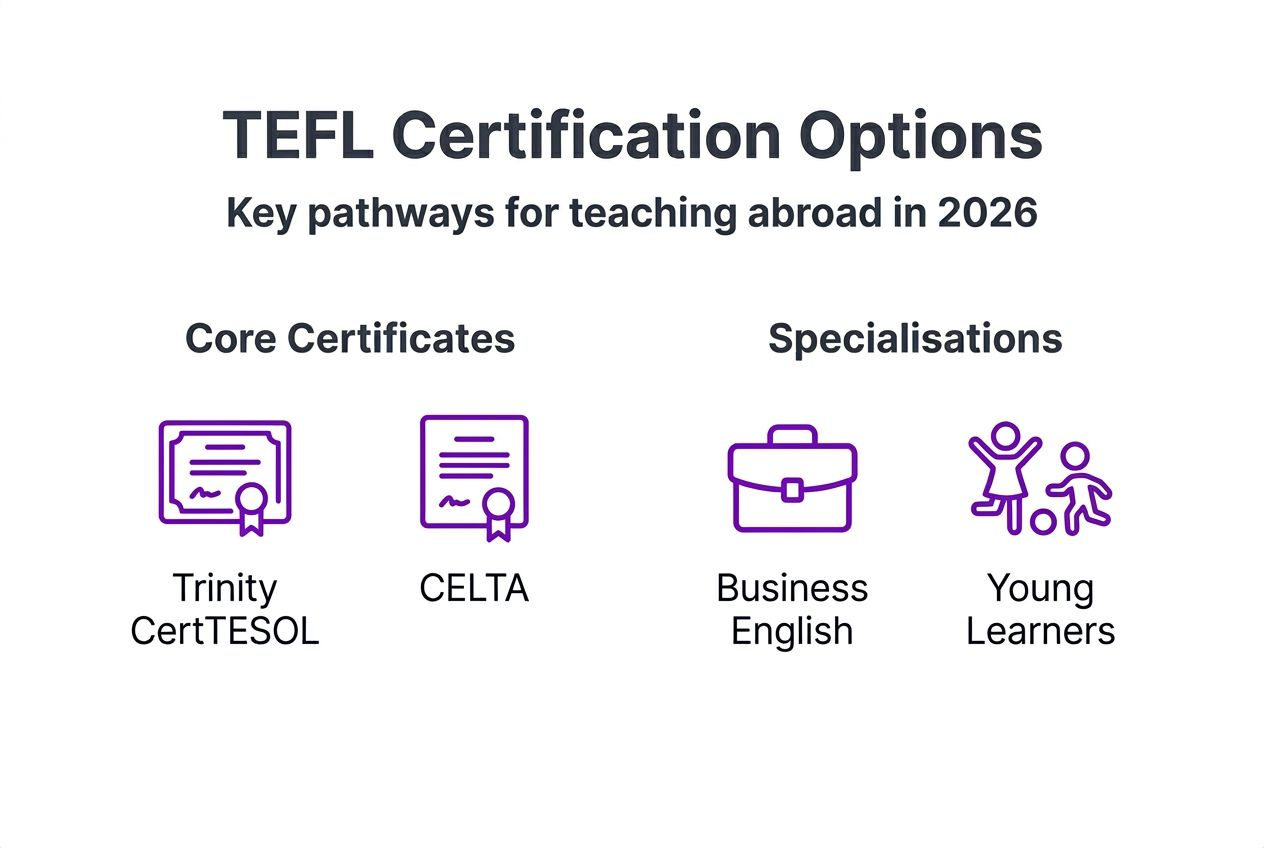
Different certifications serve distinct career goals and target markets. Understanding options helps you choose training aligned with your ambitions and preferred teaching contexts. Trinity College London offers two primary pathways alongside numerous specialisation options.
| Certification | Focus | Best For |
|---|---|---|
| Trinity CertTESOL | Teaching English to speakers of other languages | General English teaching in language schools, private institutions |
| Trinity CertPT | Preparation for Cambridge exams | Exam preparation centres, schools specialising in Cambridge qualifications |
Beyond foundation certifications, specialised courses expand your employability:
- Business English: Corporate language training and executive coaching
- CLIL (Content and Language Integrated Learning): Teaching academic subjects through English
- Young Learners: Specialised methods for children and teenagers
- Online Teaching: Digital classroom management and remote instruction techniques
The job market increasingly values specialists who bring targeted expertise. Business English teachers command higher salaries in corporate settings. CLIL specialists find opportunities in international schools and bilingual programmes. Online teaching certifications became essential during the pandemic and remain valuable as hybrid models persist.
Exploring TEFL certification options in Europe reveals how different qualifications align with specific markets. Spain’s growing CLIL sector creates demand for qualified bilingual teachers. France’s business community seeks trainers who understand corporate culture. Italy’s exam preparation centres need Cambridge specialists. Matching your certification to market demand increases employment prospects.
Hybrid and online course formats offer flexibility without sacrificing quality. Many programmes combine online theory modules with intensive in-person teaching practice, accommodating working professionals. This approach maintains rigorous standards whilst providing scheduling flexibility. When considering top TEFL study abroad destinations, evaluate both traditional and hybrid options based on your circumstances.
Common misconceptions about teaching English abroad
Misunderstandings about qualifications, experience, and processes create barriers for aspiring teachers. Addressing these myths provides clarity and realistic expectations.
Myth: A university degree is always required to teach English abroad. Reality: whilst some countries and employers require degrees, many positions prioritise accredited TEFL certification and practical experience over formal academic credentials.
Myth: Practical teaching experience is optional or can be gained on the job. Reality: structured practice during training develops essential skills and confidence that prevent early-career struggles and burnout.
Myth: Visa requirements are straightforward and easy to navigate independently. Reality: immigration regulations are complex, frequently changing, and require careful attention to detail and documentation.
Myth: All TEFL certificates are equivalent. Reality: accreditation matters enormously, with Trinity and Cambridge qualifications opening doors that non-accredited certificates cannot.
These misconceptions lead to poor decisions that limit career prospects. Teachers who skip accredited training find themselves stuck in low-paying positions with poor conditions. Those who underestimate visa complexity face legal problems and employment gaps. Understanding common teaching abroad misconceptions helps you avoid these pitfalls.
Pro Tip: Before committing to any TEFL course, verify its accreditation status directly with Trinity College London or Cambridge Assessment English. Legitimate providers proudly display their accreditation and provide centre numbers you can confirm through official websites.
Realistic expectations about the teaching abroad journey prevent disappointment and prepare you for genuine challenges. Teaching overseas offers incredible rewards, but success requires proper preparation, recognised qualifications, and ongoing support. Making informed decisions from the start sets you on a path to fulfilling, sustainable careers.
From certification to career: how EBC supports global employment
Completing your TEFL certification represents just the beginning of your teaching journey. Career support transforms training into sustainable employment through structured guidance and ongoing assistance. EBC TEFL’s comprehensive job placement services provide lifetime access to opportunities and professional development resources.
Career support includes:
- CV and cover letter review tailored to international teaching markets
- Interview preparation and mock interviews with experienced trainers
- Access to exclusive job postings through EBC’s global network
- Guidance on contract negotiation and employment terms
- Ongoing professional development opportunities and community
EBC graduates report high placement success rates, with many securing positions before completing their certification. The organisation’s global presence connects teachers with schools, language centres, and corporate clients across continents. This network proves invaluable when relocating or seeking new opportunities after initial contracts conclude.
The TEFL job placement process extends beyond initial employment. As your career develops, you may seek advancement, specialisation, or relocation. Lifetime support means advisors remain available for consultation throughout your professional journey. Alumni networks facilitate connections, mentorship, and job leads that benefit teachers at all career stages.
Professional development workshops, webinars, and resources keep your skills current with evolving teaching methodologies and market demands. The TEFL profession changes continuously, with new technologies, approaches, and opportunities emerging regularly. Staying connected to professional communities through organisations like EBC ensures you remain competitive and informed.
Strong career support distinguishes quality training providers from those offering only certification. The combination of accredited training, practical experience, visa assistance, and lifetime placement support creates clear pathways from aspiration to established teaching careers abroad.
How EBC TEFL can help you launch your teaching abroad career
You now understand what truly matters for teaching English abroad: Trinity-accredited certification, practical classroom experience, visa support, and comprehensive career assistance. EBC TEFL brings these elements together in integrated programmes designed specifically for aspiring teachers.
Whether you’re drawn to Spain’s vibrant culture, France’s sophisticated lifestyle, or Italy’s rich history, EBC’s certification to teach English abroad programmes provide everything you need. One-year study and teach abroad programmes combine accredited training, language study, visa assistance, and teaching placements into seamless experiences. Lifetime job placement support ensures you’re never alone in your career journey.
Ready to transform your teaching dreams into reality? Explore EBC TEFL’s course options and book a free consultation call to discuss your goals with experienced advisors who understand the path you’re beginning.
Frequently asked questions
What qualifications do I need to teach English abroad?
You need an accredited TEFL certification like Trinity CertTESOL, which includes practical teaching experience with real students. Whilst some countries require university degrees, many positions prioritise recognised certification and demonstrated classroom competence. Visa and work permit requirements vary by destination.
Is a university degree required to teach English overseas?
A degree is not always mandatory. Many employers in Spain, France, Italy, and other popular destinations prioritise accredited TEFL qualifications and practical experience over formal academic credentials. Requirements depend on the specific country, employer type, and visa regulations.
How important is practical teaching experience in TEFL certification?
Practical experience is critical, not optional. Research shows hands-on teaching practice increases novice teacher confidence and classroom management skills by over 40% compared to theory-only training. Quality TEFL courses include observed practice with real learners as a core component.
Can I get work visa support through TEFL programmes?
EBC offers guidance and limited support with the visa application process. This includes guidance on documentation, explanations of immigration requirements, and general assistance related to studying and teaching in Spain, France, and Italy. While this support can make the process clearer and less stressful, it does not constitute full visa application or immigration representation, and applicants remain responsible for submitting and managing their own visa applications.